
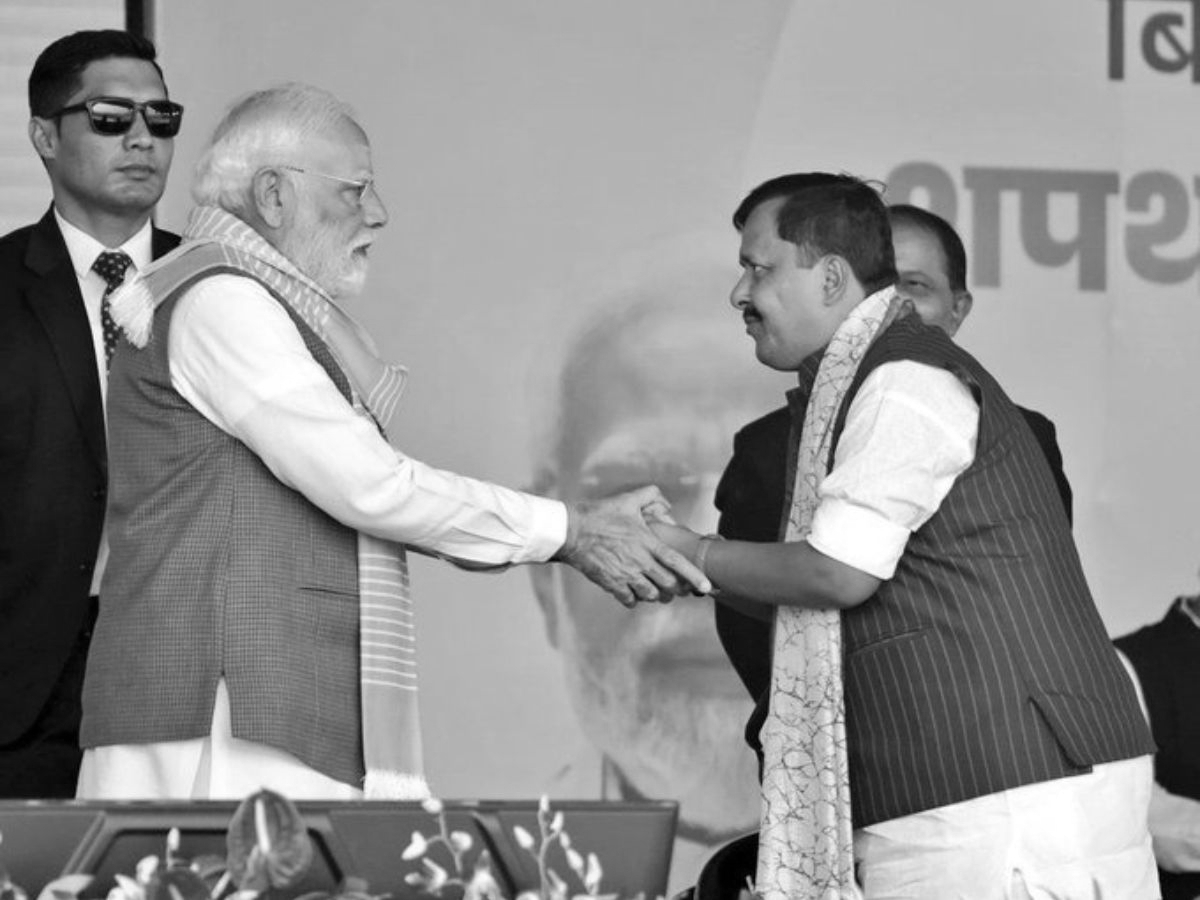
Nitin Nabin Appointed BJP Working President, Choice Reflects Reluctance to Elevate Powerful National Figures
The Bharatiya Janata Party’s appointment of Bihar minister and five-time MLA Nitin Nabin as its national working president has once again highlighted the party’s consistent reluctance to place established national leaders in positions that could confer independent political authority.
At 45, Nabin is widely expected to succeed J P Nadda as the BJP’s next full-time national president, becoming the first leader from Bihar to head the party organisation. While the party has cited his organisational experience and electoral record, the decision has also revived discussion on why senior, well-known leaders were kept out of contention.
Working President Seen as Next in Line
Although the BJP constitution does not explicitly state that a working president must succeed the incumbent, recent practice suggests otherwise. Both Amit Shah and J P Nadda moved into the top post after effectively managing the organisation. Nabin’s elevation is therefore being viewed within political circles as a clear signal of succession rather than a temporary arrangement.
Senior Leaders Kept Out
What stands out in this appointment is not Nabin’s rise, but the absence of senior leaders who traditionally would have been natural contenders. Figures such as B L Santosh , the influential general secretary (organisation), Shivraj Singh Chouhan , the long-serving former chief minister of Madhya Pradesh, and Manohar Lal Khattar , former Haryana chief minister with strong organisational and RSS credentials, were all widely seen as capable of leading the party at the national level.
However, elevating any of these leaders would have meant placing individuals with significant political stature, mass recognition, and independent influence at the helm of the party organisation something the BJP leadership has consistently avoided in recent years.
Concentration of Authority
Political observers point out that the BJP under Prime Minister Narendra Modi has steadily narrowed the space for alternative power centres within the party. Leaders with strong personal followings or long administrative legacies are increasingly confined to defined roles, while the national organisation is run by figures who do not command comparable public or political weight.
In this context, appointing a leader like Shivraj Singh Chouhan or Manohar Lal Khattar could have altered internal power equations, while elevating B L Santosh a key behind-the-scenes organiser would have brought the party’s core power structure into the public spotlight.
Nitin Nabin’s selection avoids both outcomes. Despite his long legislative career and ministerial experience in Bihar, he remains relatively low-profile at the national level, with no independent political base that could challenge the existing leadership hierarchy.
A Consistent Pattern
The choice fits into a broader pattern seen over the past decade, where the BJP has preferred to keep its top organisational posts free of leaders who could evolve into rival centres of authority. The party president’s role has increasingly functioned as an administrative and coordination post rather than a position of political dominance.
What the Appointment Indicates
Projected officially as recognition of organisational work and generational change, Nitin Nabin’s appointment also signals a more hard-nosed political calculation. The BJP appears determined to ensure that real political power remains concentrated at the very top , with no scope for nationally influential leaders to leverage the party organisation as a platform for broader authority.
As the BJP moves into its next phase, Nabin’s elevation underscores not just a change in leadership, but a continuation of a tightly controlled internal structure one where prominence is carefully managed and power remains firmly centralised.