
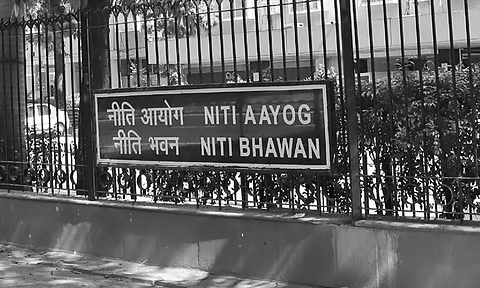
NITI Aayog’s reports on govt women safety schemes should be public, says CIC
The Central Information Commission (CIC) has directed that third-party evaluation reports prepared by NITI Aayog on women safety schemes run by the Ministry of Women and Child Development (MWCD) should be made publicly available.
These reports, which independently assess the implementation, efficiency, and effectiveness of schemes like One-Stop Centres and the Women Helpline , are objective, evidence-based evaluations commissioned by the government to guide policy reforms, mid-course corrections, and improved governance .
CIC Information Commissioner P R Ramesh , in a recent order, noted that while supplying nearly 1,870 pages of internal file notings would “disproportionately divert the resources of the public authority,” the proactive disclosure of evaluation reports is in the public interest . The commission emphasised that such reports are institutionally independent assessments intended to enhance transparency, accountability, and public awareness .
Key functions of third-party evaluations , the CIC observed, include: assessing whether schemes are implemented as intended, measuring resource efficiency, evaluating outcomes against objectives, providing evidence-based recommendations, and highlighting best practices or challenges. By doing so, these reports help policymakers make data-driven decisions , implement mid-course corrections , allocate resources efficiently, and strengthen governance.
The CIC also reiterated the importance of suo motu disclosure under the RTI Act, advising the MWCD to publish information on its website regarding contracts awarded, including the name of the successful bidder, contract value, scope of work, completion timelines, and progress updates . Such disclosure, the commission said, would facilitate informed public discourse, accountability, and effective policy implementation .
In effect, the CIC’s order reinforces that government evaluations of publicly funded schemes, especially those related to women’s safety , should not remain internal and must be accessible for citizen scrutiny and evidence-based policy reform .