
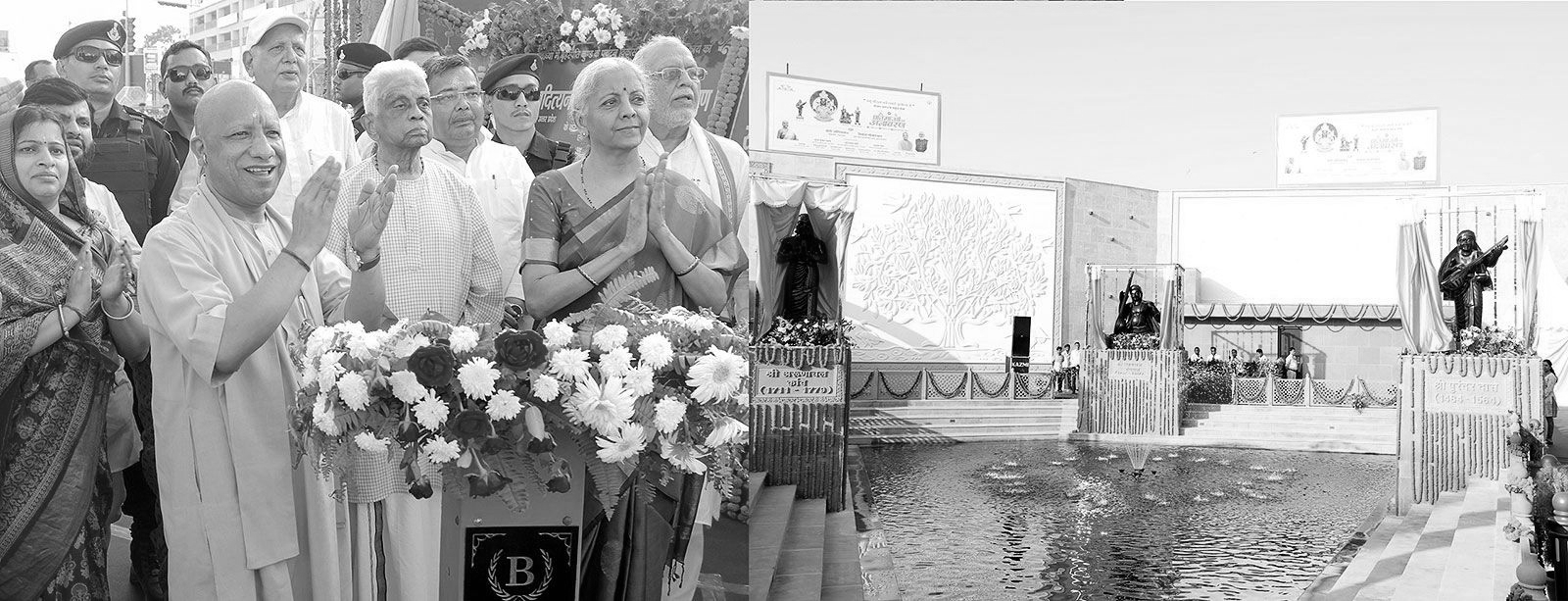
Nirmala Sitharaman unveils statues of South Indian saints in Ayodhya
In a landmark cultural and spiritual event at Brihaspati Kund, Union Finance Minister Nirmala Sitharaman unveiled statues of three iconic South Indian saints- Tyagaraja Swami, Purandara Dasa, and Arunachala Kavi, bringing the rich devotional traditions of South India to the birthplace of Lord Ram. Uttar Pradesh Chief Minister Yogi Adityanath attended the ceremony, marking a symbolic bridge between North and South India through faith, music, and literature.
Sitharaman described the occasion as a celebration of devotion that transcends language and region, noting that in South India, worship of Shri Ram is not just a spiritual practice but a way of life embedded in culture, music, and daily traditions. She highlighted that Carnatic music, a classical South Indian music form known for its intricate rhythms, melodic patterns, and devotional lyrics, has historically unified communities and spread devotion beyond linguistic and regional boundaries. She added, “In Tamil, Telugu, Kannada, and Malayalam, the glory of Shri Ram has been sung; this is the soul of India.”
• Tyagaraja Swami (1767-1847) was hailed for his unwavering spiritual focus, composing thousands of songs dedicated solely to Lord Ram. Refusing royal patronage, he lived a life of simplicity, devotion, and music, believing that art should serve the divine rather than worldly ambition. Sitharaman noted, “Tyagaraja Swami refused to sing for kings, dedicating every song solely to Shri Ram. His composition Seetha Kalyanam is sung at weddings across South India, including my own daughter’s wedding.”
• Purandara Dasa (1484-1564) , known as the father of Carnatic music, structured the musical tradition and pedagogy that forms the backbone of classical music today. His thousands of devotional songs, primarily in Kannada, spread spiritual teachings to the masses, making devotion through music accessible to all sections of society.
• Arunachala Kavi (1712-1779) , celebrated for the Tamil epic Ramanatakam, brought the Ramayana alive through poetic narration. His work honors Mother Sita with deep reverence and combines literary mastery with spiritual devotion. Sitharaman quoted his words, “Look at Mother Sita with a hundred thousand eyes, no one is more beautiful than her.” Inspired by divine visions in Srirangam, Arunachala Kavi’s compositions continue to influence South Indian devotional culture and temple traditions.
Sitharaman also recognized the contribution of Molla, a pioneering 15th-century Telugu woman poet from the potter community, who composed Molla Ramayanam, demonstrating that devotion transcends social barriers and gender.
Installing the statues of these saints in Ayodhya, the birthplace of Lord Ram, reinforces the pan-Indian nature of devotion. It symbolizes how faith, music, and literature connect regions and generations, creating cultural unity. Reflecting on the event, Sitharaman said, “This day is sacred. The installation of statues of saints who remembered Ram in each breath in Ayodhya could happen only with Shri Ram’s will.”
Expressing gratitude to the Uttar Pradesh government, she added, “We did not feel we were in North India; it felt as if we were celebrating in our own home,” underscoring how devotion can dissolve regional boundaries and unite the country culturally and spiritually.
This event, blending music, literature, and devotion, highlighted the timeless relevance of these saints and their role in reinforcing the shared spiritual and cultural fabric of India.