
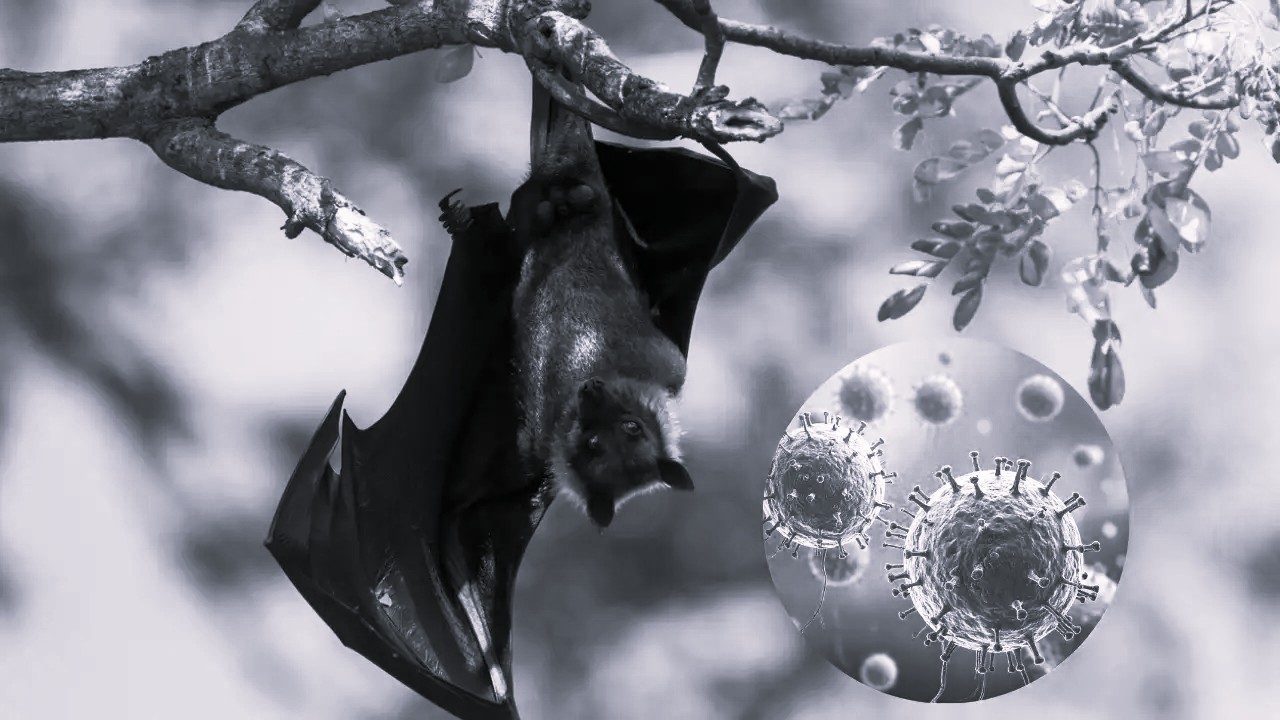
Nipah Virus: Death in the Shadow of Bats
Nipah Virus (NiV) is a highly lethal RNA virus belonging to the Henipavirus genus within the Paramyxoviridae family. Its clinical history began in 1998-1999 in the village of Sungai Nipah, Malaysia. Initially, the outbreak was misidentified as Japanese Encephalitis, but it was later discovered that the virus was jumping from fruit bats to domestic pigs and subsequently to humans. This first outbreak resulted in hundreds of deaths and led to the culling of over a million pigs, causing a massive socio-economic collapse in the region.
In the Indian context, the virus made its terrifying debut in 2001 in Siliguri, West Bengal. This outbreak was particularly shocking to the medical community as it recorded a case fatality rate (CFR) exceeding 70%. Out of 66 confirmed cases, 45 individuals lost their lives. A subsequent outbreak in 2007 claimed five more lives. After a long hiatus, the virus has resurfaced in West Bengal, and with neighboring Bangladesh reporting almost annual clusters, the regional health security is under significant strain. It is no longer a localized threat; the migratory patterns of fruit bats have turned this into a cross-border public health challenge for Southeast Asia.
Zoonotic Transmission: The Journey from Bats to Humans
Nipah is a classic example of a "zoonotic" virus, meaning it bridges the gap between animal reservoirs and human hosts. The natural hosts for this virus are fruit bats, specifically those of the Pteropus genus. Intriguingly, these bats carry the virus without showing any clinical symptoms themselves; however, when the virus enters the human system, it becomes a biological catastrophe.
Transmission typically occurs through three primary routes. First, the consumption of fruits (such as mangoes or guavas) that have been partially eaten or contaminated by bat saliva. Second, the consumption of raw date palm sap or toddy that has been contaminated with bat excreta or secretions during collection. Third, once a human is infected, the virus spreads through respiratory droplets or direct contact with bodily fluids (saliva, blood, or urine). This human-to-human transmission is what transforms a small localized spillover into a potential epidemic cluster, especially in hospital settings where healthcare workers are at high risk.
The Bengal Nurse Case: A Clinical Post-Mortem
The recent death of a 25-year-old nurse in West Bengal has brought the "long-term" devastating effects of Nipah back into focus. Although she tested negative for the virus 30 days after the initial infection, her death highlights that the damage caused by Nipah extends far beyond the viral phase. The primary medical cause was "Secondary Bacterial Infection" leading to "Multi-Organ Failure."
Nipah virus systematically dismantles the human immune system. Prolonged stay in the Intensive Care Unit (ICU) and total dependence on mechanical ventilation left her lungs vulnerable to opportunistic pathogens. Even after the virus was cleared from her system, the residual inflammatory damage caused severe pneumonia. Her eventual cardiac arrest was a byproduct of the systemic inflammation and the prolonged comatose state induced by the virus. This case serves as a grim reminder that surviving the viral peak does not guarantee a full recovery; the permanent physiological damage can be just as lethal.
Mechanism of Attack: How the Virus Invades
Once the Nipah virus enters the body, it utilizes the bloodstream to target the most vital organs: the lungs and the brain. In the respiratory system, it triggers "Acute Respiratory Distress Syndrome" (ARDS), where the lungs fill with fluid, making oxygen exchange nearly impossible.
Even more sinister is its ability to breach the Blood-Brain Barrier (BBB). Once it invades the central nervous system, it causes Encephalitis (inflammation of the brain). Patients suffer from excruciating headaches, seizures, mental disorientation, and eventually slip into a deep, often irreversible coma. It is this dual-attack mechanism, crushing the respiratory system while simultaneously shutting down the brain, that makes Nipah’s mortality rate hundreds of times higher than that of COVID-19.
Symptoms and the Challenges of Diagnosis
Early detection of Nipah is notoriously difficult because its initial symptoms are deceptively "flu-like." Patients present with fever, sore throat, and muscle pain, which can easily be mistaken for common influenza or dengue. However, within 24 to 48 hours, the condition escalates rapidly into severe respiratory distress or neurological collapse.
The gold standard for diagnosis is the Real-Time Polymerase Chain Reaction (RT-PCR) test. Samples are collected from throat swabs, blood, urine, or Cerebrospinal Fluid (CSF). However, a significant challenge remains: if the viral load is too low during the very early incubation period, the test may yield a false negative. Therefore, any suspected patient must be kept under strict clinical observation for at least 21 days to ensure public safety.
The Crisis of Treatment and Vaccine Scarcity
As of today, there is no globally licensed vaccine or specific antiviral drug proven to cure Nipah. Medical professionals are forced to rely solely on "Supportive Care." This involves managing fever, providing mechanical ventilation for respiratory failure, and using anticonvulsants to manage brain swelling.
While drugs like Ribavirin have been used in some outbreaks, their efficacy remains scientifically inconclusive. Experimental treatments involving Monoclonal Antibodies (such as m102.4) are currently in the trial phase but are not widely available for routine clinical use. This lack of a "silver bullet" means that prevention is our only viable weapon. Once a patient enters the advanced stage of encephalitis, medical intervention becomes a race against time that is rarely won.
The Kerala Model: A Blueprint for Containment
India's response to Nipah has been largely defined by the "Kerala Model." During the 2018 outbreak, the Kerala government implemented an aggressive "Contact Tracing" strategy that won international acclaim. By identifying and quarantining thousands of people who had even a brief encounter with an infected person, they successfully broke the chain of transmission.
The current situation in West Bengal is being handled with similar rigor. The Union Health Ministry has intensified surveillance, identifying over a hundred contacts and placing them under isolation. This proactive approach treating every single case as a potential epidemic is the cornerstone of preventing a regional spillover. Vigilance, rather than panic, remains the primary tool for containment.
Environmental Factors and Ecological Spillover
The recurring nature of Nipah outbreaks is a direct consequence of environmental degradation. Massive deforestation has destroyed the natural habitats of fruit bats, forcing them to migrate into human settlements, orchards, and farms in search of food.
Climate change further exacerbates this issue. Studies suggest that environmental stress in bats leads to increased viral shedding. During the winter months, when humans collect date palm sap, the proximity between bats and collection pots increases, leading to "spillover" events. Scientists warn that unless we restore ecological balance and maintain a safe distance from wildlife, the frequency of such zoonotic jumps will only increase.
Social Awareness and the Combat against Misinformation
In the age of social media, misinformation regarding Nipah often spreads faster than the virus itself, causing unnecessary panic. It is crucial to understand that Nipah does not spread through the air over long distances like COVID-19; it requires close, direct contact with the infected host or contaminated surfaces.
The public should adhere to simple yet effective precautions:
Avoid eating fruits that have fallen from trees or show signs of animal bites.
Do not consume raw date palm sap or toddy unless it is collected under strict, bat-proof conditions.
Practice rigorous hand hygiene, especially in high-risk areas.
Healthcare workers must use full Personal Protective Equipment (PPE) when handling suspected cases.
Future Preparedness and the 'One Health' Approach
The tragedy in West Bengal is a clarion call that the threat of Nipah is persistent. The World Health Organization (WHO) has classified it as a "Priority Pathogen," acknowledging its potential to cause a global pandemic. Our future strategy must transition from reactive crisis management to a proactive "One Health" approach.
This framework recognizes that human health is inextricably linked to the health of animals and our shared environment. We must invest heavily in continuous wildlife surveillance, fund the rapid development of vaccines, and modernize rural healthcare infrastructure. By monitoring bat populations and understanding their interaction with human landscapes, we can predict and prevent outbreaks before they begin. Nipah is a "silent killer," but through scientific collaboration and environmental stewardship, we can protect humanity from its shadow.
The high fatality rate of 40% to 70% means that 7 out of every 10 infected individuals may not survive. This statistic alone demands that Nipah be treated with the highest level of administrative and clinical priority. As we move forward, the lessons learned from Siliguri, Kerala, and now the recent Bengal case must be synthesized into a permanent national defense protocol against zoonotic diseases.