
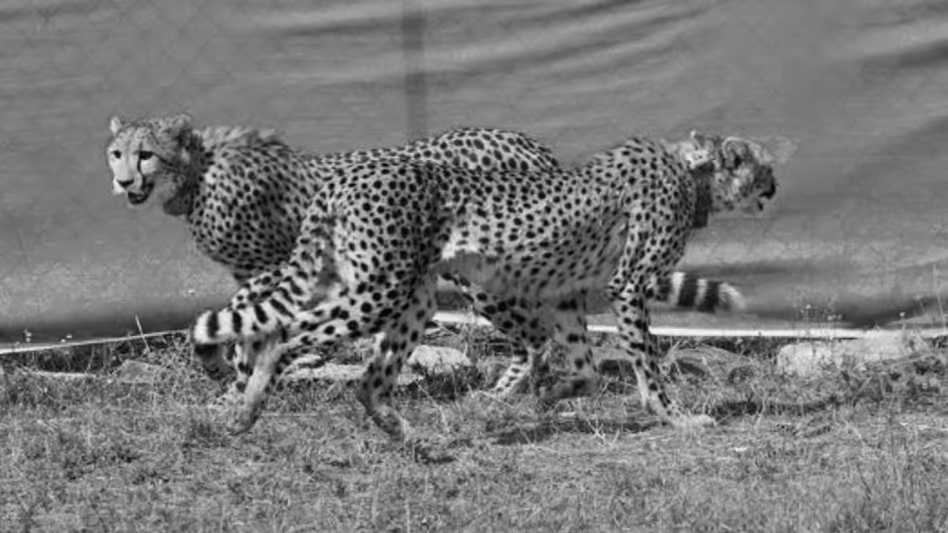
Nine more cheetahs from Botswana arrive at Kuno National Park, India’s population reaches 48
Nine cheetahs from Botswana arrived safely at Kuno National Park (KNP) on Saturday, raising India’s total population of the big cats to 48 and marking another milestone in the country’s ambitious cheetah revival programme under Project Cheetah . This latest translocation is part of a four-year government initiative aimed at restoring a species that became extinct in India nearly seven decades ago.
The nine new arrivals - six females and three males - were flown to Gwalior on an Indian Air Force (IAF) aircraft before being transported to Kuno by helicopter. Union Environment, Forest and Climate Change Minister Bhupender Yadav released the cheetahs into specially prepared quarantine enclosures, where they will remain for about a month for health monitoring, stress assessment, feeding management, and acclimatisation to the local prey and climate. Once cleared, the animals will be fitted with GPS satellite collars to track their movements after release into larger areas of the park.
This is the third batch of African cheetahs brought to India, following previous consignments from Namibia in September 2022 and South Africa in February 2023. Project officials emphasise that sourcing cheetahs from multiple countries ensures genetic diversity , a critical factor for long-term population viability. Currently, three cheetahs have been relocated to Gandhi Sagar Wildlife Sanctuary to spread the population across habitats and reduce disease risk.
Since 2023, 39 cubs have been born at Kuno, of which 27 have survived . Between February 7 and 18 this year, nine cubs were born in two litters. Notable breeders include Namibia-born Jwala and Aasha, South Africa-born Gamini, Veera and Nirva, and India-born Mukhi. Female Gamini has recently given birth to her fourth cub, reinforcing the park’s ongoing breeding success.
Officials noted that endangered animals are typically not concentrated in a single habitat to prevent the risk of disease outbreaks. The Madhya Pradesh government disclosed that around ₹1.27 crore was spent on goat meat for cheetahs during 2024‑25 , averaging ₹35,000 per day. Some cheetahs have also ventured beyond Kuno, with a sub-adult known as KP‑2 recently crossing into Rajasthan’s Baran district , highlighting the need for coordinated inter-state wildlife management.
In addition to cheetahs, a forest owl, unseen for 113 years , was recently recorded in the park, demonstrating the growing biodiversity. The government aims to establish a self-sustaining cheetah population of at least 50 in the near term and expand across around 17,000 square kilometres by 2032, with future plans including a conservation breeding centre in Gujarat’s Banni grasslands .