
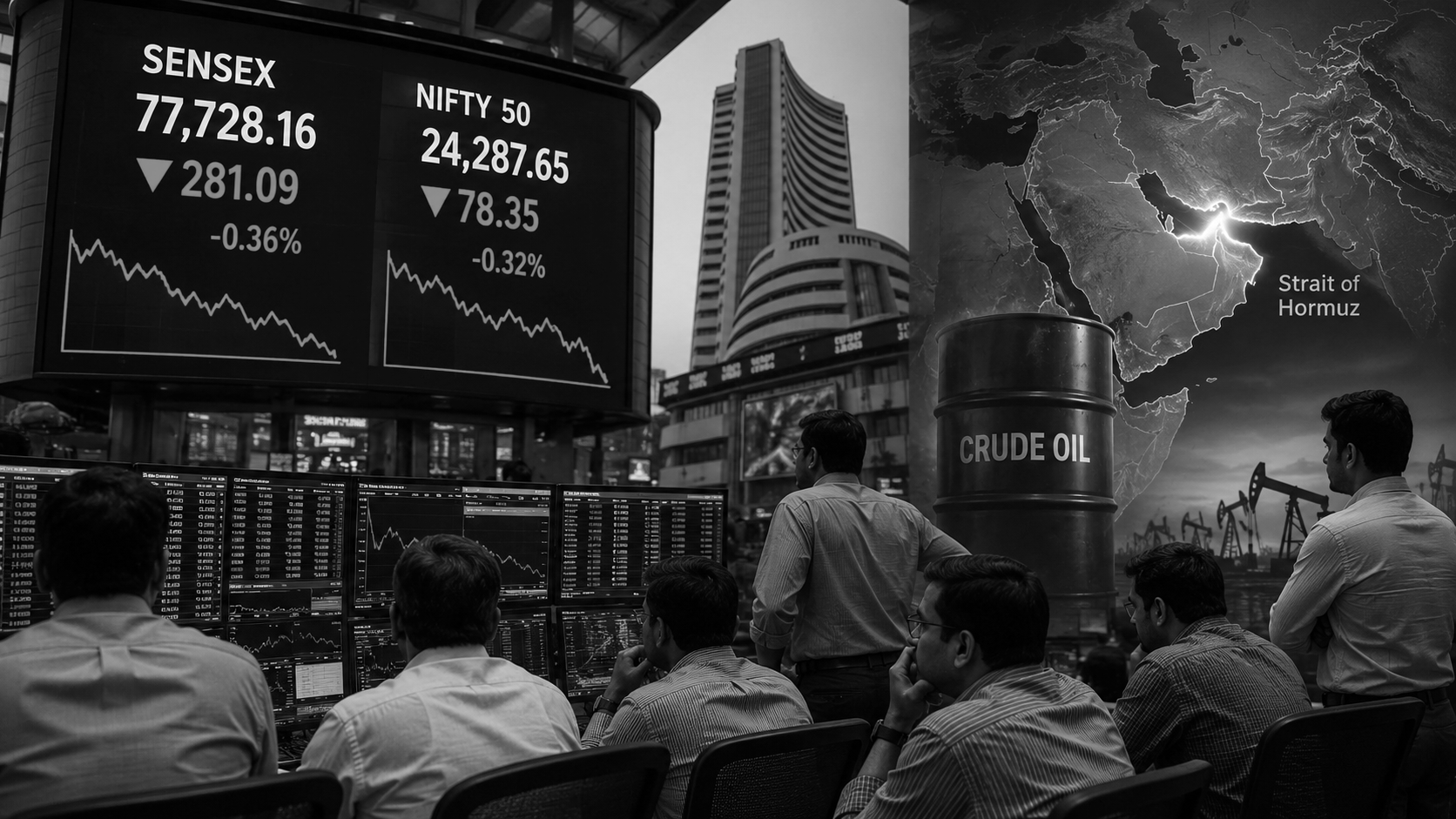
Nifty Extends Losing Streak to 5 Days as Crude Nears $90; Sensex Falls 281 Points
Indian equities extended their slide on Monday as elevated crude prices and US-Iran tensions kept investors cautious. The Sensex fell 281.09 points, or 0.36 per cent, to 77,728.16, while the Nifty dropped 78.35 points, or 0.32 per cent, to 24,287.65, marking its fifth consecutive losing session. Brent crude rose about 1 per cent to around USD 89.50 a barrel.
The Strait of Hormuz remains the central risk. Slower shipping through the energy corridor and stalled efforts to restore traffic have sustained a geopolitical premium in oil. For India, prolonged prices near USD 90 could increase the import bill, pressure the rupee and complicate the inflation outlook. A weaker currency can further raise the cost of dollar-priced energy.
Higher oil also threatens corporate margins. Airlines, paints, chemicals, logistics and other fuel-intensive businesses face rising input costs. Companies may absorb costs or pass them to consumers. Oil producers and commodity-linked businesses can benefit, creating scope for sector rotation.
Foreign institutional investor flows remain a key market signal. Although foreign investors bought Rs 508.12 crore of equities on Friday, analysts say lower crude, rupee stability and sustained earnings are needed to accelerate inflows.
Global cues are mixed. Asian markets in Japan, Shanghai and Hong Kong finished higher on Monday, while European markets were mixed. US equities had ended lower on Friday, keeping investors focused on global growth, policy and geopolitics.
Analysts expect near-term volatility and consolidation if tensions and oil prices remain elevated. Limited domestic catalysts could amplify moves. Investors may favour financially stronger, domestic-demand companies, and avoid fuel-intensive sectors.
The key upside trigger would be progress between Washington and Tehran and a sustained Hormuz reopening. That could lower oil, ease inflation concerns, revive FII appetite and support Indian equities. Until then, the market is likely to remain sensitive to every move in crude and geopolitical headlines, with traders also watching the rupee, global bond yields and expectations for US interest-rate policy, as investors assess the durability of corporate earnings and domestic demand.