
NHRC Pushes Rights-Based Reforms, Timely Wages For Migrant Workers
The National Human Rights Commission (NHRC) on Wednesday called for systemic reforms , timely payment of wages and stronger implementation of labour laws to safeguard migrant workers, while stressing that policy creation alone is insufficient without effective execution on the ground.
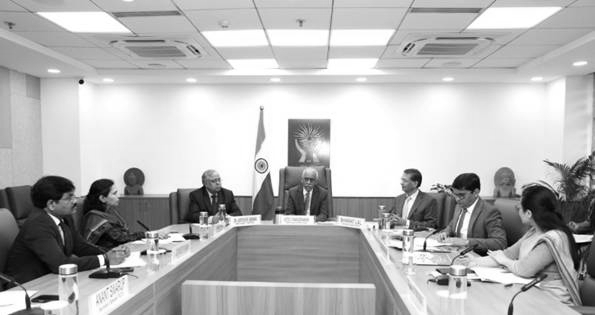
The recommendations emerged during a core group meeting on “Protecting Migrant Workers' Rights: Shared Responsibility of Government and the Private Sector” held in hybrid mode in New Delhi, attended by government officials, industry representatives, labour experts and international organisations.
Chairing the meeting, Justice V. Ramasubramanian said migrant workers face greater vulnerabilities because most belong to the unorganised sector and often struggle with language barriers, unstable housing and lack of organised support systems. He said India already has strong labour laws, including protections for migrant workers since 1979, but implementation gaps continue to persist.
He stressed the need to move from a compliance-based framework to a rights-based approach , with stronger interstate coordination, portable social protection and stricter enforcement of labour laws. He also suggested involving linguistic identity-based associations in coordination mechanisms to improve outreach and communication with workers.
NHRC member Justice (Dr.) Bidyut Ranjan Sarangi said delayed wages defeat the very purpose of migration for employment and called for adequate wages, housing, healthcare and educational facilities for workers and their families.
Secretary General Bharat Lal noted that nearly 28.9 per cent of India’s population consists of migrant workers contributing significantly to the economy. Referring to hardships during the COVID-19 pandemic, he raised concerns over exploitation by contractors and underpayment of outsourced workers. He also praised the One Nation One Ration Card scheme while stressing the need to bridge gaps between laws and implementation.
Participants proposed several measures, including a national migrant workers’ dashboard, integration of e-Shram data with welfare schemes, multilingual grievance systems, Environmental, Social and Governance (ESG)-linked incentives for companies ensuring worker welfare and mandatory contractor-level compliance declarations on wages, safety and housing.
Experts also recommended structured pre-departure orientation programmes in high-migration districts, migrant-sensitive urban planning, real-time migration databases and portability of healthcare, insurance and welfare benefits across states.
The Commission said it will further examine the suggestions before finalising its recommendations to the Union and state governments.