
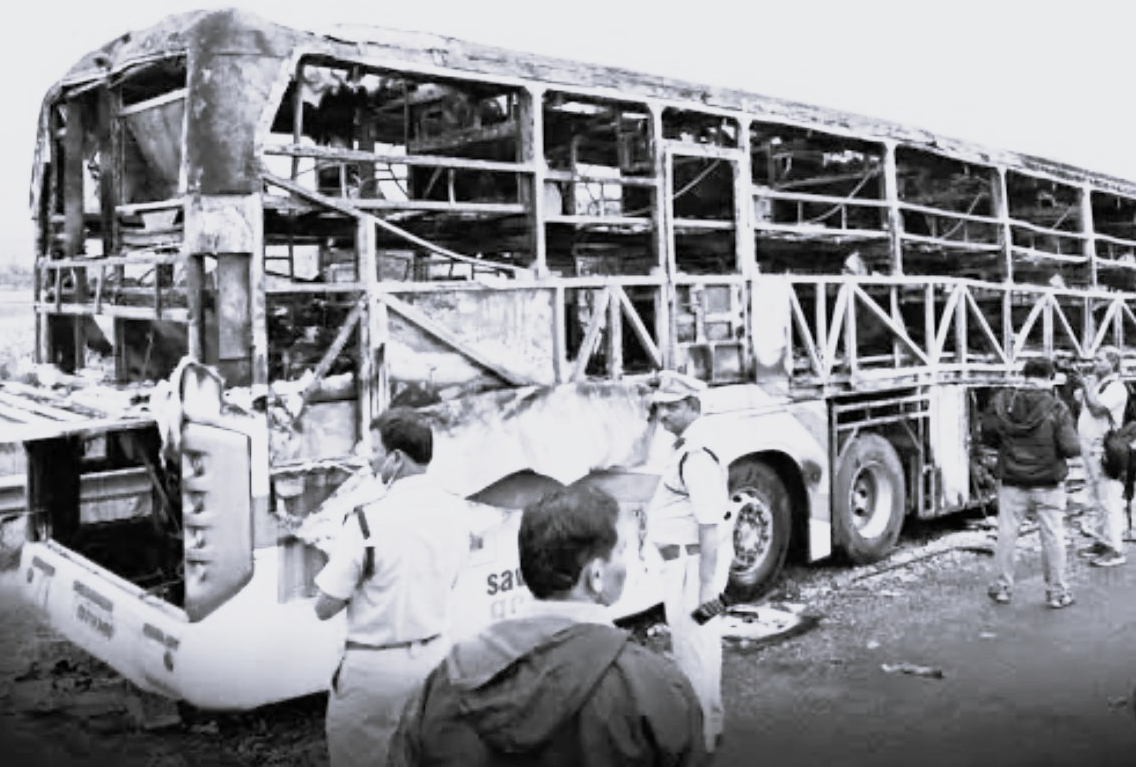
NHRC orders removal of unsafe sleeper buses following fire incidents
The National Human Rights Commission (NHRC) has initiated strong action against safety lapses in sleeper buses after repeated incidents of buses catching fire mid-journey, resulting in preventable deaths. The intervention comes amid a series of such incidents across the country, including recent fire outbreaks involving Delhi Transport Corporation (DTC) buses one CNG and two electric which prompted Delhi Transport Minister Pankaj Kumar Singh to convene a review meeting on November 24. Citing the urgency of the situation, NHRC Member Priyank Kanoongo has directed all state Chief Secretaries to remove sleeper buses that violate safety norms and ensure strict compliance with regulatory standards.
The NHRC’s action follows a complaint highlighting a serious design flaw in certain public transport buses. According to the complainant, the driver’s cabin in some sleeper buses is completely separated from the passenger compartment, delaying the detection of fires and hindering communication during emergencies. This design, the complaint argued, amounts to a violation of Article 21 of the Constitution, which guarantees the right to life, and reflects systemic negligence by bus manufacturers and approving authorities. The complaint sought urgent intervention to mandate design improvements, ensure accountability, and provide compensation to victims and their families.
Exercising its powers under Section 12 of the Protection of Human Rights Act, 1993, the NHRC directed its registry to issue notices to the Secretary, Ministry of Road Transport and Highways (MORTH) and the Director, Central Institute of Road Transport (CIRT), Pune. Both were instructed to investigate the allegations and submit an Action Taken Report (ATR) within two weeks.
In compliance, the Director of CIRT submitted a report dated November 3, 2025, summarising the findings of a technical investigation conducted at the request of the Rajasthan Transport Department. The investigation, which began on October 18, identified multiple shortcomings in bus body construction that violated the Central Motor Vehicles Rules (CMVR). These findings were formally conveyed to the Rajasthan Transport Department for further action.
MORTH has already notified comprehensive safety standards for bus construction and operation. Automotive Industry Standard (AIS):052 governs general bus body building, while AIS:119, applicable specifically to sleeper buses, outlines stringent measures to enhance emergency preparedness. Key provisions under AIS:119 include:
• Prohibition of driver partitions, ensuring the driver can monitor passenger safety and respond quickly during emergencies.
• A requirement for four emergency exits in buses up to 12 metres long and five exits in longer buses, facilitating swift evacuation.
• Mandatory installation of Fire Detection & Suppression Systems (FDSS) since 2019 to allow early identification and automatic suppression of fires.
Strict enforcement of these standards is expected to significantly improve passenger safety. With better evacuation routes, real-time visibility for drivers, and early fire control, the risk of casualties during emergencies is substantially reduced.
Through its intervention, the NHRC aims to close longstanding safety gaps, reinforce regulatory accountability, and safeguard the fundamental rights of passengers across India.