
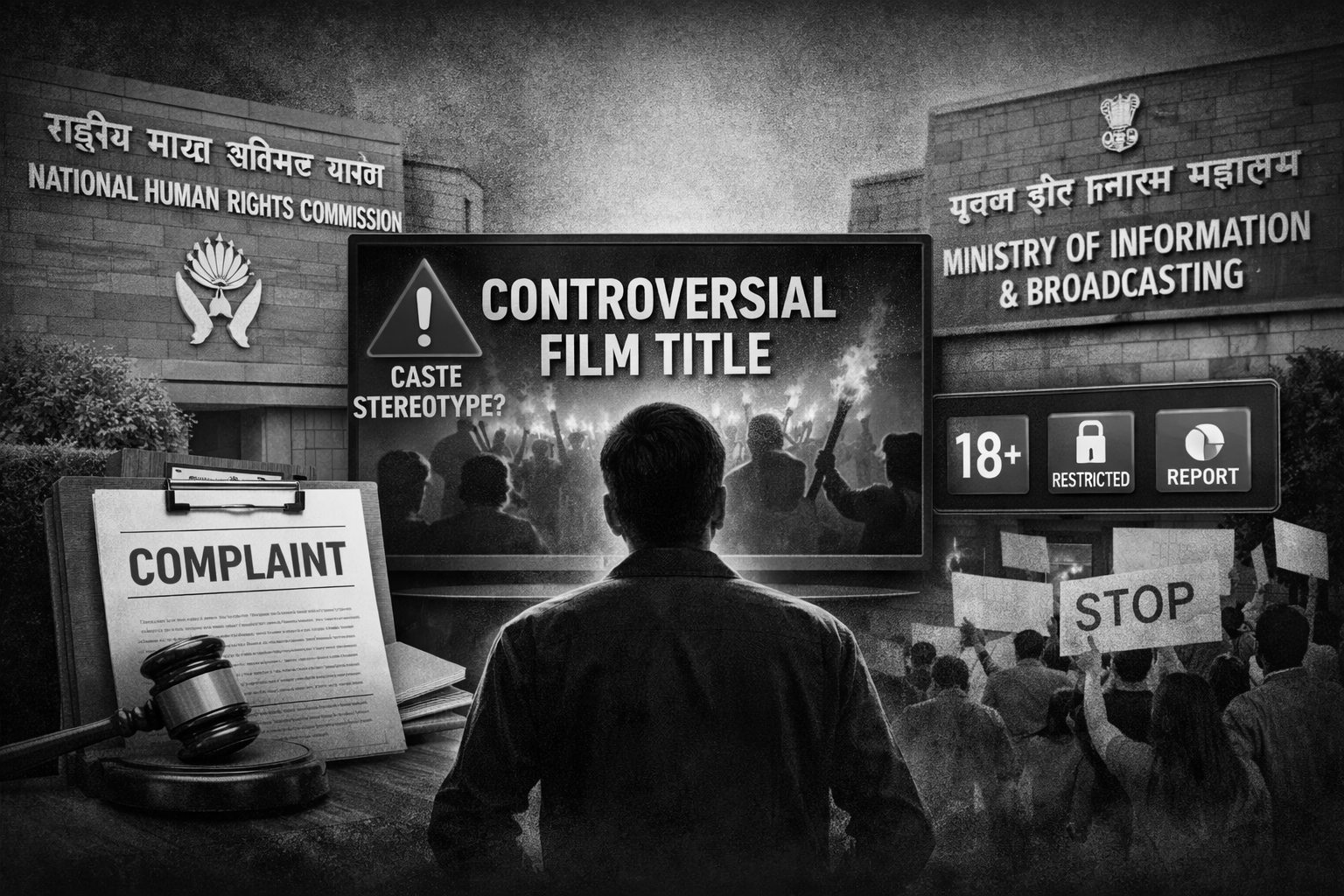
NHRC Notice Over Film Title Puts Spotlight on Caste Sensitivity in OTT Content
The National Human Rights Commission (NHRC) has taken cognisance of a complaint alleging that the title of an upcoming Netflix film promotes caste-based stereotyping and demeans a recognised social group, bringing renewed attention to the debate over regulation of OTT platforms in India. Acting under the Protection of Human Rights Act , the Commission issued a notice to the Ministry of Information and Broadcasting , directing it to examine the allegations and submit an action taken report within two weeks. The complaint contends that the film’s title associates a particular caste identity with corruption and immoral behaviour, thereby reinforcing negative stereotypes , encouraging social hostility , and undermining the dignity of the community concerned. Netflix had not issued an immediate response at the time the matter came under scrutiny.
The case highlights a broader pattern where films, OTT series, or remarks by entertainment personalities have triggered legal complaints , protests, and police cases over alleged casteist or discriminatory portrayals . In 2025, at least two prominent episodes reflected similar sensitivities. The biographical film Phule , based on social reformers Jyotirao and Savitribai Phule, generated objections and public debate over caste representation, drawing media attention and protests from sections who felt certain portrayals were objectionable. In another instance, filmmaker Anurag Kashyap faced multiple complaints, including a reported police case, over alleged casteist remarks made during discussions linked to that controversy. Alongside these high-profile incidents, several individual complaints and online petitions were reported during the year concerning perceived community insults in digital content, underscoring a rising trend of public and legal scrutiny of entertainment material.
These recurring disputes have intensified discussions around the proposed Broadcasting Services (Regulation) Bill , which seeks to bring OTT platforms under a more structured regulatory framework similar to television broadcasting. The draft legislation envisions formal content codes , age-classification systems, and internal compliance mechanisms within streaming services, potentially requiring platforms to establish review processes to ensure content does not violate norms related to discrimination or hate portrayal. Supporters argue such a framework could introduce pre-release accountability and a clearer grievance redress system, replacing today’s fragmented approach where complaints move through courts, police, self-regulatory bodies, or rights commissions. Critics, however, warn that defining stereotypes, satire, or fictional portrayals remains subjective and that tighter oversight could raise concerns over creative freedom and censorship .
Experts note that while legislation can streamline procedures and clarify responsibilities, it cannot fully eliminate controversies rooted in social identity and cultural perception. Laws may regulate process and compliance, but public reactions to perceived misrepresentation are often emotional and deeply contextual. The current NHRC notice thus reflects not only an immediate dispute over representation but also a larger policy crossroads, as India continues to balance artistic expression, legal accountability, and social sensitivity in its rapidly expanding digital entertainment landscape.