
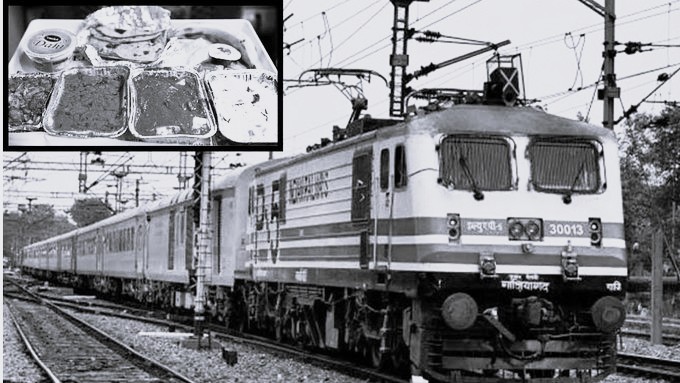
NHRC issues notice to Railways over halal-only meat allegations
The National Human Rights Commission (NHRC) has issued a notice to the Indian Railways following a complaint alleging that only halal-processed meat is being served on trains, a practice claimed to constitute unfair discrimination and violation of human rights.
The complaint, filed by Sunil Ahirwar from Bhopal, argued that the policy excludes people from Hindu Scheduled Caste communities and other non-Muslim groups who traditionally work in the meat trade, thereby affecting their livelihood rights. The complainant also contended that passengers from Hindu and Sikh communities are denied food choices in line with their religious beliefs, potentially infringing upon their constitutional rights to equality, non-discrimination, freedom of profession, dignity, and religious freedom under Articles 14, 15, 19(1)(g), 21, and 25.
Citing judicial precedents including Olga Tellis (1985), Indian Young Lawyers Association (2018), State of Karnataka v. Appa Balu Ingale (1995), and NHRC v. State of Gujarat (2009), the complaint called for urgent NHRC intervention.
The NHRC, presided over by member Priyank Kanoongo, has taken cognisance of the complaint under Section 12 of the Protection of Human Rights Act, 1993. Observing that the allegations prima facie suggest human rights violations, the Commission has directed the Chairman of the Railway Board, New Delhi, to investigate the matter and submit an action taken report within two weeks.
The NHRC emphasized that, as a government agency, Indian Railways must uphold the right of passengers to food choice according to their religious beliefs, reflecting the secular principles of the Constitution. It also noted that policies affecting livelihoods of marginalized communities, such as Hindu Dalits engaged in meat trade, require careful consideration to prevent indirect discrimination.
Experts suggest that the outcome of this case could set a precedent for other government-run institutions, including schools, hospitals, and canteens, to review policies for inclusivity and secularism, ensuring services are non-discriminatory and respectful of all religious practices. Institutions may also adopt measures to protect livelihood rights and avoid policies that disadvantage specific communities.
No immediate response has been received from the Railway authorities. The NHRC’s intervention underscores its role in monitoring and safeguarding human rights, ensuring that public services align with constitutional values of equality, non-discrimination, freedom of religion, and protection of livelihood.