
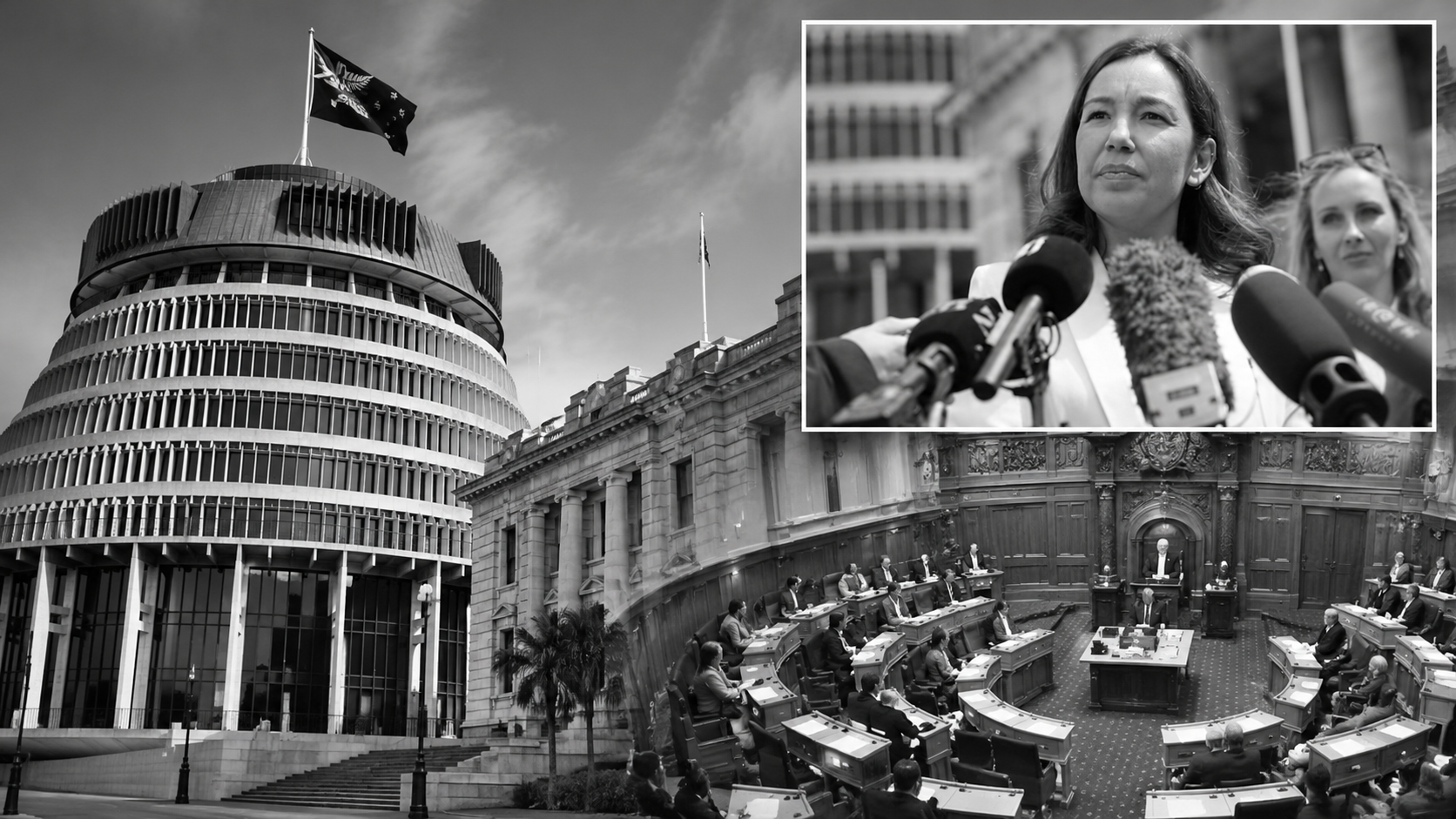
New Zealand Election Deadlock Puts Centrist Party in Kingmaker Role
New Zealand's Prime Minister Christopher Luxon faces difficult coalition negotiations after the final election results left his National-led alliance one seat short of a parliamentary majority, making the newly elected centrist Opportunity Party the potential kingmaker in determining the country's next government. The Electoral Commission's official results, released on Friday after counting special votes, showed that neither the ruling right-wing coalition nor the Labour-led opposition secured the 66 seats required to govern independently, raising the possibility of prolonged negotiations and a potential fresh election if no agreement is reached.
The National Party secured 40 seats in the 130-member Parliament, while its partners ACT and New Zealand First won 13 and 12 seats, respectively, taking their combined strength to 65. The opposition bloc, led by Chris Hipkins, secured 58 seats, comprising Labour's 36, the Greens' 17 and Te Pāti Māori's five. The remaining seven seats went to Opportunity, led by 38-year-old political newcomer Qiulae Wong.
Luxon has indicated his willingness to negotiate with Opportunity, reversing his pre-election position of ruling out an alliance. Wong has kept open the possibility of a formal coalition or a confidence-and-supply arrangement, under which her party could support key government legislation without joining the Cabinet.
However, negotiations face significant policy differences. Opportunity's five key demands include stronger competition regulations to address supermarket market concentration, political transparency, a 10-year healthcare plan, restrictions on bottom-trawling and stronger climate commitments. Its opposition to New Zealand First leader Winston Peters continuing as foreign affairs minister could create another obstacle to an agreement, alongside disagreements with ACT and New Zealand First over environmental policies.
The final count incorporated 484,865 special votes, including overseas ballots, representing 16.5 per cent of all votes cast. National lost two seats from its election-night tally, while the Greens gained one. Labour received 29.88 per cent of the party vote, ahead of National's 28.35 per cent, but National secured more parliamentary seats through electorate victories. The result also includes a 10-seat overhang under New Zealand's Mixed Member Proportional electoral system, taking Parliament beyond its usual 120 members to 130.
A Labour-led alternative remains mathematically possible only with additional support. Labour, the Greens, Te Pāti Māori and Opportunity together have 65 seats, while including New Zealand First would raise the total to 77, recalling its participation in a Labour-led government in 2017.
The election recorded 77.2 per cent turnout, with youth enrolment at 72.8 per cent. Parliament must meet by January 14, 2027. If negotiations fail, another election remains a possibility.