
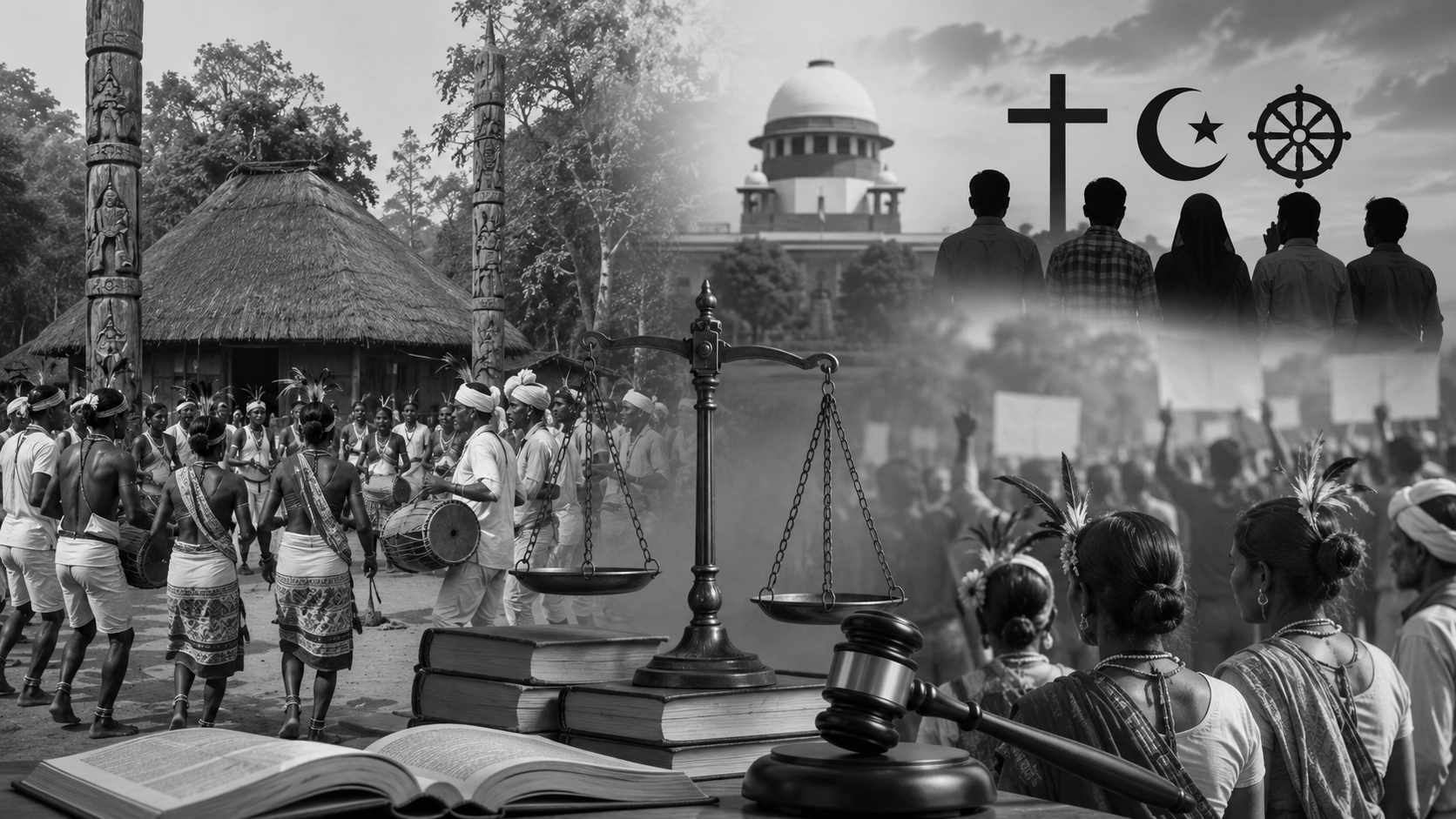
New Push on ST Eligibility Revives India's Reservation-Conversion Controversy
The demand by the RSS-linked Janjati Suraksha Manch to review the eligibility of converted tribal individuals for Scheduled Tribe (ST) reservations has once again brought the long-standing debate over reservation policy and religious conversion into the national spotlight. The issue, which has shaped legal, political and social discourse for decades, remains one of the most sensitive subjects in Indian public life.
The debate gained fresh attention after a 27-member delegation of the Janjati Suraksha Manch met Prime Minister Narendra Modi and President Droupadi Murmu , seeking a legal definition of Scheduled Tribes and constitutional changes to delist individuals who, after religious conversion, no longer follow traditional tribal faith, customs and cultural practices.
At the heart of the controversy lies the question of whether affirmative action benefits should be linked solely to social disadvantage or also to the preservation of cultural and community identity. India's reservation system was introduced to address historical discrimination faced by Scheduled Castes (SCs) , Scheduled Tribes (STs) and other disadvantaged groups. However, the relationship between caste, tribe and religion has remained a matter of intense debate since Independence.
For Scheduled Castes, the Constitution (Scheduled Castes) Order, 1950 restricts eligibility to Hindus, later extended to Sikhs and Buddhists. Christians and Muslims are excluded from SC reservations. The issue gained renewed relevance after a recent Supreme Court ruling reaffirmed that conversion to religions outside these categories results in the loss of Scheduled Caste status under the existing legal framework.
The situation is more complex for Scheduled Tribes. Unlike SC status, ST recognition is not directly linked to religion. Courts have generally viewed tribal identity through ancestry, customs, traditions and community acceptance rather than faith alone. This distinction has fuelled competing interpretations over whether converted tribal individuals should continue receiving reservation benefits.
Supporters of delisting argue that reservations were intended to protect tribal communities and their unique cultural heritage. Opponents, including tribal rights activists and Christian organisations, maintain that social and economic disadvantages often persist even after conversion and that removing benefits could undermine constitutional guarantees of equality and religious freedom.
With tribal communities playing a significant role in electoral politics across several states, the debate extends far beyond legal interpretation. As demands for policy changes intensify, the intersection of reservation , religious conversion , tribal identity and constitutional rights is likely to remain a politically charged issue with far-reaching implications for India's social justice framework.