
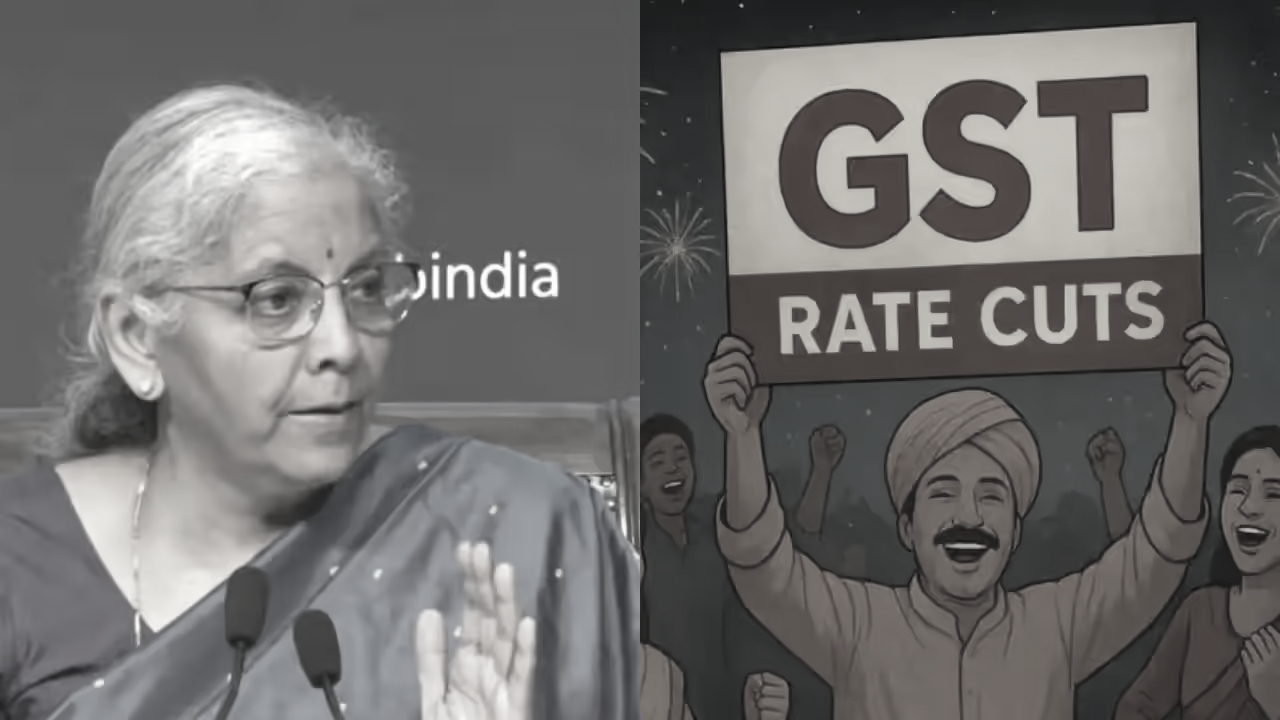
New GST rates, no bailout for states, everyone in same boat
Union Finance Minister Nirmala Sitharaman has clarified that the latest Goods and Services Tax (GST) rate cuts will impact both the Centre and states equally, and there will be no separate compensation to states for potential revenue losses. Speaking at a BJP-organized discussion on “Next Gen GST” reforms in Kolkata, she stressed that the GST Council operates on equality, with no “donor-donee” relationship between the Centre and states.
Sitharaman explained that under the current GST structure, the Centre and states share revenues roughly 50-50. However, after devolution, nearly 41 percent of the Centre’s share flows back to states, leaving the Centre with only about 23 percent. “If revenue falls, it affects the Centre as much as the states,” she said, highlighting that both are equally accountable for GST decisions.
The discussion comes amid opposition parties pushing for compensation to states for losses from GST rationalisation. Some states had expressed concerns about revenue shortfalls after the rate cuts were proposed. Sitharaman said she assured them that the GST framework is designed to share outcomes fairly, without creating winners or losers.
Beyond the immediate impact, the Finance Minister pointed out that past misclassification of items and “gaming of the system” had led to revenue leaks,for instance, differently taxing salted and sugary popcorn. The current reforms aim to eliminate such loopholes.
Sitharaman also emphasized the broader economic benefits of the rate cuts. GST 2.0, she said, is expected to inject around Rs 2 lakh crore into the economy, stimulating demand and benefiting India’s entire 140 crore population. The reforms, which take effect from September 22, are being positioned as a significant modernization of the GST system, simplifying compliance, reducing distortions, and boosting economic growth.
While some criticism remains from states worried about immediate revenue impacts, the Finance Minister expressed gratitude to state finance ministers for cooperating and highlighted the long-term gains for all stakeholders. Analysts note that by sharing the burden equally, the GST Council avoids a “bailout culture” and encourages states to focus on efficiency and compliance rather than expecting extra compensation.
In essence, these reforms are not just about rate cuts,they are a strategic effort to make GST more transparent, equitable, and growth-oriented, aligning with India’s larger economic objectives. Both Centre and states will have to navigate this shared responsibility carefully to ensure the intended benefits reach businesses and citizens alike.