
New Dinosaur Discovered in Thailand: Nagatitan Is Southeast Asia's Largest Ever
It started with a Thai villager noticing strange-looking rocks by a pond. It ended, a decade later, with the largest dinosaur ever discovered in Southeast Asia.
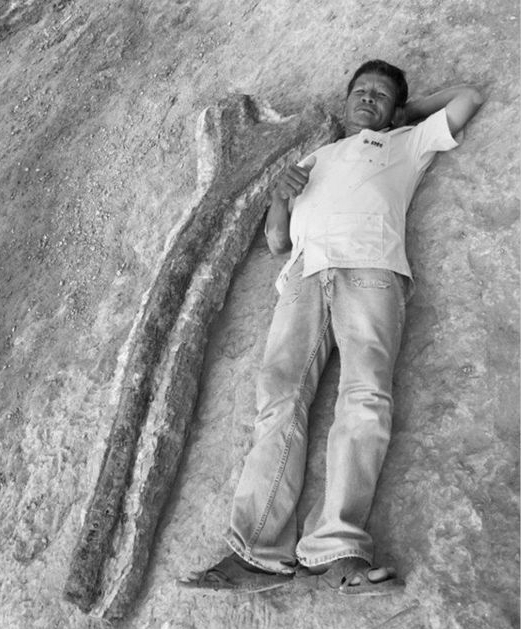
In 2016, a local man named Thanom Luangnan spotted unusual rocks protruding from the banks of a public pond in Chaiyaphum Province , northeastern Thailand, and reported the find to Thailand's Department of Mineral Resources. Those rocks were the fossilised bones of a 113-million-year-old giant. Initial excavations began but had to stop completely when funding ran out in 2019. Once new funding was secured, the dig restarted in 2024.
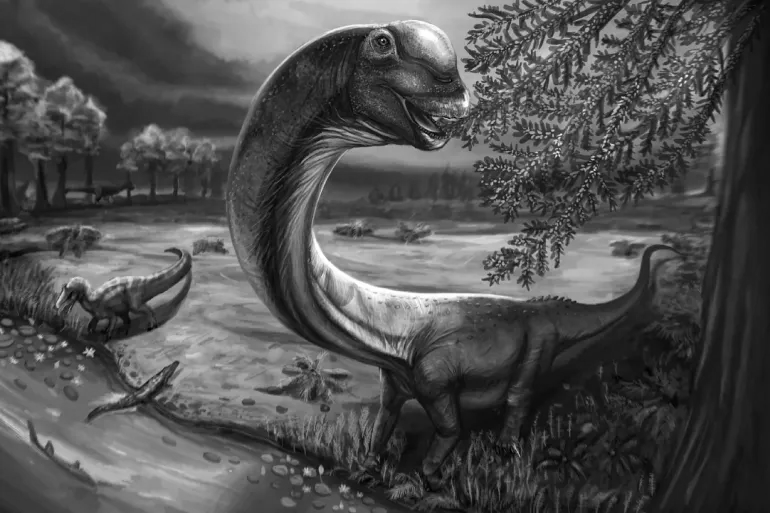
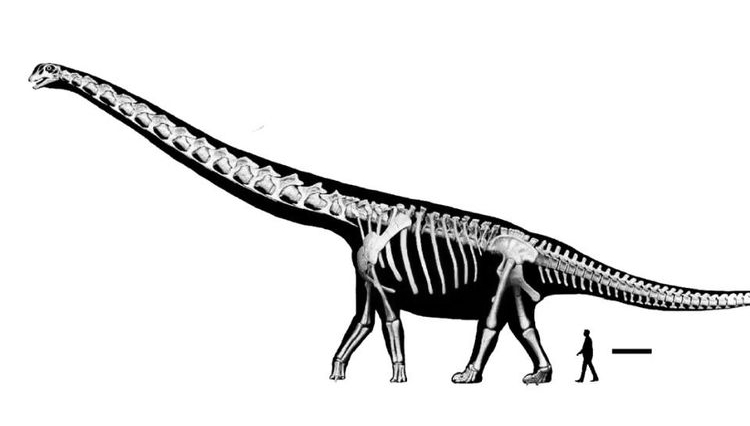
The creature has now been formally named Nagatitan chaiyaphumensis , published May 14 in the journal Scientific Reports and is the largest-known dinosaur from Southeast Asia. A sauropod defined by its long neck, long tail, small head and four columnar legs, it stretched 27 metres (89 feet) and weighed approximately 27 tonnes , equivalent to nine adult Asian elephants, or roughly the length of three city buses. For scale, a T. rex weighed less than a quarter of that.
The name fuses local mythology and geography, "Naga" references the serpent-like being from Southeast Asian folklore often associated with water, fitting for a creature found beside a pond; "titan" invokes Greek giants; and "chaiyaphumensis" marks the province of its discovery.
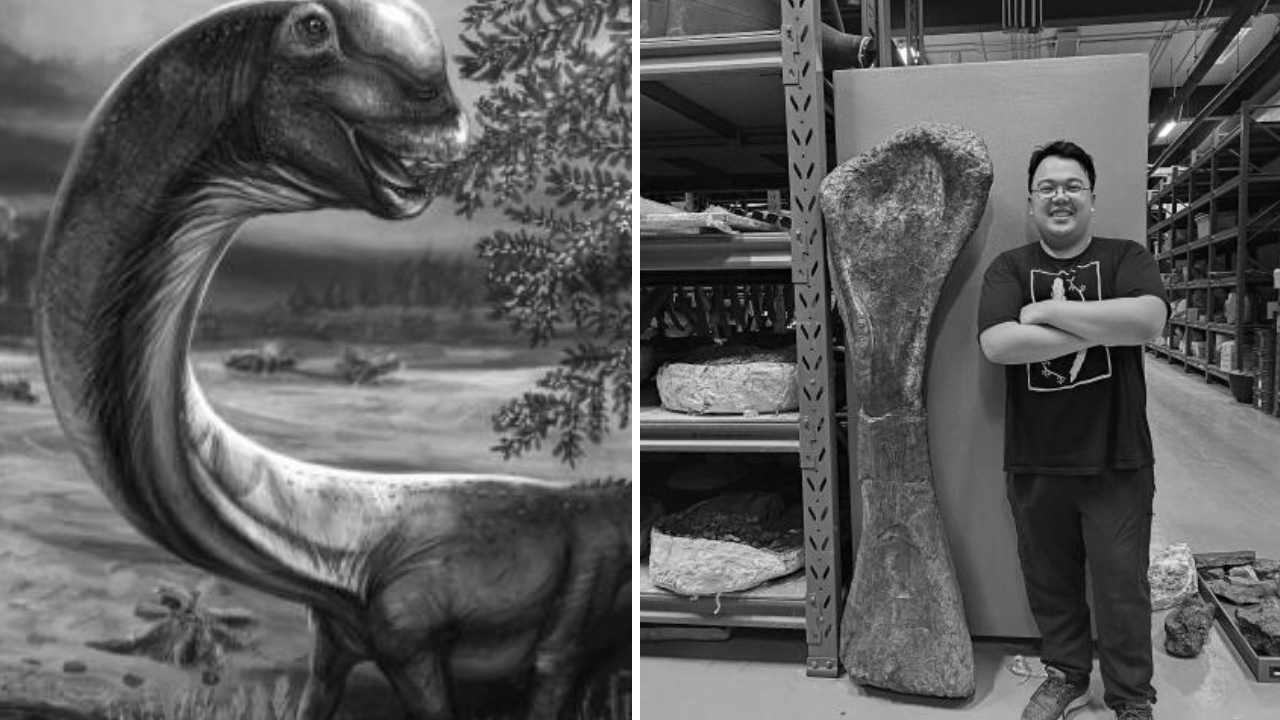
Lead researcher Thitiwoot Sethapanichsakul , a Thai PhD student at University College London , recalled the moment he first saw the front leg bone at the Sirindhorn Museum: "When I first laid eyes on the humerus, it was taller than me, and that was quite surprising." That single bone measured 1.78 metres, nearly six feet , in length. Researchers don't have the full skeleton, but the spine, ribs, pelvis and leg bones recovered were enough. Independent paleontologist Pedro Mocho of the Universidade de Lisboa called it "the most complete sauropod specimen discovered from the Khok Kruat Formation", significant because large Thai dinosaurs had previously been known only from fragments.
During Nagatitan's time, Thailand was closer to the equator, covered by open, slightly dry shrublands in a global hothouse climate, conditions that recent research suggests actively drove sauropod gigantism. Rivers teemed with crocodiles, freshwater sharks and fish. The largest predator in the ecosystem was a relative of Carcharodontosaurus , about 26 feet long and 3.5 tonnes. "At that size, it was dwarfed by Nagatitan. At full size, Nagatitan likely had very little to fear," Sethapanichsakul said.
The discovery carries a bittersweet finality. Sethapanichsakul calls it "the last titan" because it was found in Thailand's youngest dinosaur-bearing rock formation. The region subsequently became a shallow sea, meaning no further large sauropods will likely ever be found in Southeast Asia. It is the 14th named dinosaur from Thailand, a country that only entered paleontology in 1986. Thailand is now considered possibly the third most fossil-abundant country in Asia .
A life-size reconstruction stands today at Bangkok's Thainosaur Museum , and a research centre has been established at the original dig site.