
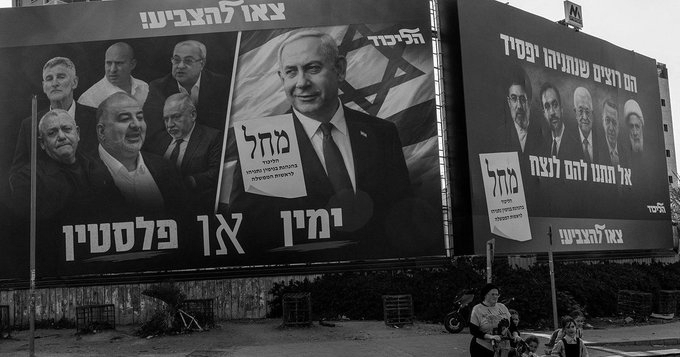
Netanyahu Faces Toughest Test Yet As Israel Heads To Polls Amid War, Anger And Trump’s Backing
Israel heads to the polls on Tuesday, October 27, with Prime Minister Benjamin Netanyahu facing a crucial test of his leadership after years of war, mounting domestic criticism and growing questions over his government’s handling of security failures. The election, the first since the Hamas-led October 7, 2023, attack, could determine whether Netanyahu remains in power or a divided opposition can assemble a new government.
Netanyahu’s Likud party is competing against several challengers, including former military chief Gadi Eisenkot, former prime ministers Naftali Bennett and Yair Lapid, former defence minister Avigdor Lieberman and opposition leader Yair Golan. Five opposition figures have agreed to avoid attacking one another during the campaign, seeking to improve their chances of ending Netanyahu’s rule. However, the opposition is split among separate parties and alliances, making coalition-building difficult.
Polling averages published by Reuters, based on data available up to October 20, suggested anti-Netanyahu parties could win around 62 seats in the 120-member Knesset, although neither camp has a guaranteed path to the 61 seats needed for a majority. Smaller parties and the final distribution of seats could prove decisive.
A central issue is accountability for the October 7 attack, in which around 1,200 people were killed and 251 taken hostage, according to figures cited in the campaign coverage. Netanyahu has resisted calls for an independent state commission of inquiry into the security failures. Eisenkot has pledged to pursue an investigation. The former general, who lost his son and two nephews in the Gaza war, has presented himself as a leader who could restore public trust.
The election also reflects disputes over military service, religion and democracy. Netanyahu’s coalition relies on ultra-Orthodox parties that oppose ending exemptions for yeshiva students, even as repeated reserve call-ups have intensified pressure on the military. His 2023 judicial overhaul triggered mass protests, while concerns over the economy and the funding of religious institutions have added to public frustration. The question of a Palestinian state has received comparatively little attention, with the main political camps offering limited differences on settlements and the peace process.
In northern Israel, Kiryat Shmona, a longstanding Likud stronghold, illustrates the strain on Netanyahu’s support. The city was evacuated during fighting with Hezbollah, and many shops remain closed. Although officials say nearly 80 per cent of its 22,000 residents have returned, some locals estimate the figure is closer to half. Renewed Hezbollah attacks in March after the US-Israeli war against Iran further damaged confidence in promises to restore security. Some disillusioned Likud voters may switch to harder-right parties rather than the opposition.
Another potentially decisive factor is Arab voter turnout. Arab citizens make up about 21 per cent of Israel’s population, and pollsters have projected turnout of around 63 per cent, up from 56 per cent in 2022. Ra’am and the Joint List are running separately. Their seats or outside support could influence government formation, although opposition leaders remain reluctant to include Arab parties in a coalition. Rising crime and concerns over far-right policies are key issues for Arab voters.
An estimated 67,000 Israelis living abroad are expected to travel home to vote, many citing concerns over democratic backsliding, the October 7 failures and government policies in Gaza and the occupied West Bank. Their political preferences vary, so their overall impact remains uncertain.
US President Donald Trump has given Netanyahu a strong public endorsement, calling him a “warrior” prime minister and arguing that their partnership is needed to confront Iran. Netanyahu has used the backing to reinforce his security credentials. But the endorsement has not settled the domestic debate.
On Monday, Defence Minister Israel Katz denied reports of a clash between Netanyahu and military chief Eyal Zamir over possible action against Iran, insisting Israel had no plan to launch an attack before the election. Netanyahu called the reports false, while Lapid accused him of seeking escalation to postpone the vote. The allegation remains unproven.