
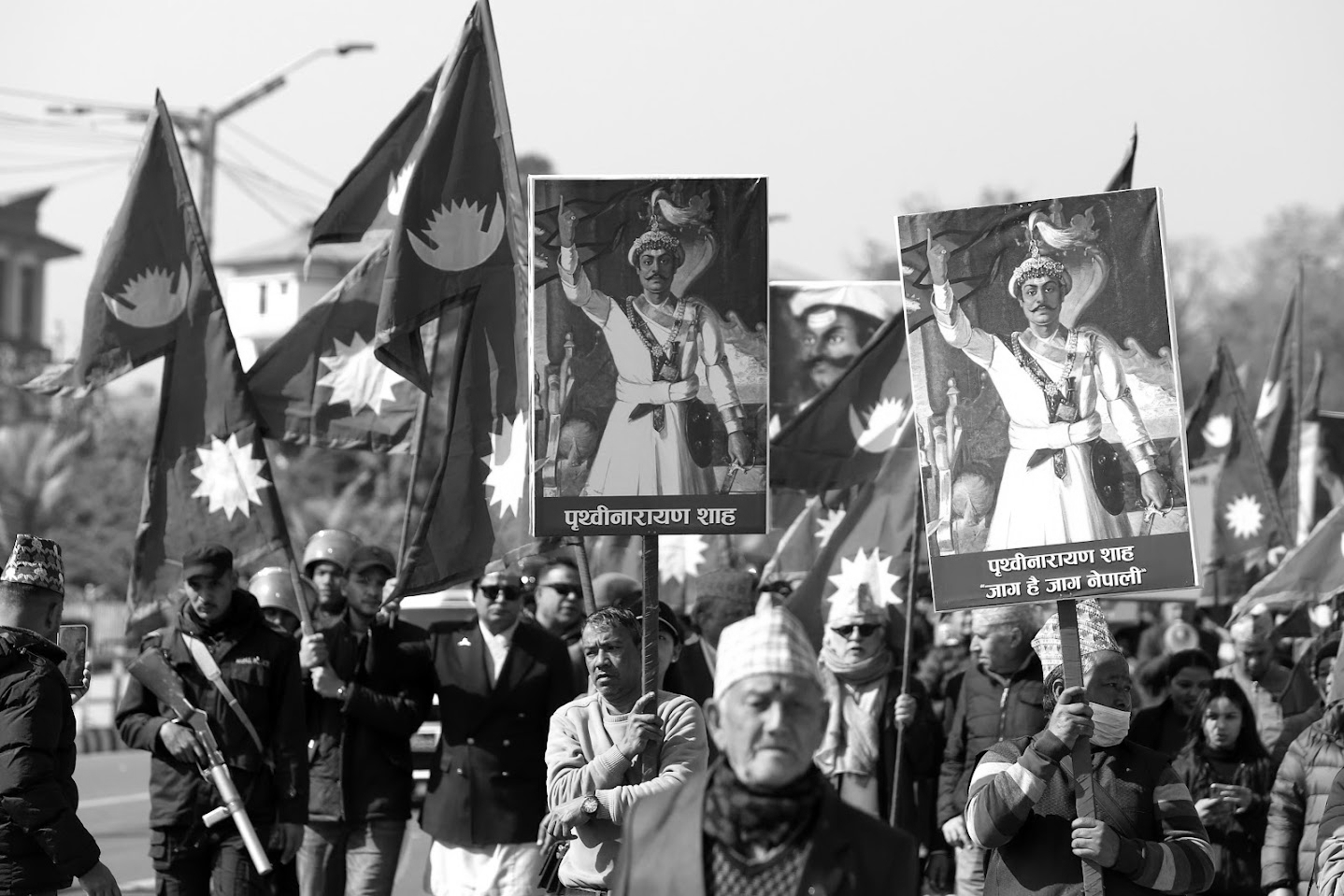
Nepalese royalists demand restoration of monarchy ahead of March elections
Supporters of Nepal’s deposed royal family rallied in the capital on Sunday, demanding the restoration of the monarchy ahead of parliamentary elections scheduled for March , amid continuing political uncertainty following youth-led protests last year .
Hundreds of demonstrators gathered around the statue of King Prithvi Narayan Shah , the 18th-century founder of the Shah dynasty , chanting slogans such as “We love our king” and “Bring back the king” . The rally marked the first major pro-monarchy mobilisation since violent Gen Z-led protests in September forced the collapse of the elected government and led to the installation of an interim administration .
Nepal abolished its 240-year-old monarchy in 2008 after a decade-long Maoist insurgency and sustained popular movements against royal rule . The last Shah king, Gyanendra , was forced to step down as the country was declared a republic .
Royalist supporters argue that the current political system has failed to deliver stability and good governance . “ The last and only alternative for this country is the monarchy ,” said protester Samrat Thapa , linking the demand for royal restoration to the unrest triggered by the youth-led Gen Z movement . He said the country needed a king to manage the situation following the protests.
Sunday’s rally coincided with the birth anniversary of Prithvi Narayan Shah . Similar events in the past have turned violent , with clashes between protesters and police . Two people were killed during a pro-king rally last March . However, Sunday’s gathering remained peaceful under heavy deployment of specially trained police units .
The Gen Z movement , driven largely by young activists mobilised through social media , erupted over corruption, unemployment, lack of opportunities and poor governance . The immediate trigger was a short-lived ban on social media imposed by the previous government, which protesters saw as an attack on freedom of expression . The unrest eventually led to the formation of an interim government .
The interim administration is headed by Nepal’s first woman prime minister, Sushila Karki , a retired Supreme Court judge . While her government has promised reforms , it has faced criticism from youth groups for moving slowly on corruption cases .
With elections approaching , Nepal remains politically polarised , as traditional parties, youth activists and royalist groups compete to shape the country’s future direction .