
Nepal signs 10-point deal with Gen-Z groups as internal divisions surface
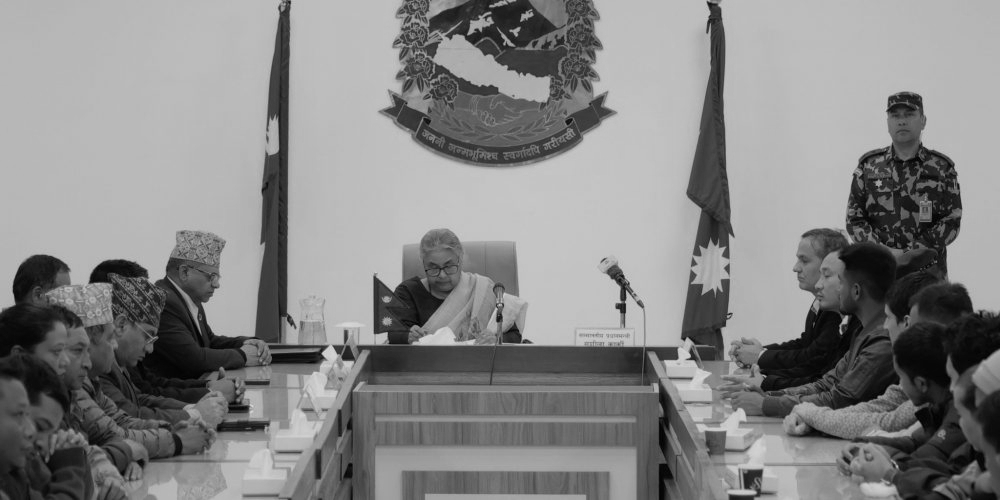
Representatives of the Gen-Z People’s Movement and the Interim Government of Nepal signed a 10-point agreement on Wednesday evening, even as widening fractures within the youth-led coalition became evident during the negotiations.
The deal was sealed at the Prime Minister’s Office between various factions of the movement, including the Gen-Z Movement Alliance, the Council of Gen-Z led by Sudan Gurung , the Gen-Z Front led by Rakshya Bom , and several splinter groups. However, disagreements flared as members questioned the rationale behind finalising the agreement in the absence of the President. Tensions escalated further when one opposing faction tore the draft document in protest shortly after it was signed.
Despite the discord, the accord outlines key commitments: honouring families of those killed in the protests, providing relief and medical support to the injured, and establishing commissions aimed at strengthening anti-corruption and accountability systems. The government has also agreed to form a high-level commission to investigate violent incidents that occurred during the recent demonstrations.
Interim Prime Minister Sushila Karki’s remarks during the signing were issued in passive voice as part of the final record. It was stated that “the struggle had been continued to date from September 8 and 9, and that a step of this struggle had been completed by reaching the agreement.” It was further noted that “constant encouragement had been received from Gen-Z, stating that following the agreement, a record for history would be created; the Gen-Z martyrs and the injured would gain identification of their struggle. It was felt that, as in other times of conflict in Nepal, this agreement would give identity.”
According to the agreement, individuals killed during the protests on September 8 and 9 will be formally declared martyrs, with their families set to receive state support. Free medical treatment, education, employment opportunities, and social security benefits will be provided to those injured in the movement. A Martyrs’ Memorial Foundation will also be established to honour their contributions, a provision welcomed by Gen-Z leaders as a meaningful step toward justice.
The pact further commits to investigating human rights violations during the protests and recommends action against those responsible. A separate high-level commission will be formed to propose amendments to Nepal’s constitution, focusing on proportional representation, increased youth participation, and reforms to the electoral system.
Suggested changes include the introduction of a None of the Above (NOTA) voting option, conducting primary elections, and lowering the minimum age for candidacy from 25 to 21 years . The agreement also emphasises ending partisan influence in state institutions and strengthening anti-corruption mechanisms. A new Gen-Z Council will be created to advise the government and support democratic processes.
The Gen-Z uprising of September 8 and 9, which reshaped the political landscape of the Himalayan nation was marked by deadly clashes. At least 76 people were killed during the two-day protest, prompting then-prime minister KP Sharma Oli to resign. An interim government was later formed following the dissolution of parliament.
Post-mortem examinations of those killed in Kathmandu Valley confirmed deaths caused by bullet wounds to the head and chest, raising serious concerns since police are permitted to fire only below the knee during crowd control operations. Reports also indicated the use of lethal weapons by police, leading to the resignation of former Home Minister Ramesh Lekhak. Oli, however, resisted pressure to step down until the death toll and political turmoil made his position untenable.
With elections scheduled for March 5, 2026, Nepal is navigating a turbulent path toward political stability. After five days of deliberations, former Chief Justice Sushila Karki was appointed Interim Prime Minister, tasked with overseeing the transition and steering the country toward the polls.