
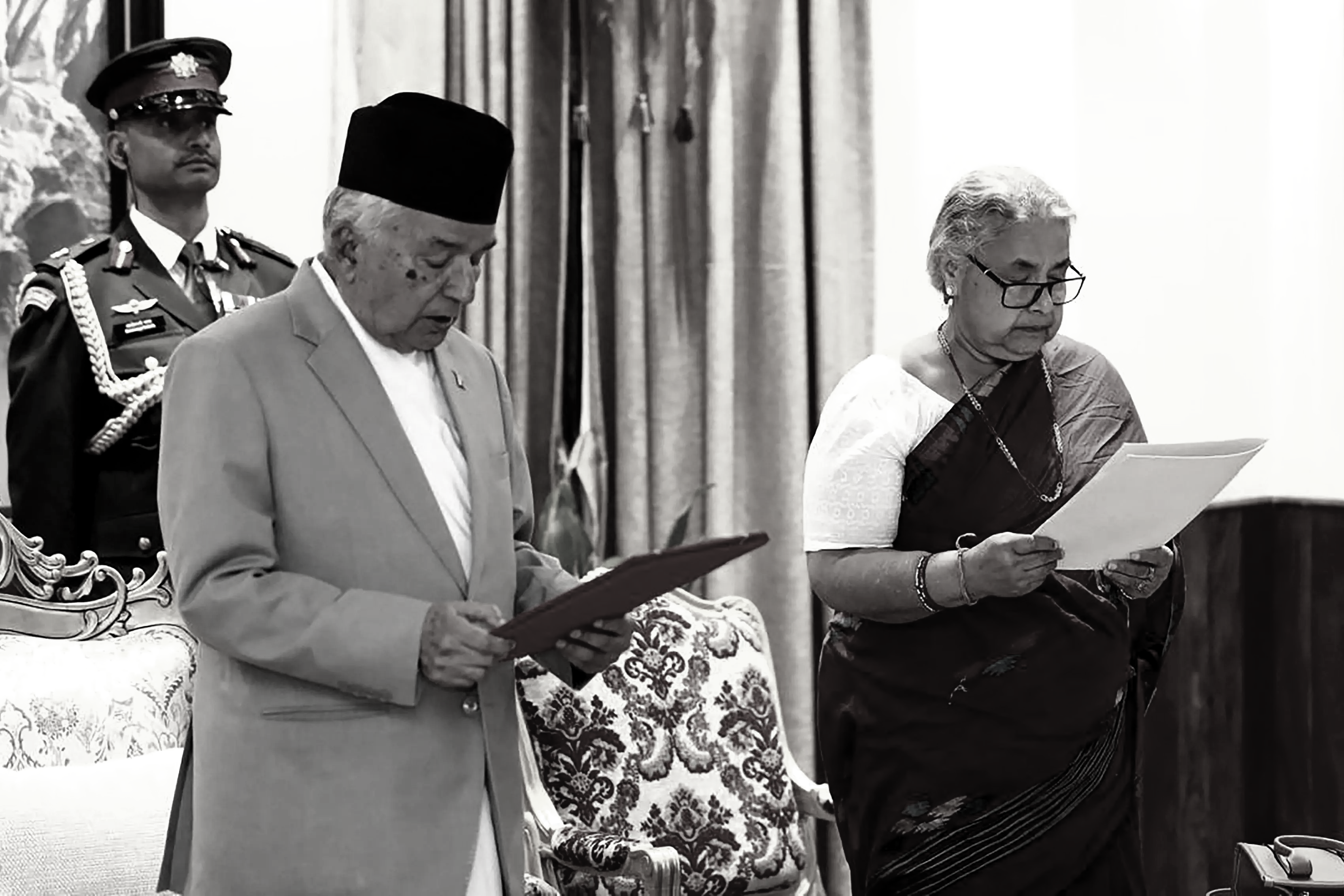
Nepal makes history: First woman PM takes charge
Sushila Karki has taken office as Nepal’s interim prime minister, the first woman to hold the job, after a week of mass protests that toppled K.P. Sharma Oli’s government. Her appointment and the rapid political turn following violent street clashes, the army on the streets, and an urgent presidential decision to dissolve parliament and set fresh elections. This is a historic moment,but it is also the start of a difficult, fragile transition.
What happened, in short: Mass protests led by young demonstrators erupted after a controversial social-media ban a nd widened into a broader anti-corruption, anti-nepotism movement. The unrest turned violent and deadly, with scores killed and many injured. The president dissolved parliament, the army moved into the capital to restore order, and Sushila Karki, a former chief justice known for a tough anti-corruption stance, was sworn in as interim PM. Fresh elections have been scheduled for March 5, 2026.
Who is Sushila Karki,and why her selection matters
Karki, 73, is a jurist, former Supreme Court chief justice and a public figure associated with anti-graft rulings. She is not a career politician, but her legal reputation and perceived independence made her acceptable to both protest leaders and parts of the political establishment,a key reason she was picked as a caretaker to steer the country toward elections. Her profile gives her moral authority, but it also raises questions about how she will manage a deeply fractured political scene.
The reality on the ground,what people are feeling: The protests left a traumatic imprint: government buildings burned, violence claimed lives, and citizens in Kathmandu and beyond experienced days of disorder. Soldiers patrolling streets and a dissolved parliament are immediate reminders that the crisis was not a small disruption but a full political rupture. Ordinary Nepalis now want stability, justice for protest victims, and credible elections,and they will judge the interim government by how quickly it delivers those basics.
What Karki’s interim government must do,the checklist
• Secure calm and restore trust: clear, time-bound steps to remove soldiers from routine policing while ensuring security for voters and protest sites.
• Investigate the violence transparently: independent inquiries into deaths and abuses to build credibility and prevent cycles of revenge.
• Organise free, fair elections on schedule: the March 5, 2026 date gives six months,tight but possible if logistics, voter rolls and security are fast-tracked.
• Engage youth and civil society: the Gen-Z movement must be integrated into a political transition if the momentum for reform is to be preserved rather than dissipated.
What we can expect next,realistic scenarios:
• Stabilisation and credible polls (best case): Karki manages a neutral caretaker administration, the security situation calms, investigations begin, and elections go ahead in March with international observers. This would reset Nepal’s politics and reward civic action.
• A rocky transition (likely risk): logistics, disputed voter lists, and continuing street protests or sporadic clashes could delay parts of the process, forcing compromises that frustrate protest leaders and parts of the political class.
• Authoritarian slide or prolonged army role (worst case): if the military’s role expands or if emergency measures overstay, Nepal risks a longer period of constrained civil libe rties and weakened democratic norms,exactly what protesters mobilised against. Reports that soldiers were heavily involved in security underline this danger.
How the region and the world will watch,and why it matters: India and other neighbours have publicly welcomed the transition and emphasised support for Nepal’s stability and development. Because of geography, trade, remittances and historic ties, a stable Nepal matters to India’s security and economy. International partners will likely offer technical support for elections, and will pressure for transparent probes into the violence. Diplomatic backing can help, but it cannot replace credible domestic action.
The political test ahead: Karki’s real challenge is less symbolic than practical: convert goodwill into institutional fixes,fast. That means credible probes into violence, a level playing field for all parties, protection for civil liberties, and an efficient, fair electoral process. If she succeeds, Nepal could emerge stronger and more inclusive. If the interim period is mishandled, the very energy that toppled a government could deepen divisions.
Nepal’s first woman prime minister is a historic milestone, but history won’t be made by ceremony alone. The next six months are the real test: will the interim government translate street anger into durable reform, or will old fault lines and security-heavy fixes blunt the protest movement’s gains? The country and the region will be watching every step.