
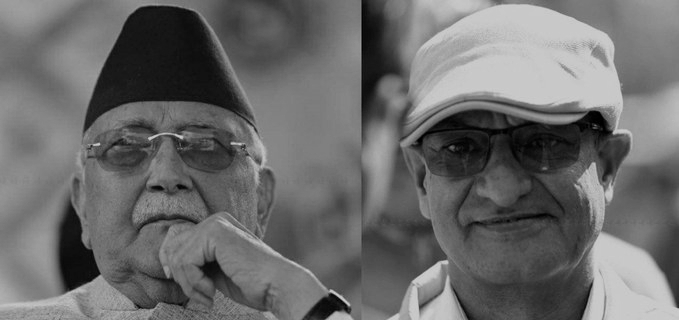
Nepal Court extends custody of Former PM Oli in Gen Z crackdown case
A district court in Nepal on Monday extended the judicial custody of former prime minister K P Sharma Oli and former home minister Ramesh Lekhak by five more days , allowing investigators additional time to probe their alleged role in last year’s violent crackdown on the “Gen Z movement.”
The Kathmandu District Court approved the extension after police argued that the investigation into the September 8-9 protests remained incomplete. The demonstrations, led largely by young activists, turned deadly, leaving at least 76 people killed , including around two dozen youths , and triggering nationwide outrage.
Both leaders, affiliated with the Communist Party of Nepal (Unified Marxist-Leninist), were arrested on March 28 following the government’s decision to act on the findings of a high-level probe commission. The panel, headed by former judge Gauri Bahadur Karki, held them responsible for authorising or enabling excessive use of force during the protests and recommended legal action.
In a parallel legal battle, the Supreme Court of Nepal on Monday resumed hearings on habeas corpus petitions seeking the release of the two leaders. Defence counsel has challenged the legality of their arrest, arguing that the cabinet overstepped its authority and that the probe report is “biased.” A ruling in the coming days could significantly impact the case.
Meanwhile, authorities have continued recording statements from both accused. Oli, 75, remains under medical care at Tribhuvan University Teaching Hospital, where investigators are taking his testimony, while Lekhak, 62, is being questioned in police custody.
The arrests have intensified political tensions in Nepal , with the newly formed government led by Balendra Shah facing strong resistance from opposition parties. Supporters of Oli have termed the move “politically motivated,” while civil society groups and victims’ families have welcomed it as a step toward accountability .
The case has deepened divisions within Nepal’s political landscape, raising concerns about stability and rule of law . With court proceedings ongoing and public sentiment sharply divided, the outcome is expected to have far-reaching political implications .