
NEP 2020 Language Policy: How India's Three-Language Formula Is Changing Education
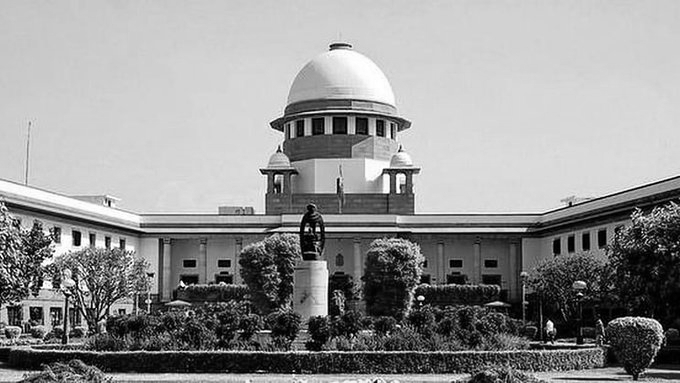
The three-language policy under the National Education Policy (NEP) 2020) has once again come into focus as the Centre, CBSE and NCERT defended its implementation before the Supreme Court , arguing that the framework aims to promote multilingualism, national integration and linguistic diversity while ensuring students are not burdened during the transition phase.
The policy debate reflects India's long history of discussions over language, education and cultural identity. From the Three-Language Formula introduced in 1968 to the NEP 2020 framework, language education has remained a sensitive issue because it is closely linked with regional identity, employment opportunities, cultural preservation and Centre-state relations.
The original Three-Language Formula of 1968 , based on the recommendations of the Kothari Commission (1964-66) , sought to balance national unity with linguistic diversity. It broadly encouraged students to learn their regional language or mother tongue, Hindi in non-Hindi-speaking states (or another Indian language in Hindi-speaking states), and English or another modern language . The objective was to promote communication between linguistic communities while protecting regional languages.
However, implementation varied across states. While several regions adopted the formula, concerns emerged in some non-Hindi-speaking states over the possibility of Hindi becoming dominant in education and administration. In Tamil Nadu , opposition to compulsory Hindi played a major role in shaping the state's two-language approach.
The NEP 2020 retains the idea of multilingual education but introduces greater flexibility. It emphasizes that no language should be imposed on students and encourages learning of three languages, with at least two preferably being Indian languages . The policy also gives importance to mother tongue or local language-based education, particularly in early schooling, while continuing to recognize the importance of English for global education and career opportunities.
Defending the policy in the Supreme Court, the Union Ministry of Education said language education reforms under NEP 2020 are aimed at developing students' knowledge, skills and cultural understanding. It cited the National Curriculum Framework for School Education (NCFSE) 2023 , which recommends that students study three languages from Grades VI to X , including at least two Indian languages.
The CBSE said the policy is being introduced through a planned, phased and systematic process and does not remove foreign languages from the curriculum. The board informed the court that students currently in Class 10 during the 2026-27 academic year will continue with the existing two-language system.
For students appearing for the Class 10 board examinations in 2027-28 , the third language will be evaluated only through internal school-based assessment, with no separate board examination paper. CBSE has also provided a one-time relaxation for students already studying two non-native languages, allowing them to continue those subjects while adding an Indian language.
The board rejected concerns that foreign languages would be eliminated, stating that they can continue as part of the language combination or as an additional fourth language. It also said concerns regarding a shortage of teachers and learning materials were being addressed through NCERT resources, flexible staffing arrangements and digital learning support.
The NCERT informed the court that learning materials for the third language are being developed across 22 Scheduled Languages , with resources already available for Hindi, Sanskrit, Marathi and Urdu .
Supporters of the policy argue that multilingual learning can improve students' communication skills, cognitive abilities, cultural awareness and future career opportunities. Knowledge of multiple languages can help students in areas such as technology, diplomacy, tourism, education and international business.
However, critics point to challenges including teacher availability, unequal resources among schools, increased academic workload and concerns over linguistic preferences in different states.
The Supreme Court's consideration of the petitions highlights that India's language debate remains connected not only to education but also to questions of identity, opportunity and national integration . The long-term success of NEP 2020's language framework will depend on flexible implementation, adequate resources and sensitivity toward India's diverse linguistic landscape.