
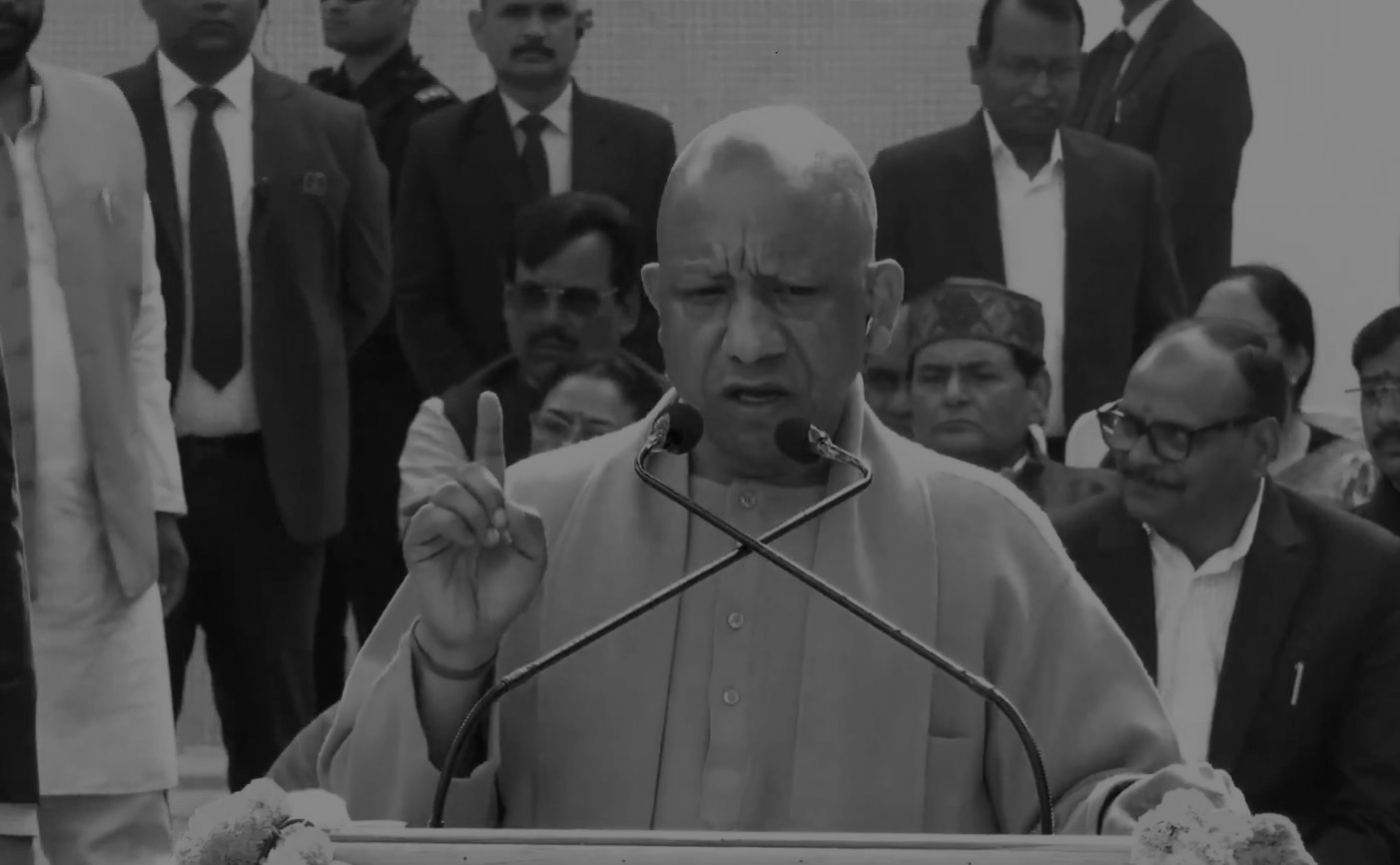
Nehru made Kashmir controversial, led to extremism: Yogi Adityanath
Uttar Pradesh Chief Minister Yogi Adityanath on Monday blamed Jawaharlal Nehru for the extremism and separatism “emanating from Kashmir”, alleging that the country’s first prime minister made the issue so controversial that it continues to sting India even today.
Addressing a programme held to mark the 75th death anniversary of India’s first Home Minister, Sardar Vallabhbhai Patel , Adityanath recalled Patel’s decisive role in the integration of more than 560 princely states into the Indian Union after Independence.
Referring to the challenges faced during the integration process, the Chief Minister cited Junagadh and Hyderabad as major hurdles. “All the Hindu princely states of India agreed to merge with the Republic of India, but the Nawab of Junagadh and the Nizam of Hyderabad refused. Both had to be integrated into India. Through a bloodless revolution, solely due to Sardar Patel’s wisdom, these two princely states became part of India,” he said.
Adityanath further spoke about the uncertainty surrounding the princely state of Jammu and Kashmir at the time of Independence, alleging that the situation worsened due to Nehru’s handling of the matter. “Pandit Jawaharlal Nehru took the matter into his own hands. He made Jammu and Kashmir so controversial that it continued to trouble India even after Independence. The country got extremism (ugravaad) and separatism (algaavaad) from Kashmir because of Pandit Nehru,” he claimed.
The Chief Minister said the nation is now grateful to Prime Minister Narendra Modi for fulfilling the vision of Sardar Vallabhbhai Patel and Syama Prasad Mookerjee by abolishing Article 370 , thereby fully integrating Kashmir with the rest of the country. He said the move strengthened the resolve of “one nation, one constitution, and one flag.”
Born in Nadiad, Gujarat, in 1875 , Sardar Vallabhbhai Patel was a towering leader of India’s freedom struggle. As independent India’s first Home Minister , he played a crucial role in unifying the country by bringing together hundreds of princely states. Patel passed away in 1950 , leaving behind a legacy of national integration and administrative firmness.