
NDMC Strengthens Creative Economy with Annual ‘Shakti’ and Sculpture Park Plan
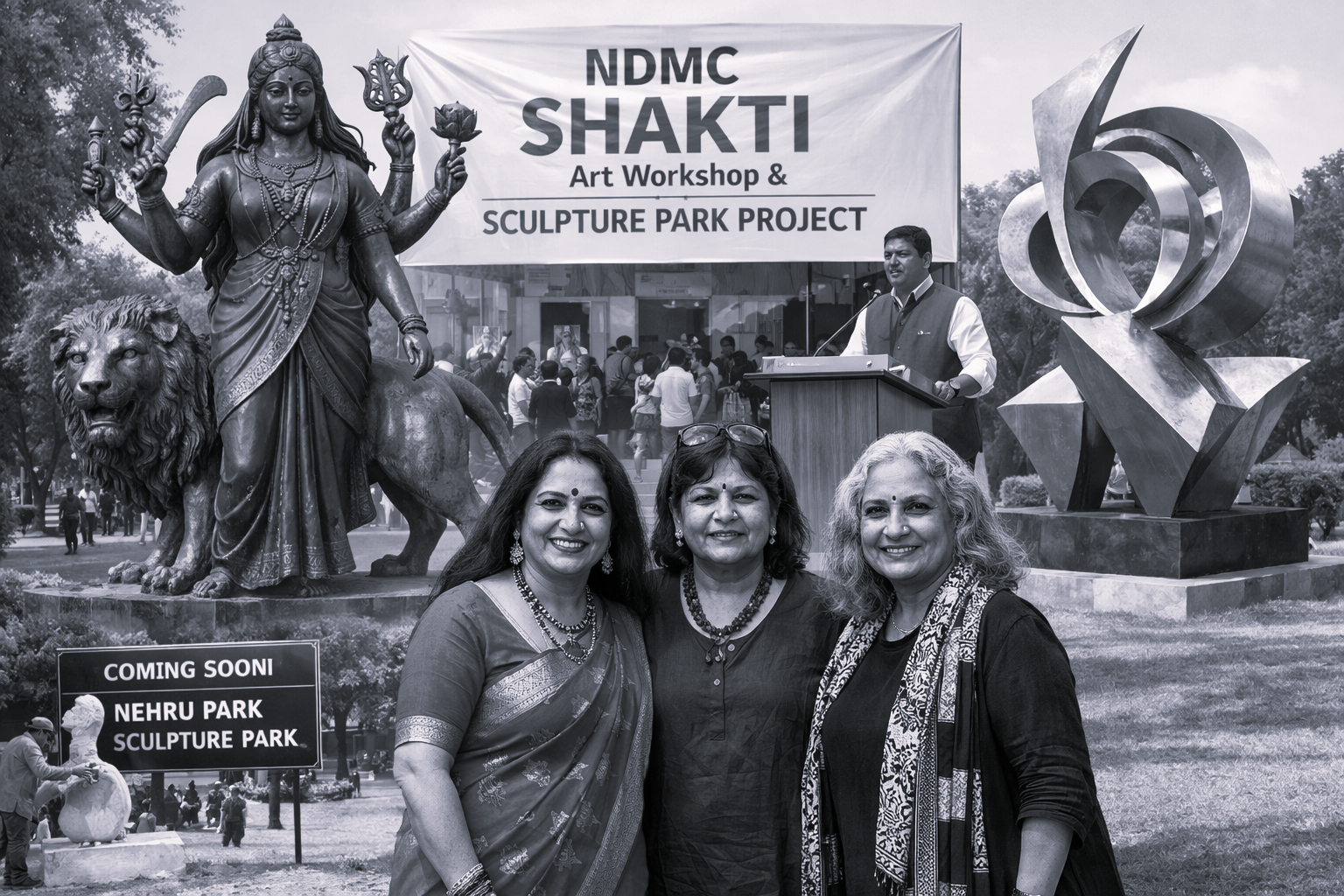
The New Delhi Municipal Council (NDMC) is increasingly positioning itself as a catalyst for integrating cultural investment with urban economic strategy, with its decision to institutionalise the ‘Shakti’ women-focused art workshop and develop a sculpture park at Nehru Park marking a significant and positive step. Rather than treating art as a standalone activity, the civic body is embedding it into a broader framework of city development, social inclusion, and economic value creation. Conducted in collaboration with Triveni Kala Sangam , the ‘Shakti’ workshop brought together 20 women artists and explored themes of identity, resilience, and empowerment, reinforcing the role of art as both a social and economic driver.
What adds depth to this initiative is its alignment with NDMC’s evolving cultural roadmap. In recent years, the council has taken structured steps such as establishing a dedicated Art & Culture Department and allocating a defined portion of its budget toward cultural development. This reflects a transition from sporadic cultural events to a more institutionalised and investment-driven approach. By making ‘Shakti’ an annual programme, NDMC is ensuring continuity, predictability, and sustained engagement within the creative ecosystem benefiting artists, galleries, collectors, and investors alike, while strengthening the professional landscape of India’s cultural industries.
The proposed sculpture park at Nehru Park further enhances this strategy by introducing a permanent cultural asset into the city’s public space. Public art infrastructure of this nature has proven globally to act as an economic multiplier boosting tourism, increasing footfall, and stimulating local business activity in sectors such as hospitality and retail. By transforming a prominent urban space into an open-air gallery, NDMC is not only enhancing the aesthetic appeal of the city but also creating long-term cultural capital that contributes to Delhi’s positioning as a vibrant cultural destination.
Equally important is the initiative’s focus on women artists and gender inclusion. By institutionalising a women-centric platform like ‘Shakti’, NDMC is enabling greater participation of women in the creative economy , improving visibility, and expanding access to professional opportunities. The involvement of established artists such as Seema Kohli , Kanchan Chander , and Vasundhara Tewari Broota adds credibility and market relevance, while also bridging traditional and contemporary artistic narratives.
Overall, NDMC’s dual approach combining recurring cultural programming with long-term infrastructure demonstrates a scalable and forward-looking model of urban governance . It reflects how cities can leverage culture not only for social impact but also for economic growth and global positioning .