
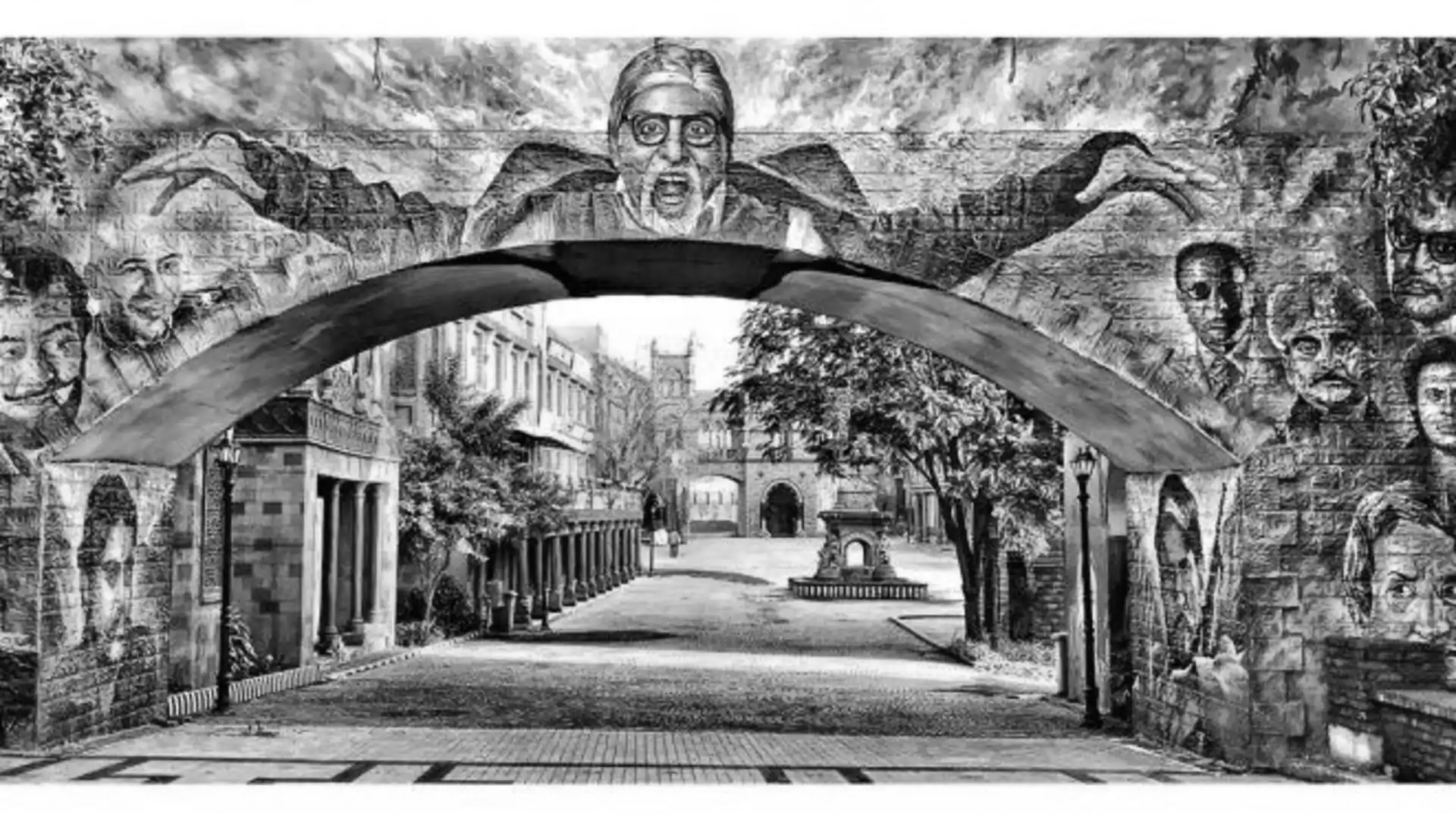
ND Studios 2.0: Legacy, Power, and the Future of Filmmaking
The revival of ND Studios in Karjat marks more than the restoration of an iconic film facility; it reflects a broader shift in how governments and the film industry are reimagining cinema infrastructure in an era shaped by technology, skills development, and global competition. Once a symbol of grand production design and cinematic ambition, ND Studios is now being repositioned as a future-ready creative hub with active state backing.
Founded by legendary art director Nitin Desai, ND Studios earned national and international recognition for its massive sets and scale, hosting productions such as Lagaan , Hum Dil De Chuke Sanam , Jodhaa Akbar , and long-running television shows like Kaun Banega Crorepati . The studio, however, faced severe uncertainty following Desai’s death in August 2023 and mounting financial stress, raising concerns about the fate of one of India’s most distinctive film infrastructures.
The Maharashtra government has since stepped in decisively. The operations and management of ND Studios have been taken over by the Maharashtra Film, Theatre and Cultural Development Corporation, the state-run body that also manages Film City in Mumbai. This move has brought administrative stability to the facility and integrated it into the state’s larger film development ecosystem.
Backing this institutional support is a substantial financial commitment. The government has sanctioned ₹130 crore for the revival of ND Studios, with funds allocated for restoring damaged sets, upgrading basic amenities, modernising infrastructure, and repositioning the studio as a centre of excellence rather than merely a shooting location. This level of intervention places ND Studios among the rare film facilities in India receiving direct public investment for long-term sustainability.
The revival roadmap envisions ND Studios as a multi-functional creative campus. Plans include the launch of a scriptwriter lab to nurture original stories, residential training programmes for young artists and technicians, and a Marathi content mentoring initiative aimed at strengthening regional cinema. New preview theatres and upgraded post-production facilities are also part of the plan, alongside collaborations with the Film and Television Institute of India to offer certified training courses that bridge the gap between education and industry requirements.
In addition to production and training, the studio is being developed as a public-facing cultural destination. Proposed “Fame Tours,” immersive experiences, and special events are designed to generate year-round activity and revenue, ensuring that the studio remains economically viable even beyond film shoots. A public carnival scheduled from December 25 to 31 is intended to symbolically mark the studio’s rebirth and reconnect it with audiences.
Globally, the film industry is undergoing a rapid transformation driven by artificial intelligence, virtual production, and cloud-based workflows. AI-assisted script development, real-time visual effects, LED volume stages, and automated dubbing are becoming standard tools in advanced markets. At present, ND Studios does not yet offer full-scale AI-driven or virtual production infrastructure, but its revival plan focuses on building the foundational ecosystem needed to adopt such technologies in the future.
Experts point out that technology alone cannot transform cinema without skilled manpower and institutional support. In this context, ND Studios’ emphasis on training, content development, and post-production capacity positions it to adapt more easily to next-generation filmmaking tools when they are introduced. The studio’s physical scale, combined with a growing talent pipeline, remains a critical advantage in an increasingly hybrid film economy.
The revival also aligns with broader film incentive frameworks. At the national level, India’s production rebate schemes encourage domestic and international filmmakers to shoot and conduct post-production work in the country, indirectly benefiting studios with modern facilities. Maharashtra’s film policy further supports productions through incentives, logistical assistance, and single-window clearances, making state-supported studios more attractive to filmmakers.
Despite the rise of AI-based content platforms and digital studios, physical studios continue to play a crucial role, particularly in India. Large-scale sets, controlled shooting environments, historical reconstructions, and high-volume television production still require substantial physical infrastructure. ND Studios has previously demonstrated its strategic value by supporting productions during industry disruptions elsewhere, underscoring its importance as a resilient production hub.
Beyond infrastructure, the revival carries symbolic significance. Government officials have consistently framed the initiative as an effort to honour and carry forward Nitin Desai’s vision. By combining restoration with future-oriented planning, the state aims to ensure that the studio’s legacy evolves rather than fades.
Ultimately, the rebirth of ND Studios reflects a changing approach to cultural industries in India, where cinema infrastructure is increasingly viewed as a public asset rather than a purely private venture. While the studio may not yet represent the cutting edge of AI-driven filmmaking, it has laid the groundwork to become a hybrid creative ecosystem that blends traditional craftsmanship with modern technology.
If executed with professional management and sustained investment, ND Studios could emerge as a model for how India preserves cinematic heritage while preparing for the future of filmmaking. In an industry where storytelling, skills, and technology are converging, the revival of ND Studios may well signal the beginning of a new chapter in the country’s evolving film economy.