
NCAP a ‘Notional’ Programme, air pollution a nationwide crisis: Congress
The Congress on Sunday accused the Centre of failing to tackle India’s worsening air pollution crisis, alleging that the government’s response under the National Clean Air Programme (NCAP) has been largely ineffective and inadequate.
Congress general secretary in-charge communications and former Union Environment Minister Jairam Ramesh said air pollution has become a nationwide, structural public health crisis, but the government continues to respond with piecemeal and insufficient measures.
Citing a recent analysis by the Centre for Research on Energy and Clean Air (CREA) , Ramesh said nearly 44 per cent of Indian towns 1,787 out of 4,041 statutory towns suffer from chronic air pollution, with PM2.5 levels consistently exceeding national standards over multiple years.
He said the NCAP, projected as the National Clean Air Programme, has in reality turned into a “Notional Clear Air Programme”, as it currently covers only 131 cities, amounting to just 4 per cent of India’s chronically polluted towns. Of these cities, 28 lack continuous ambient air quality monitoring stations, while most of the remaining cities continue to report dangerously high particulate matter levels.
Ramesh said the findings underline the failure of the NCAP to deliver meaningful improvements in air quality and accused the Modi government of repeatedly downplaying the serious health impacts of air pollution, including during recent parliamentary discussions.
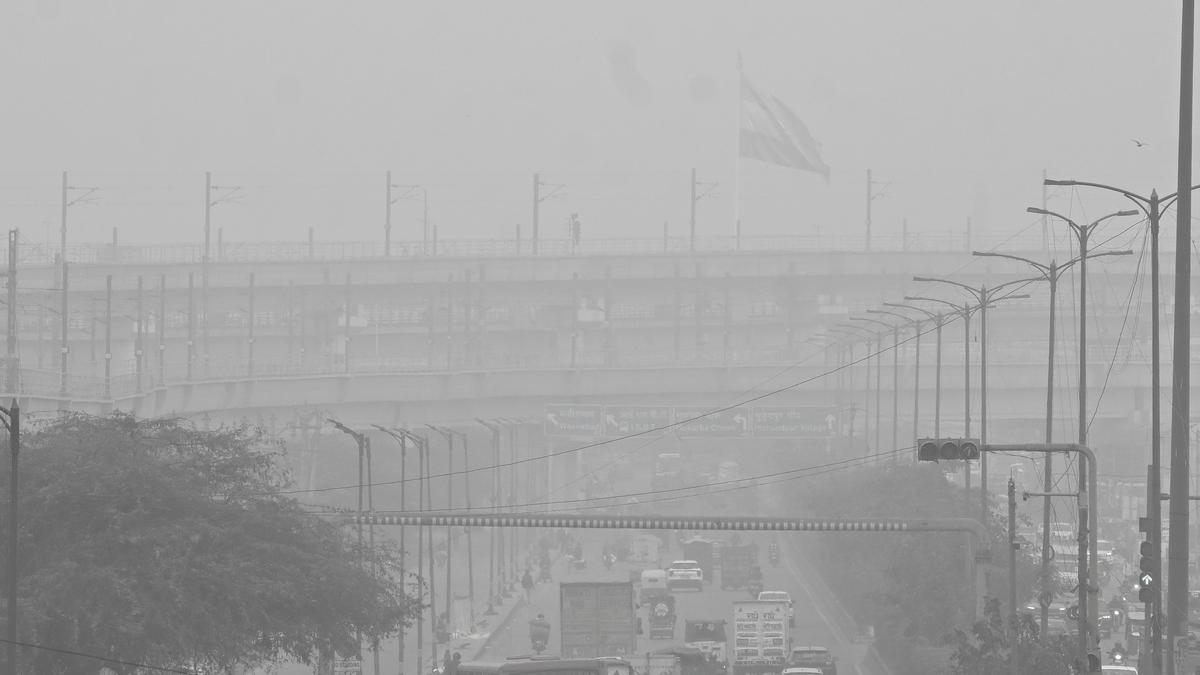
The criticism comes amid renewed concern over pollution levels in the national capital. Delhi recently recorded the highest annual average PM10 concentration in the country, at around 197 micrograms per cubic metre, nearly three times the national permissible limit. The capital has also witnessed frequent severe AQI episodes, with pollution levels crossing 500 and even 700 on several winter days due to vehicular emissions, dust, industrial pollution, and seasonal factors such as crop residue burning.
Calling for urgent reforms, Ramesh demanded a complete overhaul of the NCAP, including a substantial increase in funding. He said the current allocation of about ₹10,500 crore, spread across 131 cities, is grossly inadequate and should be expanded into a ₹25,000 crore programme covering at least 1,000 of the most polluted towns in the country.
He also sought legal backing for the NCAP, stronger enforcement mechanisms, improved air-quality monitoring, and a shift in focus towards PM2.5 levels, vehicular emissions, industrial pollution, and coal-based power plants. He further called for immediate enforcement of pollution norms for thermal power plants and the installation of flue gas desulphurisation units by the end of 2026.
The Congress reiterated that India cannot afford to pollute its way to prosperity and stressed that emergency measures such as the Graded Response Action Plan (GRAP) cannot substitute for long-term, structural clean-air reforms.