
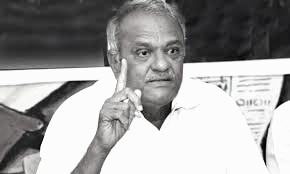
'Naxalites are not terrorists,' says CPI's Narayana
CPI National Secretary Narayana has made a significant statement, expressing support for the Maoists' recent willingness to engage in peace talks and abandon armed conflict. He highlighted a clear distinction between Maoists and terrorists, criticizing Prime Minister Modi’s comments on the issue as being misguided.
Narayana accused the central government of using anti-Naxal operations as a pretext to eliminate tribal communities and seize valuable mineral-rich forests in the Bastar region, which he claims are then handed over to private corporations. He warned that if the government does not engage in sincere dialogue with the Maoists, it risks facing widespread public unrest. He cited recent political upheavals in countries like Bangladesh, Sri Lanka, and Nepal as examples of what can happen when governments fail to address popular discontent and solve long-standing problems.
In a separate but related topic, Narayana announced that the upcoming CPI conference in Chandigarh will feature a crucial discussion on a new policy regarding party leadership. The proposal suggests that individuals over the age of 75 should be barred from holding leadership positions, while they can still remain party members. He speculated that the RSS and BJP might also adopt a similar age-related leadership reform in the near future.
Narayana also touched upon key social and economic issues facing Andhra Pradesh and the nation. He revealed the CPI's plan to launch a new movement to advocate for 42% reservation for Backward Classes (BCs) in the upcoming 2029 elections. Additionally, he strongly criticized the government's proposal to build new medical colleges on a Public-Private Partnership (PPP) model, arguing that this approach would not be beneficial to the general public. He demanded that the government take full responsibility for the construction and operation of these colleges, citing the lack of public benefit from such a model. He pointed to the Amaravati capital project as an example of a project suffering from a lack of government funding.