
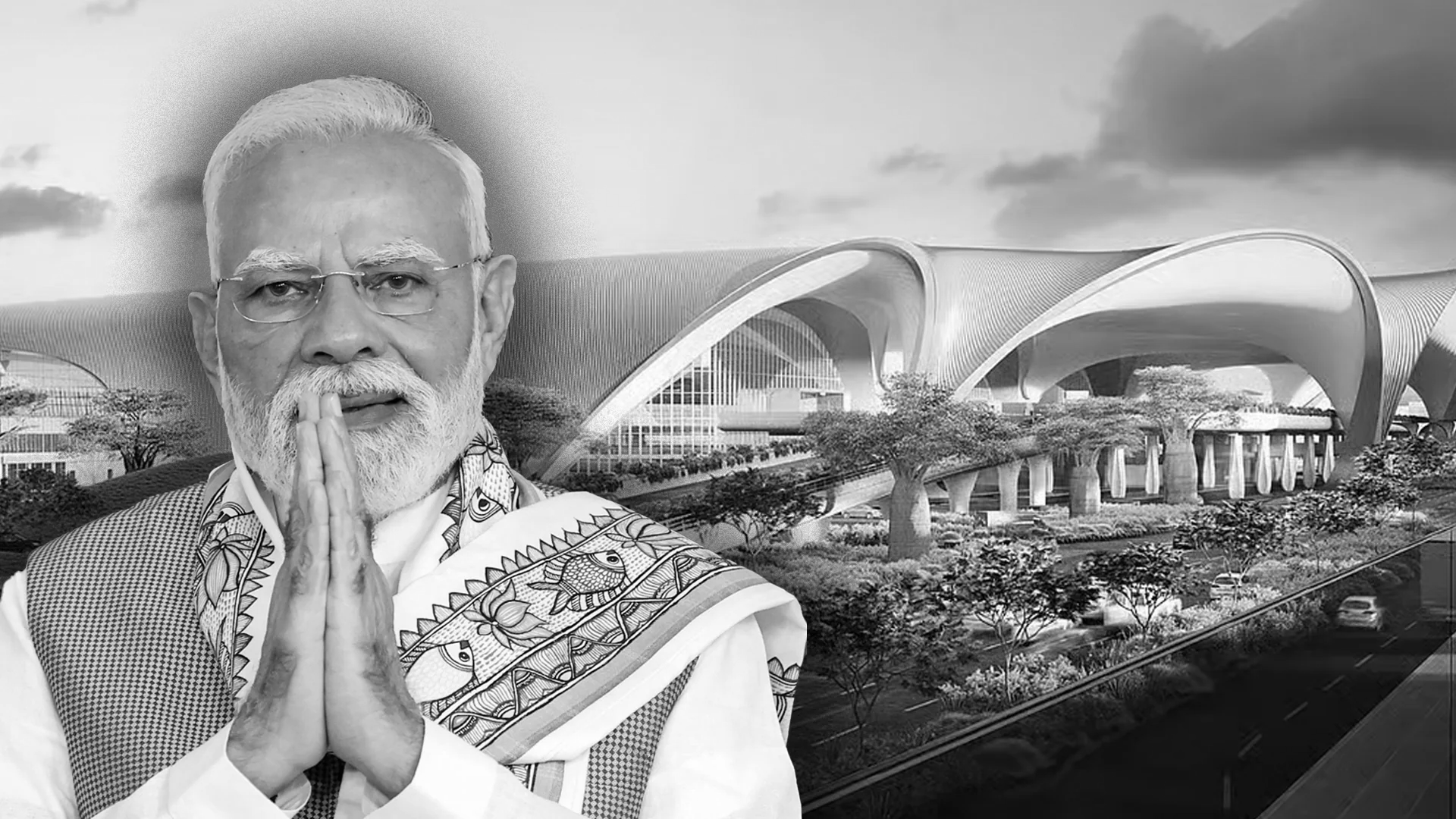
Navi Mumbai Airport inauguration: A major leap for India’s aviation
The inauguration of the Navi Mumbai International Airport (NMIA) by Prime Minister Narendra Modi has been hailed as a landmark achievement for India’s aviation sector, with global aviation leaders emphasising its economic and social impact.
Sheldon Hee, Regional Vice President for Asia Pacific at the International Air Transport Association (IATA),a global trade association for the world’s airlines, representing, regulating, and supporting the aviation industry, called the development a “significant milestone” for India’s rapidly expanding aviation industry. He noted that aviation contributes US$53.6 billion( ₹4.4 lakh crore) to the Indian economy and supports 7.7 million jobs, and said the airport, developed under a Public-Private Partnership led by Adani Airports Holdings Limited, would ease congestion in Mumbai, strengthen connectivity, and bring substantial economic benefits.
Prime Minister Narendra Modi visited Maharashtra on October 8–9 to inaugurate the airport and launch several development projects in Mumbai. The PM undertook a walkthrough of the newly built airport before officially inaugurating it and addressing the gathering.
Phase 1 of NMIA, built at a cost of approximately Rs 19,650 crores, is India’s largest Greenfield airport project. In comparison, Hyderabad’s Rajiv Gandhi International Airport (Shamshabad) was constructed for just about ₹1,600 crore in its initial phase in 2008, roughly one-tenth the cost when adjusted for inflation. The sharply higher cost of NMIA is attributed to massive land acquisition expenses, extensive resettlement efforts, and modern sustainability and connectivity features that go far beyond those of earlier airports.
Serving as the second international airport for the Mumbai Metropolitan Region, NMIA will complement Chhatrapati Shivaji Maharaj International Airport (CSMIA), helping Mumbai evolve into a global multi-airport hub. The airport, spread across 1,160 hectares, is designed to eventually handle 90 million passengers annually and 3.25 million metric tonnes of cargo.
The airport introduces several modern features, including an Automated People Mover (APM) connecting all four passenger terminals, a landside APM linking city infrastructure, and sustainable practices such as dedicated storage for Sustainable Aviation Fuel (SAF), solar power generation of 47 MW, and EV bus services for public transport. NMIA will also be the first airport in India connected by a Water Taxi, marking a new chapter in multi-modal urban connectivity.
The development of NMIA is a collaborative effort between Adani Airports Holdings Limited and the City and Industrial Development Corporation of Maharashtra Limited (CIDCO). A Special Purpose Vehicle (SPV) named Navi Mumbai International Airport Private Limited (NMIAL) was established to oversee the project's execution. Adani Airports Holdings holds a 74% equity stake, while CIDCO holds the remaining 26%. This partnership follows a Design, Build, Finance, Operate, and Transfer (DBFOT) model, ensuring a structured and efficient development process. The airport is being constructed by L&T, which won the contract from NMIA. As part of his visit, PM Modi is also inaugurating Mumbai Metro Phase 3, highlighting the simultaneous growth in the city’s infrastructure.
The inauguration of NMIA marks a major step forward in India’s ambition to become a global aviation hub, offering world-class infrastructure, enhanced passenger experience, and a model for sustainable airport development.