
Naturopathy’s Changing Landscape: India Focuses on Science, Safety and Healthy Living
India’s growing focus on preventive healthcare came into focus on November 18 as the country observed the 9th National Naturopathy Day at the Central Research Institute of Yoga and Naturopathy (CRIYN) in Nagamangala, Karnataka. Organised under the theme ‘Prakritik Chikitsa, Swasth Bharat’, the observance highlighted the role of yoga and naturopathy in encouraging healthier lifestyles, preventing lifestyle-related disorders and strengthening community healthcare. The programme also saw the release of the ReGEN-Beta Diabetes Lifestyle Trial, Nature Cure 360 and research publications, alongside a naturopathy food fair and a medicinal plant plantation drive.
The Ministry of Ayush has been emphasising scientific research, quality education and the responsible integration of naturopathy with conventional healthcare. The initiative comes amid growing concerns over obesity, stress, physical inactivity and non-communicable diseases, which account for a substantial share of India’s disease burden. The Economic Survey 2025–26 reported that non-communicable diseases accounted for 57% of deaths in the country during 2021–23, underlining the importance of preventive health measures. However, the wider acceptance of naturopathy will depend on credible scientific evidence, trained practitioners and appropriate patient safeguards.
A Philosophy Rooted in Natural Living
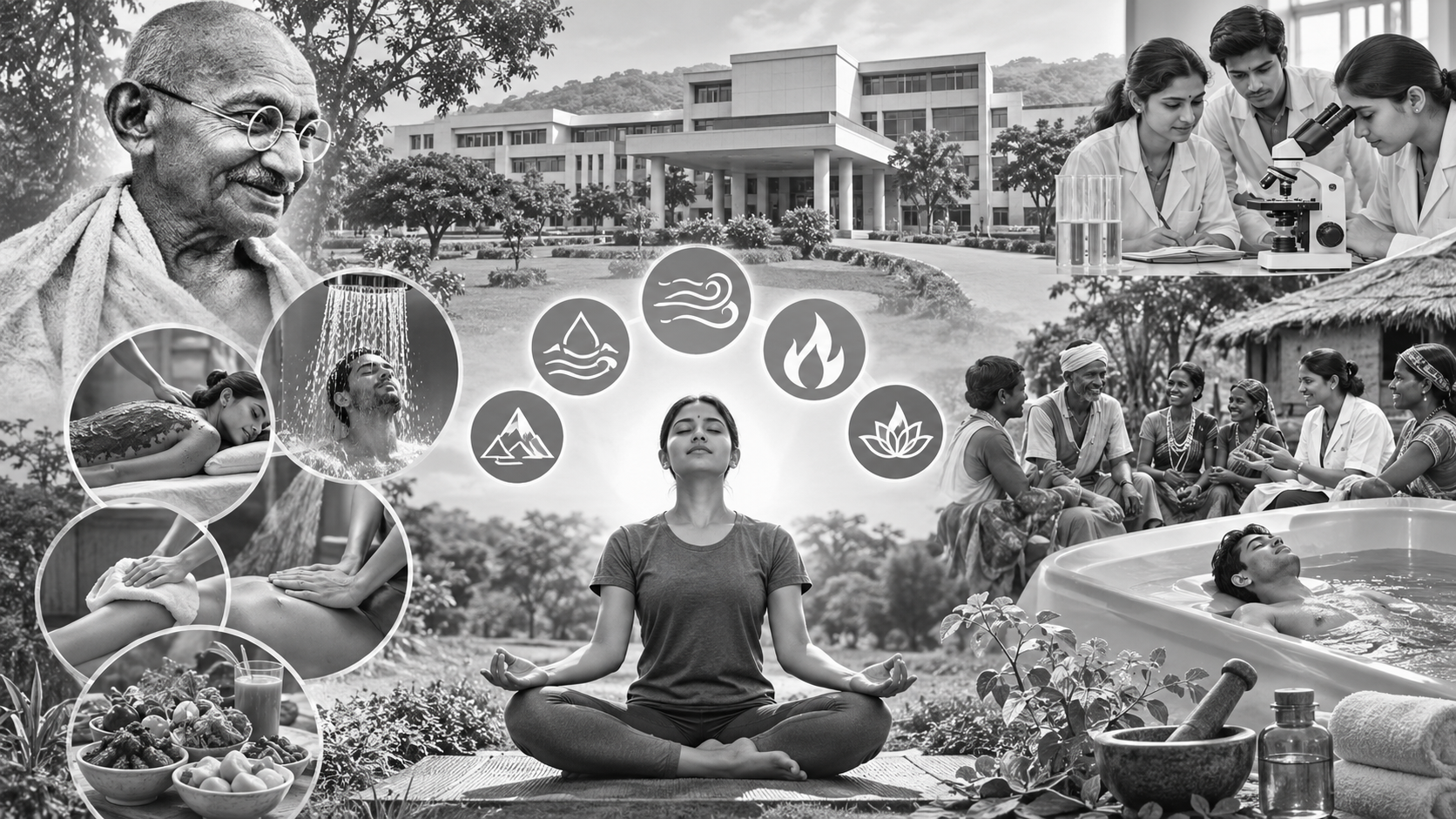
Naturopathy is a drug-free system that seeks to support the body’s natural capacity for recovery through diet, fasting, water-based treatments, mud applications, massage and lifestyle changes. Its philosophy is often described as ‘Return to Nature’, encouraging simple food habits, physical activity, adequate rest and harmony with the environment. In India, naturopathy is closely associated with yoga and the traditional Panchabhuta concept, which identifies earth, water, air, fire and ether as the five elements of nature.
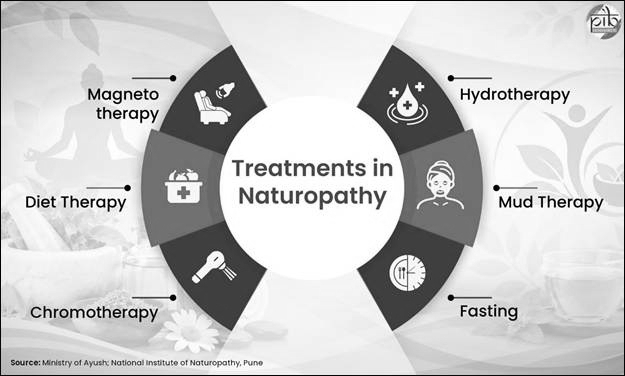
Treatments include hydrotherapy, mud packs, cold packs, baths and massage. At Nisarg Gram in Pune, facilities also include magnetotherapy, chromotherapy, physiotherapy, a yoga hall and a Saatvik diet centre. While nutrition, exercise, rest and stress management are recognised foundations of good health, the effectiveness of individual naturopathic therapies varies depending on the condition and the available scientific evidence.
Gandhi’s Legacy and National Institutions
India’s association with nature cure has a strong historical connection with Mahatma Gandhi. On November 18, 1945, Gandhi became the Lifetime Chairman of the All India Nature Cure Foundation Trust in Pune and signed its deed. The Ministry of Ayush began observing the date as National Naturopathy Day in 2018. Gandhi also led a nature cure campaign at Uruli Kanchan near Pune in 1946, promoting sanitation, balanced diets and exercise as essential elements of healthy living.
The National Institute of Naturopathy (NIN) was established in Pune on December 22, 1986, at the nature cure centre handed over to the Government of India in 1975. An autonomous institution under the Ministry of Ayush, NIN works to promote education, standardise knowledge and encourage research in naturopathy and yoga. It also operates specialised outpatient departments for maternal care, diabetes management and mind-body medicine, offering lifestyle guidance, yoga, meditation and relaxation practices.
A major expansion came with the inauguration of Nisarg Gram by Prime Minister Narendra Modi on February 25, 2024. Spread across 25 acres at Yewalewadi in Pune and developed at a cost of Rs. 213.55 crore, the campus houses a 250-bed naturopathy hospital, a research and extension centre and a medical college. It is described as the country’s first national naturopathy hospital.
Expanding Education and Professional Standards
NIN offers the Bachelor of Naturopathy and Yogic Sciences (BNYS) programme in affiliation with Shri Lal Bahadur Shastri National Sanskrit University, New Delhi. The five-and-a-half-year residential course comprises four-and-a-half years of academic and clinical training, followed by a one-year compulsory internship. Nisarg Gram has 100 BNYS seats for the 2026–27 academic year, with classes scheduled to begin on November 30, 2026.
Across India, 71 undergraduate naturopathy colleges had an admission capacity of 5,214 students, while six postgraduate colleges had a capacity of 144 students as of April 1, 2024. A total of 5,083 practitioners were registered with State Boards and Councils as of January 1, 2024. The Naturopathy Registration Board, constituted under the Ministry of Ayush through NIN, provides central registration and accredits naturopathy institutions and hospitals. NIN also conducts short courses in acupressure, naturopathy cooking, massage, fitness training and yoga.
Research and Scientific Validation
The Central Council for Research in Yoga and Naturopathy (CCRYN), established in 1978, has 22 units across the country. The Ministry of Ayush’s five research councils collectively published 653 research papers during 2025–26. NIN’s research department conducts studies and training in research methodology and Good Clinical Practice. Its ongoing research examines fasting methods, hip baths, wet-sheet packs, sun exposure and Type 2 diabetes, gut microbiota and integrated naturopathy-yoga interventions, and knee osteoarthritis.
The World Health Organization’s Global Traditional Medicine Strategy 2025–2034 also calls for stronger evidence, safety standards and responsible integration of traditional and complementary practices into healthcare systems. Its September 2026 research agenda noted that such systems are used by billions of people but receive less than one per cent of global health research funding. The WHO has stressed that traditional use alone cannot establish a treatment’s safety or effectiveness, making rigorous clinical evaluation essential.
Tribal Outreach and Wellness Tourism
NIN has established the Nisarg Arogya Sadhana Kendra at Gohe (Budruk) in Maharashtra’s Pune district, with 20 beds, separate wards, a yoga hall and a diet centre. The facility also trains tribal youth, with its Treatment Assistant Training Course admitting 40 students annually. Separately, a national capacity-building programme for tribal healers was held in Hyderabad in January 2026. The government has set an indicative target of recognising one lakh tribal healers, while a Hyderabad conclave on November 1 and 2 brought together around 1,500 traditional healers from nine States and Union Territories.
India is also promoting traditional therapies through its wellness tourism initiatives. International patients visiting the country for all types of medical care increased from 1,82,945 in 2020 to 6,44,387 in 2024; these figures are not specific to naturopathy. The government introduced the Ayush Visa on July 27, 2023, for foreign nationals seeking treatment under Ayush systems and their attendants. Five Regional Medical Value Tourism Hubs proposed in the Union Budget 2026 are also expected to combine advanced medical treatment with traditional therapies, wellness and rehabilitation.
As naturopathy expands its institutional and international presence, its credibility will depend on evidence-based practice, professional standards and patient safety. Natural therapies should not replace emergency care or established treatment for serious illnesses, and patients should not discontinue prescribed medicines without medical advice. The larger objective behind ‘Prakritik Chikitsa, Swasth Bharat’ will be meaningful only when nature-based healthcare is scientifically evaluated, responsibly delivered and made accessible to the wider population.