
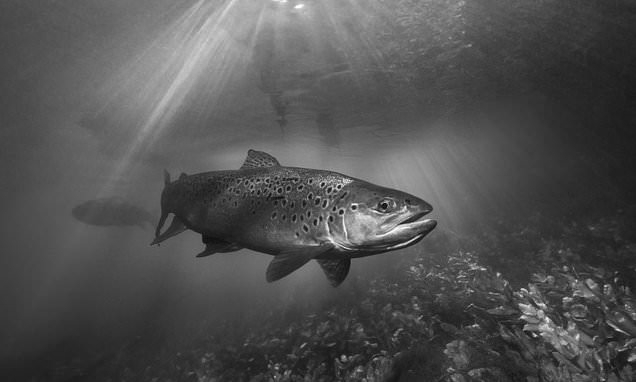
Nature’s Balance At Risk? Monster Fish 20 Times Bigger Found Near Scottish Salmon Farms
Wild brown trout living near salmon farm cages in Scotland are growing to enormous sizes, with campaigners warning that these so-called Franken trout are disrupting the natural balance of the country's freshwater lochs. While the average Scottish loch trout typically weighs well under one pound, specimens found feeding around salmon cages have been recorded at up to twenty pounds, a scale that alarmed conservationists say nature never intended.
The phenomenon has been most visible at the Loch of Cliff in Shetland, the longest loch in the region, where a local fishing guide noted that native trout populations have ballooned in size since fish cages were installed nearby. The trout are believed to be gorging on salmon feed pellets that fall through the netting of farm cages, a behaviour known within the industry as cage grazing, which allows them to pack on weight far beyond natural limits.
Dale Vince , the energy entrepreneur and founder of the Green Britain Foundation, has been among the most vocal critics of the trend, describing the oversized fish as unnatural byproducts of industrial aquaculture that are now preying on smaller native fish and unbalancing loch ecosystems. He argued that dropping what amounts to a factory farm into a wild loch inevitably spreads feed and waste well beyond the cages themselves.
Nick Underdown , Scotland director at the campaign group WildFish , echoed those concerns, saying that artificially fattening wild trout on industrial feed distorts their natural distribution and their role as predators within the loch. Beyond feed spillage, campaigners have also pointed to concerns over fish faeces reducing water quality and, in some locations, antibiotics used to control disease at farms passing through cages and into the surrounding water.
Cooke Aquaculture , which operates fish farms across sixteen countries including sites in Shetland and Orkney supplying major retailers, said its operations are subject to strict environmental regulations and ongoing monitoring, adding that antibiotics have not been used at the Loch of Cliff site for years. The Scottish government has downplayed the ecological risk, stating there is no evidence that localised excess feed from these sites affects the overall viability of brown trout populations, even as some wild trout attain unusually large sizes by foraging near the cages.
The controversy adds to a broader and long running debate over Scotland's salmon farming industry, with activists and anglers separately raising concerns about sea lice outbreaks harming wild salmon and the genetic risks posed by escaped farmed fish interbreeding with wild populations.