
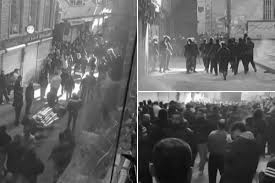
Nationwide protests grip Iran as internet shutdown fails to stem unrest
After nearly two weeks of nationwide unrest, Iran’s state media finally broke its silence on Friday, offering a brief and carefully worded acknowledgement of protests that have shaken cities across the country since late December. The prolonged delay and the language ultimately chosen has highlighted the government’s strategy, internal calculations and the mounting pressure it faces as demonstrations intensify.
State television’s short report, aired during its 8 am broadcast , portrayed the overnight unrest as violent acts carried out by “ terrorist agents ” linked to the United States and Israel . It alleged that public and private property , including cars, metro facilities, buses and fire trucks, had been set on fire and said there were “casualties,” without specifying whether they were protesters, security personnel or civilians.
Notably, the report made no reference to the economic grievances that initially sparked the protests, nor did it acknowledge widespread anti-government slogans or the unprecedented chants praising Iran’s former monarchy all of which had been widely reported by activists and witnesses before the nationwide internet shutdown .
Iran’s state media typically responds swiftly to unrest, often within hours, framing demonstrations as foreign-backed disturbances. The 12-day silence suggests the authorities may have initially underestimated both the scale and persistence of the protests, which began amid a sharp economic downturn. The rial’s collapse to record lows, rising inflation and declining living standards have fuelled widespread anger, turning economically driven protests into overt political defiance.
Analysts say internal debate within the establishment may also have delayed an official response, particularly as the protests crossed sensitive ideological red lines. Calls for the overthrow of the Islamic Republic and public expressions of nostalgia for the pre-1979 era once punishable by death underscored the depth of discontent and complicated efforts to craft a unified narrative.
The silence coincided with the government’s decision to impose a near-total communications blackout, cutting internet access and international phone lines across the country. By limiting the flow of images and testimony that could contradict official messaging, authorities reduced the immediate pressure on state media to respond while security forces dealt with unrest on the ground.
State television only acknowledged the protests after a renewed surge of demonstrations followed a coordinated call by exiled Crown Prince Reza Pahlavi , which reportedly drew thousands into the streets at a specific hour. The timing suggests the acknowledgment was intended to signal that the state remained in control as protests took on a more organised and symbolic dimension.
The assertion that “terrorist agents” backed by Washington and Israel orchestrated the unrest follows a familiar pattern in Iranian official discourse. Similar claims were made during the 2019 fuel protests and the 2022 demonstrations following the death of Mahsa Amini. As in previous cases, no evidence was provided to support the allegations.
Independent rights groups and analysts argue that the protests have been driven primarily by domestic pressures, including economic hardship, sanctions and political repression, rather than foreign interference. The state media’s emphasis on arson and property damage, without addressing protesters’ demands, appears aimed at delegitimising the movement while justifying security measures.
The omission of casualty figures was particularly striking. While rights groups have reported dozens of deaths and thousands of arrests, state media avoided acknowledging fatalities among protesters. Observers say such omissions are often deliberate, reflecting concern that confirmed figures could inflame public anger or invite international scrutiny.
By Friday morning, the government faced growing pressure on multiple fronts: sustained street protests, renewed warnings from the United States, and the political symbolism of demonstrations responding to an exiled royal figure. The brief acknowledgment appeared designed less to inform than to reassert narrative control, framing unrest as externally driven violence rather than a domestic political crisis.
The restrained and vague tone of the report, short, unspecific and lacking detail suggested caution rather than confidence. Unlike during previous crackdowns, authorities did not declare the protests crushed or announce sweeping arrests on state television, indicating uncertainty over how events may unfold.
The 12-day silence, followed by a minimal and tightly framed statement, reflects a calculated ambiguity: acknowledging unrest without amplifying it, blaming foreign enemies without evidence, and citing casualties without assigning responsibility. As protests continue under a communications blackout, the credibility gap between state media and independent accounts is likely to widen, raising questions over whether the unrest will subside or deepen into a broader challenge to Iran’s leadership.