
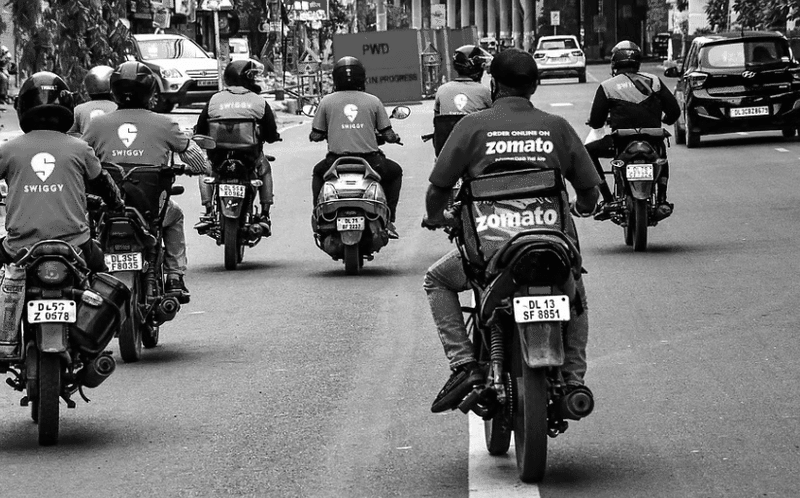
National social security board for gig workers soon, says Maharashtra minister
Maharashtra Labour Minister Akash Fundkar on Saturday said the Centre will soon establish a national social security board under the Code on Social Security, 2020 , to advance welfare protections for gig and platform workers across India. The board is expected to play a central role in recommending and monitoring social security schemes for these workers, who were not previously recognised as formal employees under labour law.
Speaking during the legislative assembly’s Question Hour, Fundkar said the new board - to be set up shortly - will oversee and expand access to healthcare, insurance, and family welfare benefits for gig and platform workers. He noted this marks a crucial shift from past practice, when such workers were largely treated as business partners with delivery‑based payments and no statutory social security rights. The social security code, which came into force in November 2025, now formally defines the status of gig and platform workers.
The minister added that when the national board is established, state‑specific laws on gig worker welfare in states such as Rajasthan and Karnataka will lapse , reflecting a unified national framework.
Under the social security code, central government rules are expected to define how gig and platform workers become eligible for benefits such as life and disability cover, accident insurance, health and maternity benefits, and old‑age protection. Draft rules have proposed that workers engage with an aggregator for a minimum number of days - often cited as 90 days with one platform or 120 days across multiple platforms in a financial year to qualify for social security benefits under the code.
Officials highlighted the e‑Shram portal , the government’s national database of unorganised workers, which now includes hundreds of thousands of gig and platform workers. Registration provides each worker with a unique Aadhaar-linked Universal Account Number (UAN) , making it easier to manage social security benefits and transfer them across jobs and platforms. Experts said the reforms represent a major extension of statutory protections to a workforce expected to grow rapidly, with projections indicating the gig workforce could rise from about 1 crore in 2024–25 to over 2.35 crore by 2029-30.
In another update, Fundkar addressed pending dues for workers from closed NTC mills in Mumbai , which shut after the COVID‑19 pandemic. He said the state government is coordinating with central authorities to explore settlement options, and the dues are expected to be cleared within a year , following Bombay High Court directions.