
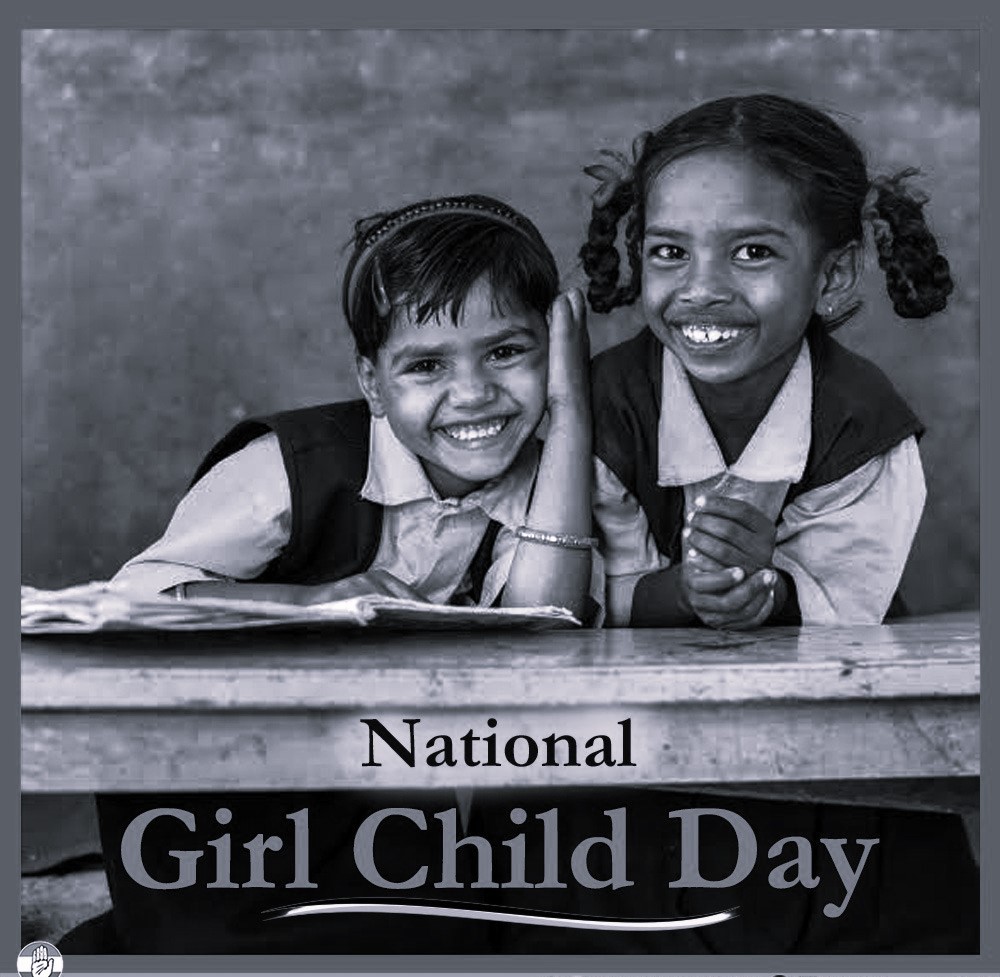
National Girl child day: Building an equal future for India’s Daughters
India observes National Girl Child Day every year on January 24 to draw attention to the rights, education, health, safety and overall well-being of girls. Initiated in 2008 by the Ministry of Women and Child Development to address gender inequality and promote girls’ welfare, the day also carries a key theme each year to focus national attention on priority areas. The theme for National Girl Child Day 2025 was “Empowering Girls for a Bright Future” , underscoring the need to provide girls with equal opportunities, access to education, health and personal growth, and to support them in realising their full potential. While the official theme for 2026 has not been formally announced , celebrations continue that spirit of empowerment and inclusion, reinforcing the need for collective efforts to ensure equality, dignity and opportunity for every daughter in the country.
National Girl Child Day was initiated in 2008 by the Ministry of Women and Child Development with the aim of addressing gender discrimination and promoting awareness about issues such as female foeticide, child marriage and unequal access to education and healthcare. Over the years, the observance has evolved into a national platform for advocating social change and strengthening the commitment to empower girls as equal stakeholders in India’s development journey.
In recent years, India has registered measurable improvements in key indicators related to the girl child, according to official government data. The Sex Ratio at Birth (SRB) the number of girls born per 1,000 boys increased from 918 in 2014-15 to 930 in 2023-24 , as reported by the Health Management Information System (HMIS) of the Ministry of Health & Family Welfare and discussed in government briefings on the Beti Bachao Beti Padhao initiative. Over the same period, girls’ Gross Enrolment Ratio (GER) at the secondary school level rose from about 75.51 percent in 2014-15 to around 78 percent in 2023-24 , based on Unified District Information System for Education (UDISE+) data released by the Ministry of Education. These improvements reflect the impact of sustained awareness campaigns, policy interventions and education-focused programmes aimed at increasing access and reducing gender disparities in schooling and health outcomes for girls.
Progress is equally visible in higher education. Female enrolment has risen significantly from 1.57 crore in 2014-15 to 2.18 crore in 2022-23, marking an increase of 38 percent. Women now constitute about 43 percent of enrolments in Science, Technology, Engineering and Mathematics disciplines, placing India among countries with the highest female participation in STEM education globally. Female enrolment in doctoral programmes has also grown sharply, increasing by over 135 percent between 2014-15 and 2022-23, highlighting expanding opportunities for women in advanced research and academia.
These gains have been supported by a range of government initiatives aimed at protecting, educating and empowering the girl child. Flagship programmes such as Beti Bachao Beti Padhao , Mission Shakti , Kasturba Gandhi Balika Vidyalayas (KGBV) , Vigyan Jyoti , KIRAN (Knowledge Involvement in Research Advancement through Nurturing) , CURIE (Consolidation of University Research for Innovation and Excellence) and the Sukanya Samriddhi Yojana have played a significant role in improving girls’ survival, access to education, participation in science and research, skill development, financial inclusion and overall safety. Complementing these initiatives are strong legal frameworks, including the Protection of Children from Sexual Offences (POCSO) Act and the Prohibition of Child Marriage Act , which aim to create a safer, more secure and enabling environment for every girl in India.
National Girl Child Day is more than an annual observance; it is a call to transform mindsets and ensure that girls are valued and respected as equal members of society. As India moves towards its vision of Viksit Bharat by 2047, empowering the girl child remains central to achieving inclusive, sustainable and women-led development. Ensuring that every girl has the freedom, resources and opportunities to realise her full potential is essential to shaping a stronger and more equitable nation.