
Nar–Par–Girna Project Moves Forward, 939 Hectares of Forest Land at Stake
Maharashtra’s ambitious Nar–Par–Girna River Link Project, estimated at nearly ₹7,400 crore, has cleared an important preliminary hurdle, but its environmental footprint is likely to remain under close scrutiny as the scheme involves large-scale forest diversion, land submergence and areas within the Western Ghats Eco-Sensitive Area (ESA).
The Environment Ministry’s Expert Appraisal Committee (EAC) recommended granting the project its Terms of Reference (TOR) at its July 30 meeting. The move allows the detailed Environmental Impact Assessment (EIA) process to begin, but does not constitute final environmental clearance.
The project covers about 3,801 hectares, including approximately 939 hectares of forest land, 1,905 hectares of government land and 957 hectares of private land. More than 1,600 hectares of the project area is expected to be submerged. The scheme will affect nine villages, involving 516 houses and around 2,580 people, making rehabilitation and compensation key issues.
The project aims to divert surplus water from the west-flowing Nar, Par, Auranga and Ambika river basins to the water-deficit Girna sub-basin of the Tapi basin. It is expected to provide assured irrigation to nearly 50,000 hectares in Nashik and Jalgaon districts. Earlier assessments estimated the potential water transfer at around 10–10.6 TMC.
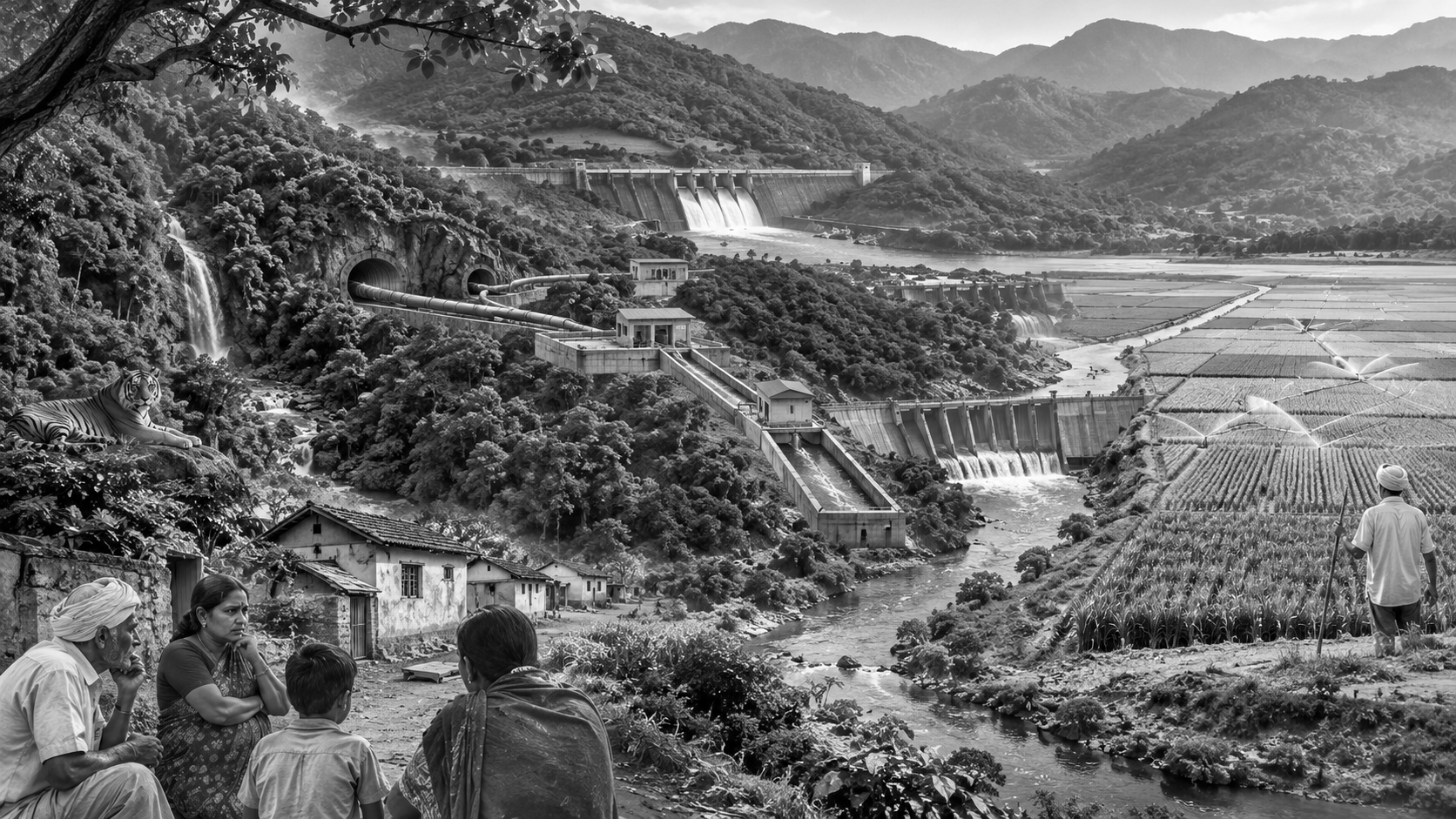
The proposed infrastructure includes nine dams, three links, pump houses, tunnels and associated channels. The project is being managed by the Girna River Valley Division of Maharashtra’s Water Resources Department.
Its environmental implications are particularly significant because proposed dam sites at Ukhedmal, Rakshasbhuvan, Umbarpada and Sarnya Aawan fall within villages identified under the Western Ghats ESA. The three links, portions of the command area and tunnel and drainage alignments also pass through ESA areas and intersect reserved forests.
The development comes amid the Centre’s latest effort to notify the Western Ghats as an ecologically sensitive region. The seventh draft notification, issued in July 2026, proposes covering 56,825.7 sq km across six states, including 17,340 sq km in Maharashtra.
The project has also faced pressure from farmers seeking faster implementation. In 2024, farmers in Jalgaon demanded early progress, citing the region’s irrigation needs.
With both agricultural benefits and ecological costs involved, the forthcoming EIA and environmental appraisal will be crucial in determining whether the proposed diversion can deliver irrigation gains while adequately addressing forest loss, downstream ecological flows, biodiversity and the rehabilitation of affected communities.