
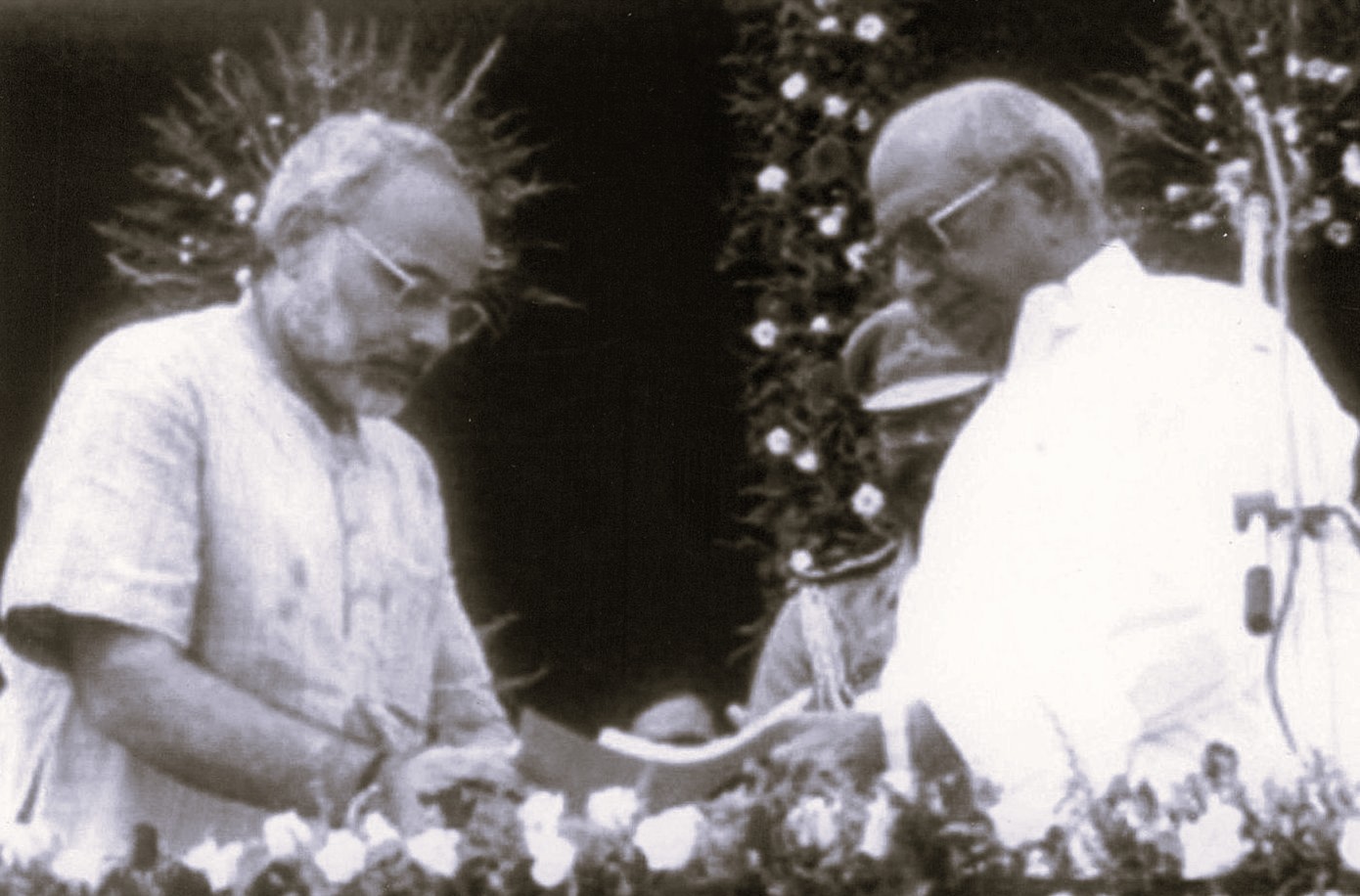
Narendra Modi at 25 Years in Public Life: The Pragmatist, the Populist, and the Political Master
Prime Minister Narendra Modi on Tuesday completed 25 years in continuous public office, a journey that began in the aftermath of calamity in Gujarat and evolved into one of the most consequential premierships in India’s history.
Born in Vadnagar, Gujarat, Modi’s story from a tea seller at a railway station to the leader of the world’s third-largest economy has often been invoked as a symbol of social mobility and political resilience. A lifelong member of the Bharatiya Janata Party (BJP) and the Rashtriya Swayamsevak Sangh (RSS) , Modi rose through ranks not by lineage but by persistence and organisational skill.
From Gujarat to Delhi - A career forged in crisis
When Modi was sworn in as Chief Minister of Gujarat in 2001, the state was reeling from an earthquake and severe drought. His early years in office were overshadowed by the 2002 Godhra riots, a defining and divisive moment. The riots triggered widespread condemnation and demands for his resignation, but Modi survived politically, recasting himself as a development-focused administrator. Under his leadership, Gujarat saw significant investments in infrastructure, energy, and industrial growth.
Bold acts and political milestones
As Prime Minister since 2014, Modi has rarely shied away from disruptive decisions.
His government rolled out demonetisation in 2016 to curb black money and promote digital transactions; implemented the Goods and Services Tax (GST) in 2017 to unify India’s indirect taxation; revoked Article 370 in 2019, ending Jammu & Kashmir’s special status; and presided over the construction of the Ayodhya Ram Mandir , inaugurated in 2024.
Modi ordered surgical strikes and air raids on terror camps across the Pakistan border, marking a decisive break from earlier governments’ restraint to diplomatic protests. His approach to China oscillated between diplomacy and confrontation: a warm meeting with President Xi Jinping in Mamallapuram (Chennai) in 2019 was followed by the Galwan Valley clash in 2020, which marked a sharp deterioration in ties.
Though the Aadhaar programme originated under the Congress-led UPA, Modi expanded its reach across welfare schemes and banking a pragmatic embrace that reflected his willingness to adopt good ideas irrespective of their political origin. In doing so, he demonstrated that governance could transcend party lines.
Leadership style - Command and Centralisation
Admired for his discipline and decisiveness, Modi’s leadership style is also criticised for its centralisation. Within the BJP, he has not allowed strong regional leaders to emerge a contrast to earlier eras when figures like Shivraj Singh Chouhan and Vasundhara Raje provided balance within the party’s leadership pyramid. With the exception of Uttar Pradesh, most BJP-ruled states today are led by chief ministers with limited national recall.
Critics accuse him of weakening independent institutions from investigative agencies to the media by promoting loyalty over autonomy. His supporters, however, argue that he has brought unprecedented efficiency, focus, and stability to governance.
Communication Without Dialogue
Modi remains one of the most communicative Prime Ministers, yet paradoxically one of the least accessible. He has not held a single open press conference in over a decade but maintains direct public engagement through Mann Ki Baat , his radio address broadcast almost every month.
The programme, now in its 11th year, has been praised for consistency and for shaping social campaigns from Swachh Bharat to Vocal for Local though listener ratings remain modest. It is seen as a one-way medium rather than a dialogue, reinforcing Modi’s preference for control over conversation.
Navigating Contradictions
Modi’s public posture as a statesman often contrasts with the rhetoric of his online supporters. While he attends Raj Ghat ceremonies honouring Mahatma Gandhi, some of his vocal backers regularly attack Gandhi’s legacy on social media. Similarly, he condemned the recent attack on Chief Justice of India B.R. Gavai , even as pro-government voices online derided the judiciary for “anti-Hindu” comments.
His relationship with global leaders also reflects this duality once warm with Donald Trump, now marked by tension over trade, data laws, and India’s closeness to Russia. Yet, Modi continues to command a towering international presence, from G20 summits to UN forums, where he often speaks of India’s civilisational ethos and economic rise.
The Road Ahead
At 75, Modi faces the twin challenge of sustaining economic momentum and grooming successors. With rising unemployment, an assertive opposition, and whispers within the BJP about over-centralisation, the next few years will test whether his model of governance, equal parts charisma, nationalism, and control can evolve into one that endures beyond him.