
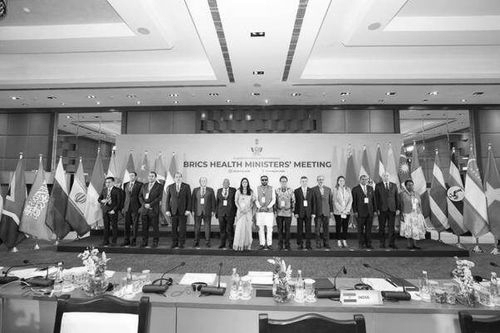
Nadda Highlights India’s Healthcare Reforms at 16th BRICS Health Ministers’ Meeting
Union Health Minister J P Nadda on Thursday highlighted India’s transformative healthcare reforms, saying people-centric policies, expanded access, digital public infrastructure and improved service delivery have strengthened the country’s health system.
Addressing the 16th BRICS Health Ministers’ Meeting virtually, Nadda welcomed health ministers, heads of delegations and senior officials from BRICS member and partner countries participating in the meeting in Chandigarh. The event is being hosted by India from July 22 to 24 as part of its 2026 BRICS chairship. A key outcome of the meeting was the unanimous adoption of the 16th BRICS Health Ministerial Declaration, which seeks to deepen cooperation and promote resilient, equitable and people-centric healthcare systems across member countries.
Recognising mental health as a key component of Universal Health Coverage, Nadda announced the establishment of the BRICS Network of Centres of Excellence on Mental Wellness, to be coordinated by NIMHANS. The initiative is aimed at strengthening research, promoting mental well-being and addressing treatment gaps.
The meeting also saw the adoption of operational frameworks on Diseases Driven by Social Determinants of Health and the BRICS Network of National Public Health Institutes, providing a stronger institutional basis for scientific collaboration, public health intelligence and multi-sectoral action.
Nadda stressed the need for closer cooperation to tackle infectious diseases, non-communicable diseases, climate-related health risks and emerging technological challenges. He called for stronger collaboration on tuberculosis, noting that BRICS nations account for nearly half of the global TB burden.
He also highlighted initiatives in digital health, healthy lifestyles and pandemic preparedness, including the BRICS Integrated Early Warning System for mass infectious diseases. India’s experience with the Ayushman Bharat Digital Mission and E-Sanjeevani telemedicine platform was cited as an example of how digital infrastructure can expand healthcare access in remote and underserved areas.
Calling for a more inclusive global health architecture, Nadda invoked the Indian philosophy of ‘Vasudhaiva Kutumbakam’, urging BRICS nations to work together in solidarity and shared responsibility to build a healthier future.