
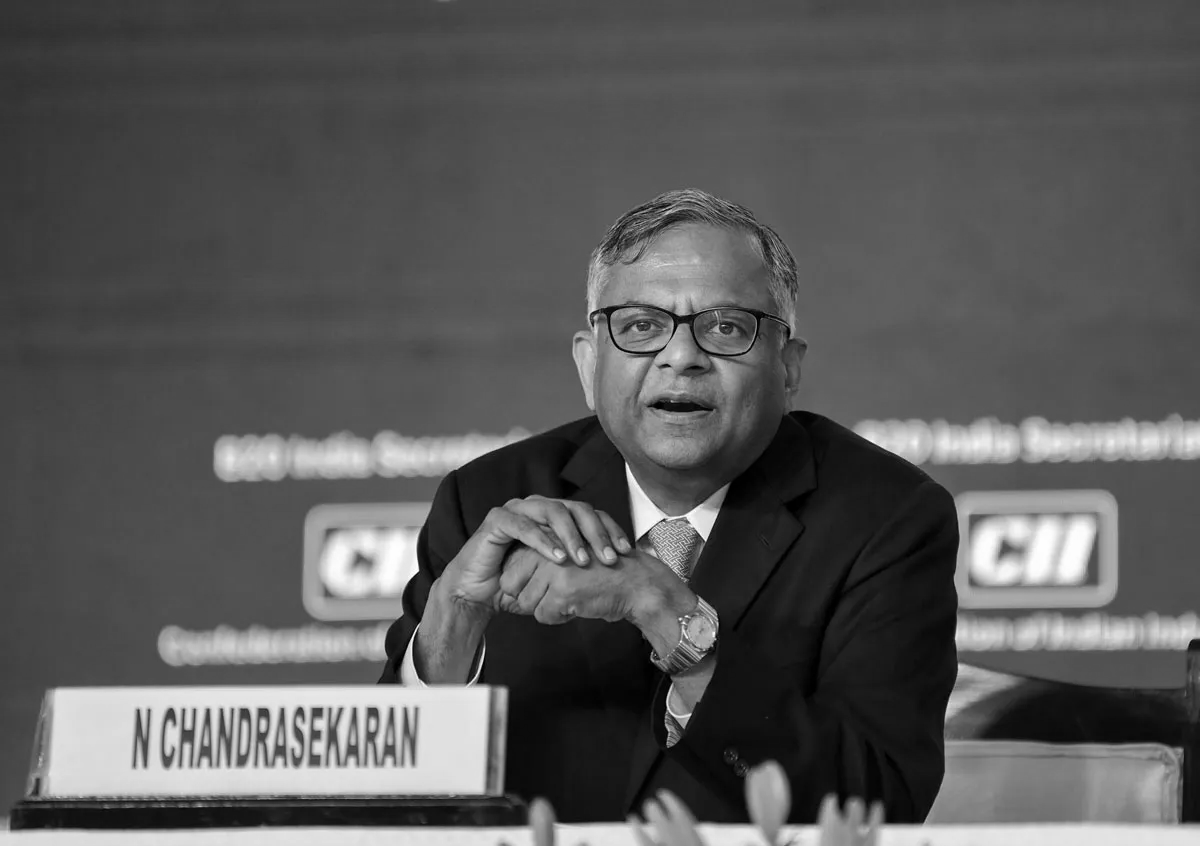
N Chandrasekaran to Exit Tata Sons After Decade at Helm, Succession Battle Begins
N Chandrasekaran will step down as chairman of Tata Sons on February 20, 2027, ending a decade at the helm of one of India's most influential business groups and opening a new chapter in a leadership battle that has already unsettled investors.
Chandrasekaran, 63, who has spent 40 years with the Tata Group, told the Tata Sons board on Wednesday that he would not offer himself for reappointment. He also urged the board to decide on his successor soon, saying clarity was needed as several strategic projects remained at critical stages.
The decision follows a six-month deadlock over his proposed five-year extension. The Sir Dorabji Tata Trust and Sir Ratan Tata Trust had recommended extending his term, and the proposal moved through the Tata Sons nomination process before reaching the board on February 24. But one director did not support it, and Chandrasekaran deferred the matter. No resolution followed.
He has not named the director. However, the standoff has been linked to differences with Noel Tata, chairman of Tata Trusts and Ratan Tata's younger half-brother. Tata Trusts collectively controls about 66 per cent of Tata Sons. Reported disagreements involved the group's five-year strategy, governance, the performance of newer businesses, Tata Sons' potential listing and how the Shapoorji Pallonji Group could exit its stake without a public listing. Concerns were also raised over losses at businesses including Air India.
The dispute is significant because Chandrasekaran leaves behind a dramatically reshaped Tata empire. Since taking charge in 2017, he pushed the group into aviation, semiconductors, electronics, batteries and digital businesses, while expanding its traditional strengths in automobiles, steel and technology. His tenure included bringing Air India back into the Tata fold and consolidating the group's aviation operations, including the Vistara merger.
That aggressive expansion also brought heavy investment and pressure to deliver returns, making the performance of newer ventures central to the debate over Tata's future strategy.
The market reacted sharply to his decision. TCS fell about 5.3 per cent, Tata Motors dropped 3.3 per cent, while Titan and Tata Steel declined more than 2 per cent as investors reacted to the leadership uncertainty. Analysts described the initial sell-off as a knee-jerk reaction and said sentiment could stabilise once a credible successor is chosen.
Yet Chandrasekaran's tenure has also delivered substantial shareholder wealth creation. Tata Group's listed companies recorded a 3.3-fold increase in combined market capitalisation during his tenure, highlighting the scale of the transformation before his exit.
Chandrasekaran joined Tata Group in 1987, rose through Tata Consultancy Services and became its CEO in 2009. He took over Tata Sons in 2017 after Cyrus Mistry's removal.
Now, the succession process begins. The next chairman will inherit a vast global conglomerate, but also the unresolved question of how power should be balanced between Tata Trusts and professional management. The answer could shape the Tata Group for the next decade.