
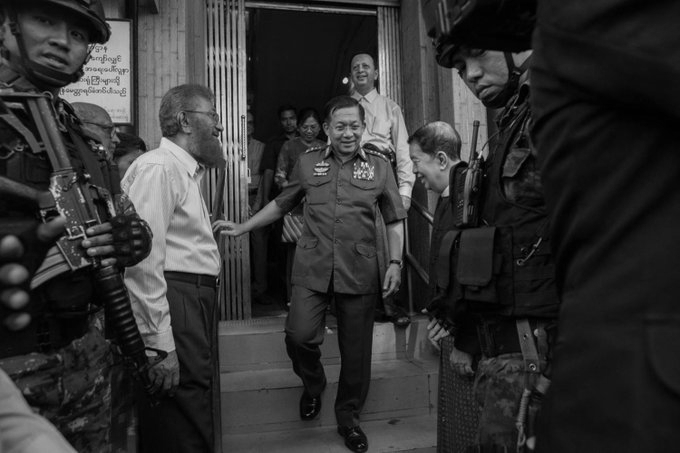
Myanmar’s Min Aung Hlaing Rejects Parts Of ICJ Genocide Ruling On Rohingya
Myanmar's military-backed President Min Aung Hlaing has said his government will refuse to comply with certain requirements of a landmark International Court of Justice (ICJ) ruling that found the country responsible for genocide against the Rohingya Muslim minority. His statement raises fresh concerns over international efforts to secure justice for victims of the 2017 military crackdown.
Addressing a Cabinet meeting on Wednesday, Min Aung Hlaing said Myanmar would take appropriate action as a responsible country but would reject requirements it considered "inappropriate", according to the state-run Global New Light of Myanmar newspaper. He did not specify which parts of the judgment his administration intended to disregard.
The president described the case brought by The Gambia as a "one-sided accusation" and said the use of the term genocide had seriously damaged Myanmar's international reputation. His government had earlier called the November 19 ruling unfair and disappointing, pointing to the six judges who dissented from the majority decision.
The ICJ, the United Nations' highest judicial body, ruled that Myanmar committed genocide during its 2017 military operations in Rakhine State. The court found that security forces killed thousands of Rohingya civilians, carried out widespread sexual violence and subjected children to extreme violence. It rejected Myanmar's argument that the operations were legitimate counter-insurgency measures.
The judgment requires Myanmar to investigate and prosecute suspected perpetrators, prevent further genocidal acts, protect Rohingya from discrimination and facilitate the safe return of displaced people. It also ordered the restoration of lost property, efforts to locate missing people, rehabilitation for survivors and compensation where restitution is insufficient. Myanmar must report on its implementation measures within two years.
The crackdown forced more than 730,000 Rohingya to flee to neighbouring Bangladesh. Around 1.2 million refugees now live in camps there.
Although the ruling is legally binding and final, the ICJ has no direct enforcement mechanism. Any action through the UN Security Council could face opposition from the United States, China or Russia.
Meanwhile, Britain formally recognised the Rohingya genocide on November 23, sanctioned five senior Myanmar military officers, announced plans to restrict aviation fuel supplies and pledged £8 million for humanitarian assistance and justice initiatives. The Security Council is expected to discuss the ruling privately on December 7.
Separately, International Criminal Court prosecutors sought an arrest warrant for Min Aung Hlaing in 2024 over alleged crimes against humanity. Judges have yet to announce a decision.
Myanmar remains engulfed in civil war after Min Aung Hlaing seized power in 2021, overthrowing the elected government led by Aung San Suu Kyi.