
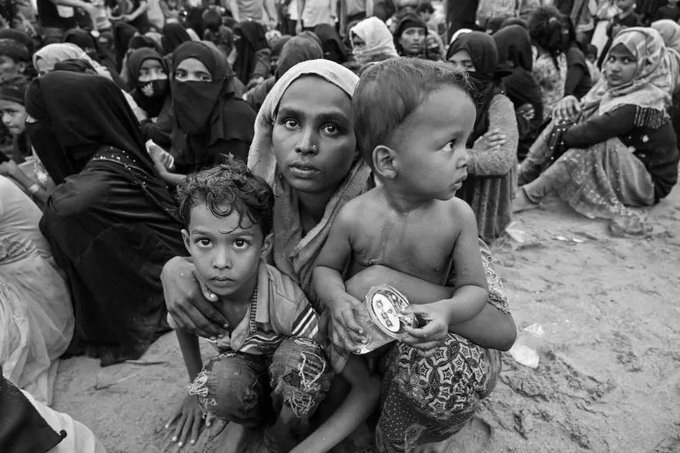
Myanmar military faces Rohingya genocide case at UN court
The United Nations’ top court will begin hearings into allegations that Myanmar committed genocide against the Rohingya Muslim minority, marking a pivotal stage in one of the most significant cases before the International Court of Justice. The case was filed in 2019 by Gambia , a Muslim-majority country in West Africa, which argues that Myanmar’s military campaign in Rakhine state in 2017 violated the 1948 Genocide Convention . Myanmar, now under military rule, denies the accusations.
Myanmar is an ethnically diverse country with more than 135 officially recognised ethnic groups. While communities such as the Bamar, Shan, Karen, Kachin and Rakhine are acknowledged by the state, the Rohingya have long been excluded from citizenship. Decades of discrimination, restrictions on movement, denial of education and healthcare, and periodic violence rendered the community effectively stateless well before the events that led to the case.
The legal challenge centres on a military operation launched after attacks by a Rohingya insurgent group in August 2017. What the army described as a “ clearance operation ” quickly escalated into widespread violence. United Nations investigators and rights groups documented mass killings, extrajudicial executions, gang rapes, sexual violence, torture and the systematic burning of entire Rohingya villages . Satellite imagery showed hundreds of villages destroyed, with homes, mosques, farms and markets razed.
The crackdown forced more than 700,000 Rohingya to flee to Bangladesh within months, joining earlier waves of refugees. Today, around 1.2 million Rohingya live in overcrowded camps in Bangladesh, while many others remain internally displaced or scattered across the region. Conditions in the camps are dire, marked by food shortages, poor sanitation, limited healthcare and restricted access to education and livelihoods. Children face risks from trafficking and exploitation, while women and girls remain vulnerable to abuse.
Gambia said it brought the case as a moral and legal duty to uphold the Genocide Convention, which allows any signatory state to act in the collective interest of preventing genocide. During earlier hearings, Gambia’s lawyer Paul S. Reichler warned that without international judicial scrutiny, Myanmar’s military “will be accountable to no one and there will be no constraints on their persecution and ultimate destruction of the Rohingya.”
“Myanmar’s case before the ICJ is a beacon of hope for hundreds of thousands of people like myself that our plight for justice will not go unheard,” said Lucky Karim of Refugee Women for Peace and Justice.
Myanmar was initially represented at the court by Nobel Peace Prize laureate for “non-violent struggle for democracy and human rights” Aung San Suu Kyi , who denied genocide in 2019, saying the mass exodus was an unintended outcome of counter-insurgency operations. She has since been imprisoned following the military takeover, convicted on charges her supporters call politically motivated.
The proceedings have reignited debate over selective justice in international law. Rights advocates argue that while an unstable country like Myanmar faces accountability, major powers such as Israel and China should also be subject to equal legal scrutiny for alleged mass abuses against Muslim populations. Activists also stress that Bangladesh must be held accountable for attacks on Hindu minorities , underscoring that justice should apply uniformly. A genocide finding would strengthen parallel efforts at the International Criminal Court against Myanmar’s military leadership.