
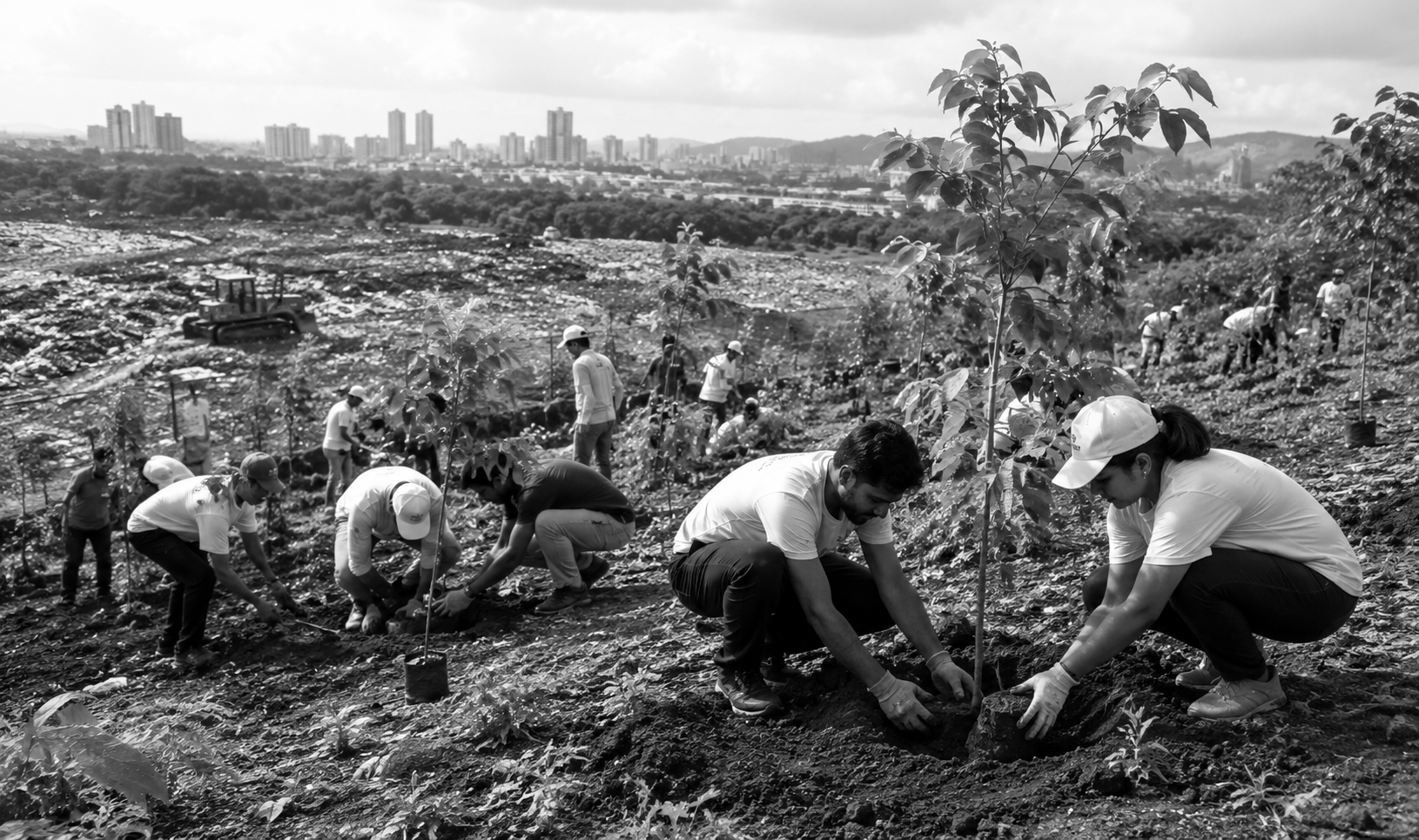
Mumbai Launches 16,000-Tree ReRoot Drive to Transform Kanjurmarg Landfill
As cities across India grapple with rising temperatures, shrinking green spaces and mounting environmental pressures, Mumbai has unveiled an ambitious initiative that seeks to turn a former waste site into a thriving urban ecosystem. On World Environment Day , the Brihanmumbai Municipal Corporation (BMC) launched ReRoot , a large-scale afforestation drive that will see around 16,000 trees planted at the Kanjurmarg dumping ground in eastern Mumbai.
The plantation campaign, organised jointly by BMC and Antony Waste Handling Cell Ltd , aims to transform part of the waste-processing facility into a greener and more sustainable landscape. According to the civic body, more than seven indigenous tree species suited to the local environment will be planted during the drive. The new saplings will add to the 12,800 plants already growing at the site, significantly expanding green cover in the area.
Citizens were invited to participate in the initiative throughout the day, with officials describing the project as an effort to convert solid waste management infrastructure into a green and resilient urban ecosystem . Beyond beautification, the plantation is expected to contribute to biodiversity enhancement, pollution mitigation and improved environmental conditions around the landfill.
The launch of ReRoot comes at a time when Maharashtra is intensifying its push toward urban greening and afforestation. Over the past decade, the state has undertaken several large-scale programmes, including the Green Maharashtra Mission , Harit Maharashtra Abhiyan and annual Van Mahotsav campaigns. Municipal corporations across Mumbai, Pune, Thane and Nagpur have also invested in urban forests, biodiversity parks and restoration projects to expand green spaces.
Yet the growing emphasis on plantation drives has also sparked debate among environmental experts. While large-scale tree planting generates public participation and environmental awareness, researchers increasingly argue that the true measure of success lies not in the number of saplings planted but in their long-term survival and ecological impact.
According to the latest India State of Forest Report (ISFR) 2023 , Maharashtra has approximately 65,383 square kilometres of forest and tree cover , including 50,858 sq km of forest cover and 14,525 sq km of tree cover . The state also possesses the largest tree cover outside forests in India , highlighting the increasing role of urban and community-based plantations in maintaining green landscapes.
However, experts caution that gains in plantation numbers do not always translate into the restoration of natural ecosystems. As a result, initiatives such as ReRoot are being closely watched as potential models for long-term ecological restoration rather than one-day symbolic plantation exercises.
For Mumbai, the challenge now extends beyond planting 16,000 trees. The real test will be ensuring that these saplings survive, mature and eventually transform a former dumping ground into a self-sustaining urban forest that benefits future generations.