
Mumbai Bus Workers Challenge Court Order Over Pay, Pensions and Job Security
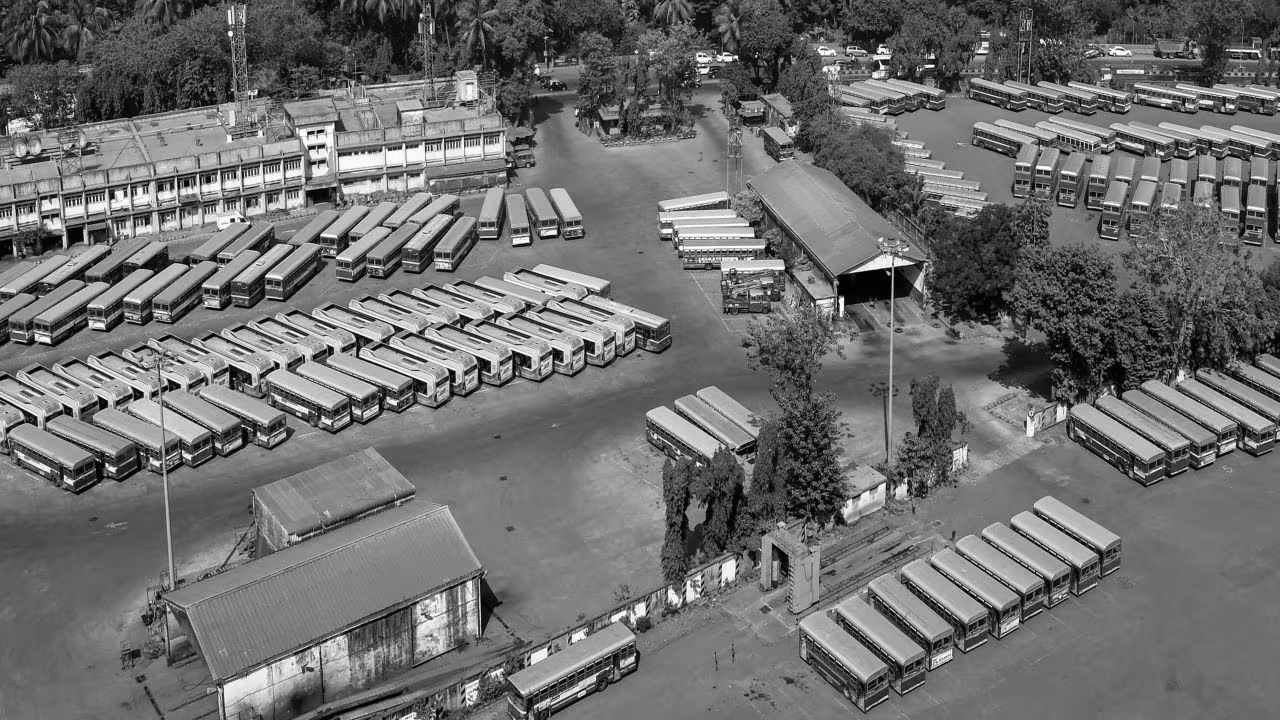
Mumbai's public transport system faced major disruption on Friday after employees of the Brihanmumbai Electric Supply and Transport (BEST) undertaking launched an indefinite strike, defying an Industrial Court order and the Maharashtra government's invocation of the Maharashtra Essential Services Maintenance Act (MESMA) . The strike severely affected bus operations across the city, leaving thousands of commuters stranded during peak morning hours and bringing renewed attention to the long-standing issues confronting one of Mumbai's most important public service institutions.
The agitation was called by the BEST Sanyukt Kamgar Kruti Samiti , a joint action committee representing 12 unions, after workers alleged that their long-pending demands had remained unresolved despite repeated assurances from authorities. The impact of the strike was visible from the early hours of Friday, with hardly any buses leaving BEST's 27 depots across Mumbai. Striking employees allegedly prevented buses from operating, forcing commuters to depend on autorickshaws, taxis, app-based cab services and the Metro network to reach their destinations.
The strike went ahead despite an ad-interim order issued by the Industrial Court restraining employees from resorting to industrial action. The Maharashtra government had also invoked MESMA , declaring the strike illegal because of its potential impact on essential services. Mumbai Police warned that legal action would be taken against anyone obstructing public transport operations, damaging BEST property or preventing willing employees from reporting for duty.
The dispute carries enormous significance because BEST remains the city's second-largest public transport provider after the suburban railway network. The undertaking transports nearly 25 lakh passengers daily and supplies electricity to more than 10 lakh consumers in South and Central Mumbai. Any disruption to its services has immediate repercussions for commuters, businesses and public life across the financial capital.
At the core of the agitation are demands that unions say have been ignored for years. Employees are seeking the merger of BEST's budget with that of the Brihanmumbai Municipal Corporation (BMC) , implementation of the Seventh Pay Commission recommendations for 2016-2026 , recruitment to vacant posts, promotions for eligible workers and an end to contractual employment practices in both the transport and electricity divisions. They have also demanded the absorption of wet-lease workers and opposed further privatization and public-private partnership initiatives.
One of the most contentious issues is BEST's increasing dependence on the wet-lease model . Of the nearly 2,700 buses currently operated by the undertaking, only 243 are owned by BEST , while the rest are supplied by private contractors. Employee unions argue that this model has reduced permanent employment opportunities and weakened the public character of the organization. They are demanding that BEST expand its own fleet to between 5,000 and 6,000 buses under direct ownership.
Retirement dues have emerged as another major flashpoint. Earlier this month, the Maharashtra government approved ₹500 crore as the first installment toward clearing long-pending dues of retired BEST employees. While unions welcomed the move, they argue that total outstanding liabilities are much higher, with some labour leaders estimating the backlog at around ₹1,410 crore . Workers continue to seek a comprehensive settlement of all pending dues.
The latest confrontation has also revived memories of the landmark 2019 BEST strike , when employees raised many of the same concerns, including financial support, employee welfare and opposition to privatization. Interestingly, not all unions supported the current agitation. The Shramik Utkarsh Sabha and the BEST Kamgar Union distanced themselves from the strike, stating that discussions with the administration and state government were still underway.