
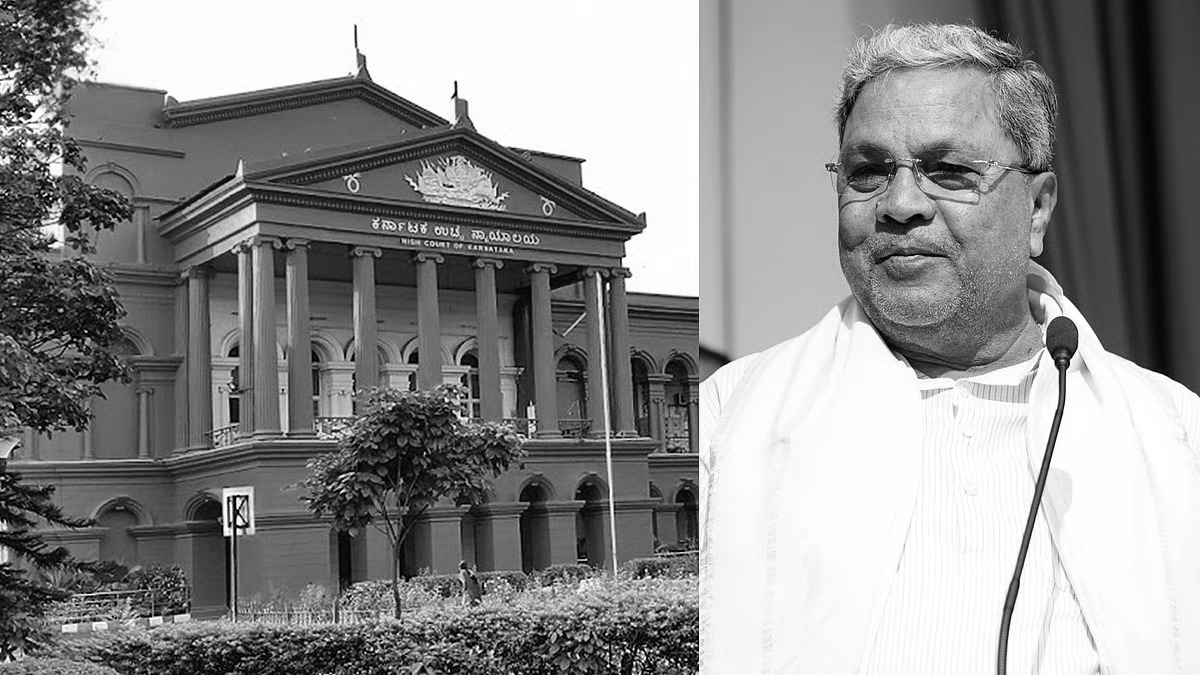
MUDA Land Case Reopens as High Court Questions Closure Report
The MUDA site allotment case has re-emerged as a significant legal and political issue in Karnataka, drawing renewed attention after the Karnataka High Court stepped in to review the closure of earlier proceedings. The case centres on allegations linked to the allotment of compensatory land to Chief Minister Siddaramaiah’s wife, Parvathi B M , under a government scheme.
The controversy dates back to the acquisition of nearly 3.16 acres of land owned by Parvathi in Mysuru by the Mysuru Urban Development Authority (MUDA) for the development of a residential layout. As part of its 50:50 scheme , MUDA compensates landowners by allotting them half of the developed land in exchange for their acquired property. While the policy is intended to ensure fair rehabilitation, concerns were raised in this instance over the nature and value of the plots allotted .
Petitioners have alleged that the sites granted to Parvathi were located in a prime locality with significantly higher market value than the original land acquired, suggesting a possible imbalance in compensation . These claims triggered an investigation by the Lokayukta police , which registered a case against Siddaramaiah, his wife, and his brother-in-law.
However, after completing its probe, the Lokayukta police filed a B-Report (closure report) , concluding that there was no prosecutable evidence to substantiate the allegations. The report effectively cleared all accused and was subsequently accepted by a Special Court for public representatives on January 28 , appearing to bring the matter to a close.
The issue has now taken a fresh turn. Acting on a petition filed by activist Snehamayi Krishna , the Karnataka High Court has questioned the closure and issued notices to all key parties, including Siddaramaiah and his wife. The court has also sought responses from the Lokayukta police and the Enforcement Directorate (ED) , indicating that the findings of the earlier investigation may undergo closer judicial scrutiny.
With the High Court reopening the matter, the case has once again moved into the public and political spotlight. Beyond the individuals involved, it raises broader concerns about transparency in land acquisition processes, fairness in compensation frameworks, and accountability within public institutions . The outcome of the court’s review is likely to have far-reaching implications , both legally and politically, in the days ahead.