
MP High Court orders ASI to share Bhojshala survey videography with all parties
The Madhya Pradesh High Court has directed the Archaeological Survey of India (ASI) to upload and share the complete videography of its survey of the Bhojshala Complex with all contesting parties, marking a significant step in the ongoing legal dispute over the religious nature of the site.
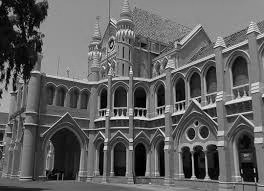
A division bench comprising Justices Vijay Kumar Shukla and Alok Awasthi issued the order while hearing multiple petitions related to the Bhojshala complex in Dhar district, where Hindus claim the structure to be a temple dedicated to Goddess Saraswati (Vagdevi), while Muslims identify it as the Kamal Maula mosque.
The court directed the ASI to upload the entire videographic record of its 96-day survey on a secure digital platform and provide access to both the litigants and the court by April 27. The bench observed that access to such material is essential for ensuring fairness, particularly when objections to the ASI report may arise from the recorded evidence.
The direction came after submissions by senior advocate Salman Khurshid, appearing for the Maulana Kamaluddin Welfare Society, who argued that the respondents must be given access to the videography to effectively challenge the survey findings. He also referred to earlier directions of the Supreme Court, which indicated that objections arising from such material should be duly considered.
Opposing the plea, counsel for the ASI submitted that the volume of footage, spanning several weeks, made it difficult to share and that the Supreme Court had envisaged viewing primarily by the High Court. The bench, however, rejected this contention, emphasizing the need for transparency in proceedings.
During the hearing, an intervener’s counsel also questioned the maintainability of petitions filed by Hindu groups, arguing that the dispute involves contested ownership claims and should be adjudicated by a civil court or a tribunal under the Waqf Act, 1996 . It was further contended that historical land records dating back to 1925–26 describe the site as a mosque and that any challenge to its Waqf status is now time-barred.
Arguments were also advanced on the architectural features of the structure, with claims that it reflects characteristics typical of a mosque, including a mihrab and qibla alignment. At the same time, the ASI’s findings have indicated that the existing structure may have been constructed using remains of an earlier Hindu temple dating back to the Paramara period.
The Bhojshala complex has long been at the centre of competing religious claims. Believed to have been established during the reign of Raja Bhoja in the 11th century as a centre of learning associated with Goddess Saraswati, the site later came to be used as a mosque during subsequent periods. Over time, administrative arrangements allowed for regulated access to both communities on designated days.
The matter has now been listed for further hearing next week, with the court expected to examine objections, if any, arising from the videographic evidence once it is made available to all parties.