
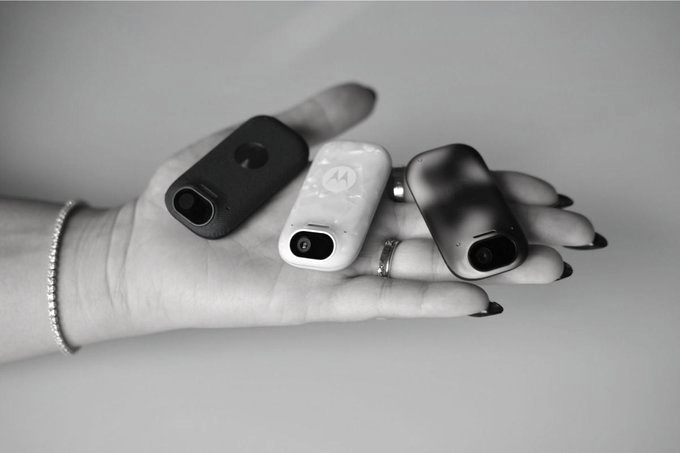
Motorola Showcases Qira AI Platform, AI Wearable Concept at Electonics Show 2026
Motorola on Tuesday announced a unified artificial intelligence platform called Qira and showcased an AI-powered wearable prototype, dubbed Project Maxwell , at the Lenovo Tech World event during CES 2026 in Las Vegas.
CES, or the Consumer Electronics Show , is the world’s largest annual technology exhibition, where global companies unveil next-generation consumer electronics, software platforms, and future technology concepts.
Qira brings together Lenovo’s AI Now and Motorola’s moto AI into a single cross-device AI system designed to work seamlessly across smartphones, personal computers, and future wearables from both brands. The platform is built to retain user context, memory, and preferences across devices, allowing users to continue tasks without repeating instructions.
Motorola said Qira is designed to offer a consistent AI experience across the Lenovo–Motorola ecosystem by understanding natural language commands, remembering task progress, and anticipating user needs. Lenovo brought Motorola Mobility under its global portfolio with its acquisition in 2014, though collaboration for several years remained largely limited to hardware and manufacturing integration. A stronger push towards a connected ecosystem began in 2024 with the launch of Smart Connect , laying the groundwork for deeper cross-device interaction. This effort has now evolved into the Qira unified AI platform, unveiled at CES 2026 , which combines on-device and cloud-based AI and is backed by partnerships with Microsoft, Google, Qualcomm, Intel, and Perplexity AI.
For everyday users, the unified AI platform is expected to simplify device usage by reducing reliance on multiple assistants and improving productivity. Qira is likely to be integrated into Motorola and Lenovo devices without additional cost.
Motorola also introduced Project Maxwell , described as a perceptive AI companion device. Developed by Motorola’s 312 Labs team, the wearable prototype integrates a camera, microphone, and sensors to understand the user’s surroundings and provide contextual assistance in real time.
The device uses multimodal perception to process visual and audio inputs simultaneously and can respond to natural language commands without requiring a smartphone. Motorola clarified that Project Maxwell is a proof of concept and not production-ready , with no launch timeline announced.
While no official pricing has been revealed, industry estimates suggest that if Project Maxwell is commercialised, it could be priced between $299 and $499 globally . In India, this would translate to an estimated range of ₹25,000 to ₹45,000 , positioning it as a niche, early-adopter product.
With Qira, Motorola and Lenovo are aligning with an ecosystem-based AI strategy similar to those pursued by rivals such as Apple, Google, and Samsung. While the unified AI platform is expected to reach consumers through existing devices in the near future, Project Maxwell represents a longer-term vision for hands-free, context-aware AI companions.
Motorola’s announcements at CES 2026 underscore the growing focus on connected and intelligent consumer technology, with promises of simpler and more seamless digital experiences for everyday users.