
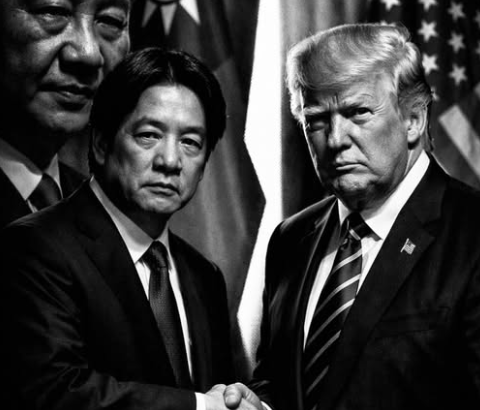
Most Favoured Nation: US grants Taiwan lowest tariffs at 15%
The United States and Taiwan have signed a landmark trade agreement under which Taipei will remove or sharply reduce 99 per cent of its tariffs , while Washington will lower duties on Taiwanese imports to 15 per cent , the lowest tariff rate the US imposes on any major trading partner , reflecting both economic and strategic priorities in the Asia-Pacific. The deal marks one of the most consequential trade and strategic partnerships in the region in recent years.
Under the agreement, Taiwanese exports to the US will face a 15 per cent tariff, or the US government’s “Most Favoured Nation” rate , aligning Taiwan with other Asia-Pacific trading partners such as Japan and South Korea . In return, Taiwan has committed USD 250 billion in direct investments across US industries, including advanced semiconductor manufacturing, artificial intelligence applications, and energy. The Taiwanese government will also provide up to an additional USD 250 billion in credit guarantees to support smaller firms investing in the US. These commitments allowed the US to reduce previously proposed tariffs from as high as 32 per cent to 15 per cent, placing Taiwan among the most preferentially treated US trading partners.
Taiwan will also significantly increase its long-term purchases of US products , committing USD 44.4 billion in liquefied natural gas and crude oil , USD 25.2 billion in power equipment , and USD 15.2 billion in civil aircraft and engines . Tariffs on US agricultural products will be immediately eliminated, and restrictions on automobiles, pharmaceuticals, medical devices, machinery, and chemicals will be eased, giving American producers near-complete market access. American farmers, ranchers, and industrial manufacturers are expected to reap major benefits from this expanded access.
The agreement addresses a widening trade imbalance, which reached nearly USD 127 billion in the first 11 months of 2025 due to US dependence on Taiwanese semiconductor exports. US officials said the pact would help create multiple “world-class” industrial parks to boost domestic high-tech manufacturing and secure supply chains for advanced technologies.
At the centre of the deal is TSMC , the world’s largest contract chipmaker. TSMC has committed USD 165 billion to US fabrication plants and a major research and development hub. These investments aim to strengthen domestic chip production, support US artificial intelligence ambitions, and reinforce supply chains relied upon by technology leaders such as Nvidia and AMD .
Taiwan’s security relationship with the US has long relied on its “silicon shield” - the strategic advantage derived from producing over 60 per cent of the world’s chips and more than 90 per cent of advanced semiconductors. By embedding Taiwanese companies into US industrial and defence ecosystems, the deal transforms Taiwan’s leverage from purely technological dominance to long-term strategic interdependence , reducing the risk that China could use semiconductor control as leverage.
Taiwan’s 15 per cent tariff rate is notably low compared with other major US trading partners. The European Union typically faces 19–23 per cent , India 18 per cent , China 34 per cent , Pakistan 19 per cent , and Bangladesh 19 per cent . A small group of countries have agreed to zero or near-zero tariffs on US goods . Israel eliminated all tariffs on US imports, while Vietnam , Philippines , and Taiwan have committed to near-complete tariff elimination. India has offered zero-duty access for key sectors, including pharmaceuticals, aircraft components, and select agricultural goods.
Ambassador Jamieson Greer attended the signing of the US–Taiwan Agreement on Reciprocal Trade, held under the auspices of the American Institute in Taiwan and the Taipei Economic and Cultural Representative Office in the United States. He described the agreement as a groundbreaking deal that strengthens supply chain resilience and expands opportunities for American farmers, ranchers, and manufacturers across Asia.
Politically, the pact comes ahead of President Donald Trump ’s planned visit to China in April, signalling a deepening economic and strategic partnership between Washington and Taipei amid intensifying US–China rivalry. Analysts say the deal is also a clear strategic move to challenge China , ensuring that Taiwan remains economically and technologically embedded with the US, while giving Washington leverage in the semiconductor and high-tech sectors that are critical to regional security.
China’s response has been sharply critical. Officials in Beijing warned that the pact could weaken Taiwan’s economy and industrial base, accusing Taipei of aligning too closely with US strategic goals. A spokesman for China’s Taiwan Affairs Office described the deal as being negotiated “under intense pressure from Washington,” and cautioned that Taiwanese investment commitments abroad could “hollow out” key industries on the island. State media echoed these concerns, framing the agreement as inconsistent with the “One China” principle and potentially destabilising regional economic relations. At the same time, China continues to emphasise cross‑Strait trade and economic cooperation as counterweights, while pursuing broader trade diversification strategies to manage US tariffs.