
More people, or better lives? Rethinking India’s population policy in the 21st century
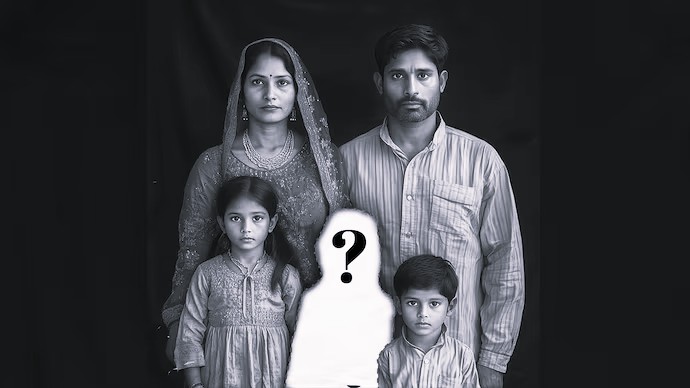
When Andhra Pradesh Chief Minister N. Chandrababu Naidu recently remarked that Indian families should “have at least two or three children for the nation’s future,” he reignited a debate many thought was settled. The comment, made while discussing declining birth rates, seemed to reverse decades of belief that India’s population needed stabilisation, not expansion. It sparked sharp reactions from economists, women’s groups, and environmentalists, who questioned whether his nostalgia for larger families fits the arithmetic of 21st-century economics and technology.
Naidu, once a symbol of digital governance and futuristic planning, now finds himself in a paradox calling for more births when the world’s leading economies are investing in automation, AI, and green innovation rather than raw population growth. His statement, though well-meant, opens a crucial conversation: should India encourage more children, or invest more wisely in the people it already has?
The context: Andhra Pradesh and the new demographic fear
Andhra Pradesh’s fertility rate, like much of southern India’s, has fallen below the replacement level of 2.1. The state’s Total Fertility Rate (TFR) stands around 1.6 — comparable to developed countries like Germany and Japan. Naidu’s concern arises from a real issue: the working-age population is shrinking in some regions, raising fears of future labour shortages, pension burdens, and ageing demographics. Yet translating that concern into a “three-child” call overlooks deep structural changes in India’s economy and society. The real challenge is not that Indians are having too few children, but that India still fails to productively educate and employ the millions of youth it already has.
India’s demographic picture: From explosion to transition
For decades, India was defined by a demographic explosion from 350 million in 1947 to over 1.4 billion by 2024. Having overtaken China, India now faces a new reality: uneven demographic transition. Southern and western states like Andhra Pradesh, Tamil Nadu, Kerala, and Maharashtra have fertility rates below replacement, while northern and eastern states such as Bihar, Uttar Pradesh, and Jharkhand continue to grow rapidly. This duality means India is simultaneously experiencing population growth and decline. India’s median age is around 28, still young but the advantage won’t last. By 2040, a large section of the workforce will begin ageing. Without urgent investment in education and skills, the “demographic dividend” could turn into a demographic debt.
Why the three-child argument is economically flawed
Naidu’s argument stems from the old belief that more people mean more growth, an equation no longer valid.
Labour productivity now outweighs labour quantity. Modern economies thrive on innovation, not headcount. Japan, Germany, and South Korea show that smaller, skilled populations can sustain prosperity through automation and excellence.
Job creation lags behind population growth. India already struggles to employ its youth 10–12 million join the labour market annually, but few find stable work. More births without more jobs will deepen unemployment and inequality.
Fiscal strain. Encouraging bigger families increases spending on healthcare, education, and housing — areas already under fiscal pressure.
Gender impact. Pro-natalist policies often fall on women, curbing their participation in education and work — sectors crucial to modern growth.
Environmental cost. Every new citizen needs food, energy, and water. In a climate-stressed country like India, population growth can magnify ecological fragility.
21st-Century economics: Growth in the age of AI
The world Naidu once envisioned filled with e-governance and digital innovation — is now being reshaped by Artificial Intelligence. Automation is transforming every industry, from manufacturing to farming.
In this new era:
• Low- and middle-skill jobs are shrinking , while high-skill, digital roles are expanding.
• Reskilling and education have become the key to employability.
• Human creativity and empathy , not population size, drive competitiveness.
Adding more people to an economy that already struggles to employ its youth only widens inequality. In the AI era, skills are the new oil; numbers alone no longer bring growth.
The “Population Productivity Paradox”
India’s paradox is clear: it has one of the youngest populations, yet one of the highest youth-unemployment rates. This reflects mismatch, not shortage. Millions of graduates hold degrees but lack employable skills. Informal work still dominates, offering little security. Women’s workforce participation is only around 25 percent, constrained by social and safety barriers. Adding a third child won’t solve these problems it could worsen them by stretching limited resources thinner.
Lessons from abroad
Countries that once promoted higher fertility are rethinking their approach. China ended its one-child policy and tried incentives for larger families yet births kept falling. Japan, South Korea, and Singapore offer tax breaks and childcare support, but fertility remains low. The lesson: slogans don’t create babies; economic security and gender equality do. Stable jobs, affordable housing, and work-life balance matter far more than political appeals.
The feminist and social perspective
Encouraging women to “produce more children” without improving support systems risks reverting to patriarchal ideas. Modern women seek education, careers, and autonomy — not demographic obligations. In Andhra Pradesh and elsewhere, gaps persist in childcare, healthcare, and workplace equality. Asking women to bear more children without addressing these issues means asking them to sacrifice progress for arithmetic.
Technology, Not birth rate, Is the real growth lever
India’s path to prosperity lies not in expanding its population but in expanding its technological and human capital. Automation will dominate routine labour, while green technologies demand specialised skills. Digital governance reduces bureaucracy; education and healthcare growth depend on quality, not quantity.The future belongs to a smarter population not a bigger one.
A better path forward: From population control to population empowerment
Instead of debating how many children families should have, India should focus on making every child born healthier, skilled, and productive.
1. Invest in Human Capital
• Ensure universal, high-quality education and digital literacy.
• Improve early childhood nutrition and healthcare.
• Expand vocational and technical training for the AI era.
2. Enable Women’s Participation
• Provide maternity/paternity leave, flexible work, and childcare.
• Enforce equal pay and workplace safety.
• Empower women to choose family size freely.
3. Skill the Workforce for the AI Era
• Launch lifelong learning programs and retraining initiatives.
• Build industry-academia partnerships for continuous upskilling.
• Promote entrepreneurship and digital micro-enterprises.
4. Reform Social and Pension Systems
• Invest in health insurance and old-age care.
• Encourage savings and voluntary retirement schemes.
5. Promote Balanced Regional Development
• Offer incentives for migration to underdeveloped states.
• Strengthen rural broadband and local industries.
6. Integrate Population Policy with Climate Policy
• Assess environmental impact of demographic policies.
• Encourage sustainable urban planning and smaller families.
The political angle: Easy rhetoric, Hard reality
Naidu’s call fits a broader political trend invoking population themes to signal patriotism or tradition. But demography is not ideology; it’s economics and social planning. It’s easier to urge citizens to “have more children” than to fix schools, hospitals, and labour markets. Real leadership lies in the latter. India needs reformers who will modernise education and empower women, not romanticise large families.
The fiscal reality
Every additional child represents a significant lifetime public cost in education and welfare. Without matching productivity or revenue, this burden is unsustainable. India’s priority should be quality spending per child, not quantity of children. A single well-educated, healthy child contributes more to the economy than several undernourished, undereducated ones.
AI, Labour, and the future of work
By the 2030s, AI will handle much of manufacturing, logistics, and services. Routine jobs will shrink; creative, caregiving, and analytical roles will rise. The real challenge isn’t too few babies it’s too few adaptable adults. India must prepare its youth to work with machines, not compete with them. That requires long-term policy vision, not short-term population expansion.
A call for rational population discourse
India’s population debate has swung between fears of overpopulation and fears of decline. What’s needed is balanced sustainable population management grounded in economics, gender equity, and environmental responsibility. Naidu’s remarks should be seen as an opening for dialogue, not a directive, a chance to rethink what kind of population India truly needs.
Conclusion: From counting heads to building minds
In the 1960s, India worried about “too many mouths to feed.” Today, some worry there may be “too few workers.” Both miss the point: it’s not numbers but capability that defines national strength. If India wants a secure future, it shouldn’t chase a “three-child” dream, it should chase a three-pillar vision: education, innovation, and inclusion. A nation that invests in every child’s potential will never run short of hands, ideas, or hope.