
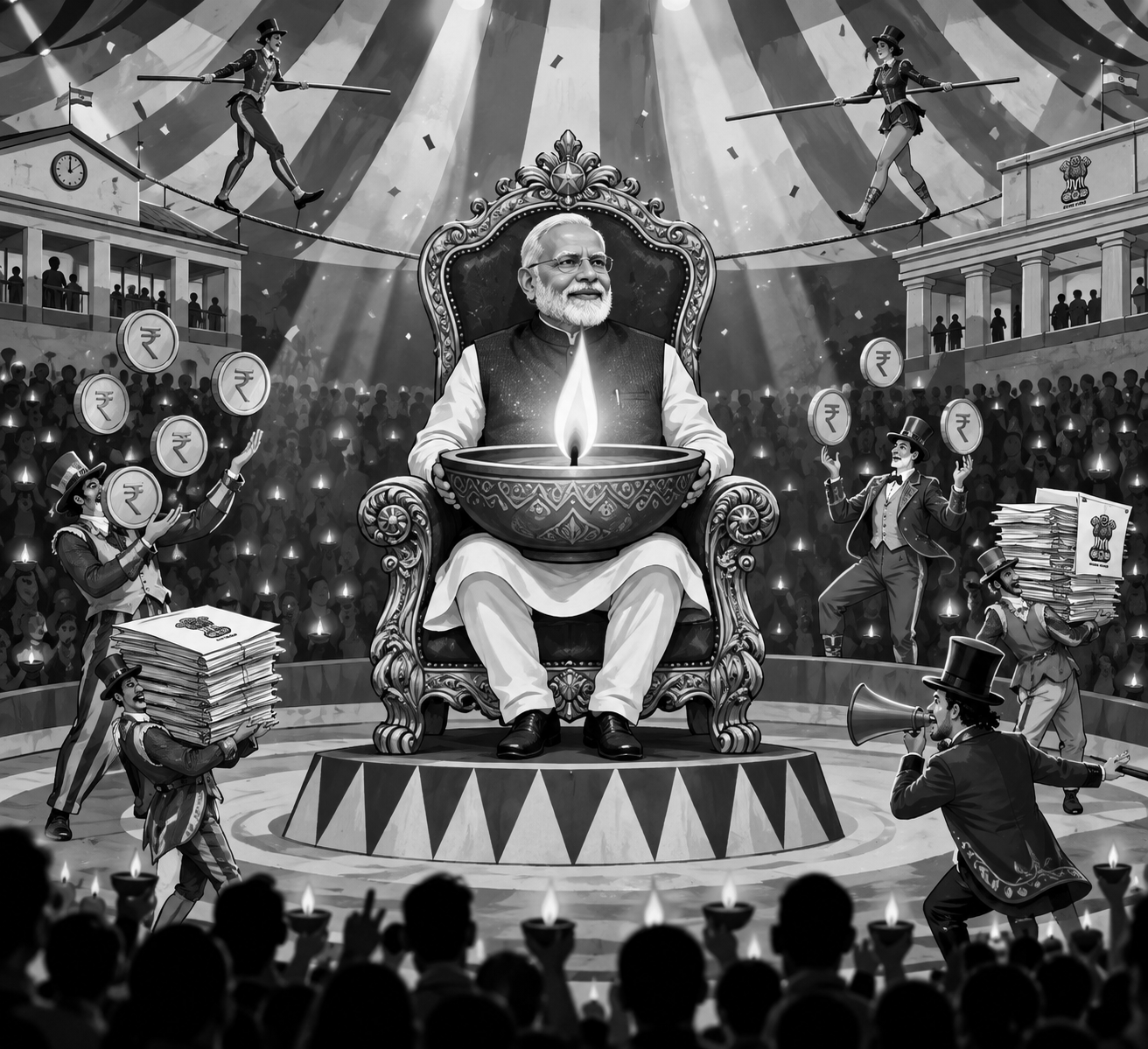
Modi’s 76th Birthday: Not Just A Birthday, But A Government-Backed Spectacle Of Diyas And Directives
Prime Minister Narendra Modi turned 76 on Thursday, and there is nothing wrong with that being cause for celebration. He is entitled to mark the day, his supporters are entitled to celebrate with him, and ordinary citizens are free to send their wishes. That much should not be up for debate. The trouble begins where a personal birthday turns into a coordinated public campaign, with government machinery pressed into service for it.
The BJP has launched a month-long "Seva Sankalp Abhiyan" tied to Modi's birthday and his 25 years in public office, alongside an appeal for citizens to light an "Aashirwad Ka Diya" for his long life and success. But a government does not need a dedicated campaign to remind people what it has done over 25 years - citizens already live with the results, good and bad, every single day. If the work was genuinely felt, it would not require diyas, banners and school participation to be noticed. Manufacturing a "showcase" for achievements the public is supposed to already recognise suggests the campaign is less about service and more about spectacle.
That distinction matters because it is not free. Every rupee spent organising this campaign is a rupee not spent on problems citizens are currently grappling with - new UPI transaction charges among them, alongside inflation and everyday cost pressures. A government choosing to fund a month-long celebration of itself, instead of addressing the issues people are actually raising, is a matter of priorities, not symbolism.
Those priorities show up clearly on the ground. In Delhi, diya material - lamps, cotton wicks and oil - was reportedly distributed to schools from Chhatrasal Stadium, with CM Shri schools receiving supplies directly and others told to arrange their own; official notices reportedly went out directing schools to participate, making the lighting a mandated exercise rather than an optional one. Bihar's Chief Secretary reviewed similar preparations across departments, with instructions reportedly sent to schools and government institutions to conduct diya-lighting - again through formal notices, not appeals for volunteers. West Bengal's plan is the most striking in scale: lamp-lighting across roughly 80,000 educational institutions, budgeted at ₹2 per lamp - a small figure that adds up fast once multiplied across tens of thousands of schools.
When a campaign built around personal "gratitude" needs administrative notices and compliance instructions to happen, it stops being an expression of goodwill and starts looking like a directive that teachers and students are simply expected to follow. Taken together, these are not isolated local initiatives but a coordinated pattern across states, run through the same public infrastructure meant to serve students, not amplify a leader's birthday. Once diyas, wicks and oil are procured and distributed through official channels, the spending stops being a private gesture and becomes public expenditure - money that should be accounted for, department by department, rupee by rupee.
That question sits uneasily against ordinary economics. Vegetable-oil prices in India have risen by nearly 20 percent over the past year, Reuters reported, pushing the government to weigh cutting import duties. The oil used in diyas is not necessarily the cooking oil households buy, so that link shouldn't be overstated. But the optics remain awkward: families watching costs climb, while public institutions spend money and staff time lighting lamps for a leader's birthday, mandated by notice rather than chosen freely. After 25 years in office, that energy would be better spent fixing what's broken than staging a circus around the person meant to fix it.