
Modi-Xi Meet, Putin’s NDB Push, BRICS Declaration: Big Power Moves In New Delhi
Prime Minister Narendra Modi 's meeting with Chinese President Xi Jinping, Russia's push to expand the role of the New Development Bank, and the adoption of a 140-point New Delhi Declaration were among the biggest developments on the opening day of the BRICS Summit in the national capital on Saturday, with India seeking to strengthen the grouping while maintaining its strategic autonomy. The 18th Summit runs through Sunday, when partner countries and outreach invitees join for an open session before the gathering formally closes.
Xi's visit, his first to India since 2019, included a nearly 50-minute meeting with Modi covering border peace, trade, market access, supply chains, business ties and people-to-people exchanges. Xi, for his part, called on BRICS nations to steer the international order toward greater equity and justice. The cautious thaw acquired a practical dimension as China Southern Airlines announced the resumption of Guangzhou-New Delhi flights from September 21, ending a six-year suspension.
Saturday's closed-door meeting brought together all 11 BRICS members, Brazil, Russia, India, China, South Africa, Egypt, Ethiopia, Indonesia, Iran, Saudi Arabia and the UAE, with Presidents Lula, Cyril Ramaphosa and Prabowo Subianto joining Xi and Putin. Getting the New Delhi Declaration signed off wasn't easy, Iran and the UAE had clashed over the wording on West Asia, and the deal came together only after last-minute talks. Modi called it a "significant diplomatic breakthrough," announcing that not a single member had objected to the final text.
The 140-point declaration leaned on the idea of BRICS nations working as equals rather than one country calling the shots. It strongly condemned the Pahalgam terror attack, backed zero tolerance for terrorism and its funding, and urged restraint and dialogue on West Asia while supporting Palestinian statehood. It also took aim at unilateral tariffs and sanctions disrupting global trade, and pushed for more cross-border payments in local currencies, though members stopped short of proposing a common BRICS currency. On the world stage, the bloc backed reforming the United Nations, including expanding the Security Council, and pointedly noted that no woman has ever been UN Secretary-General, a nod to long-standing African and Global South demands for a bigger seat at the table. South Africa and Brazil separately proposed an international panel to study global inequality. Unlike the New Development Bank, set up through a formal treaty in 2014, this declaration is a political statement rather than a binding agreement.
Vladimir Putin pitched the New Development Bank as an investment platform for trade and technology cooperation, while BRICS finance chiefs pushed for IMF and World Bank reform. India proposed a BRICS Risk Lab at Gujarat's GIFT City. Modi pushed a BRICS Seafarers' Emergency Support Network and a continuity mechanism for summit follow-through, with AI, critical minerals, energy security, climate finance and resilient supply chains also featuring prominently. The day built on India's year-long chairship agenda, including the Strategy for BRICS Economic Partnership 2030, the BRICS Global Value Chains Action Plan (2026-2030), a proposed BRICS Incubator Network for startups, and Commerce Minister Piyush Goyal 's push on market access and financing for women-led enterprises.
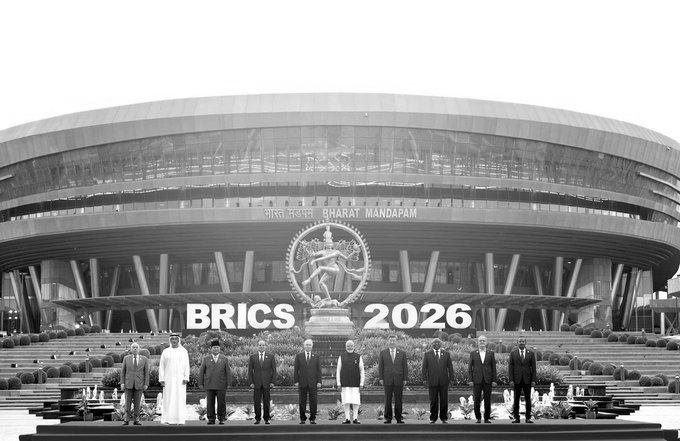
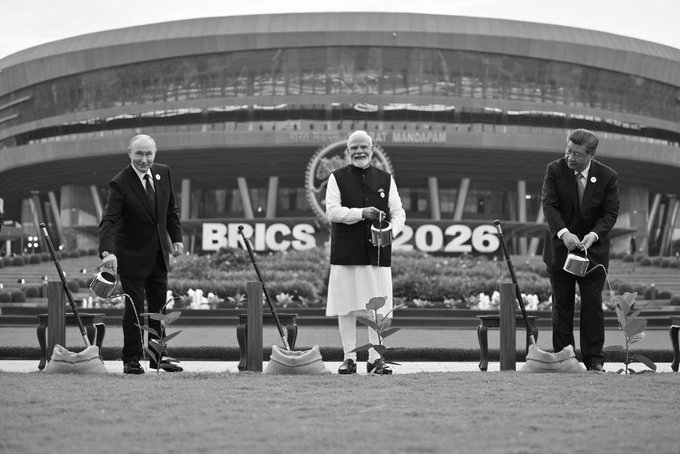
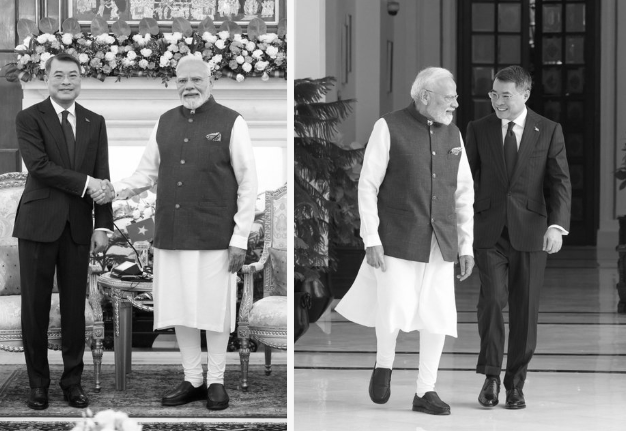
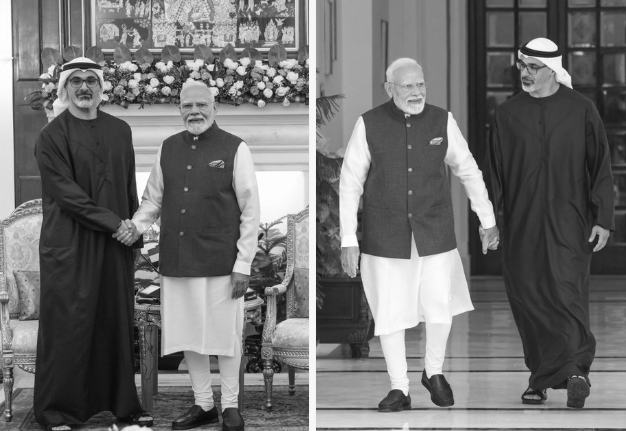
The day closed with leaders touring the Bharat Innovates Exhibition, a joint family photo, and a tree-planting ceremony ahead of Modi's gala dinner. Beyond Xi, Modi held talks with Putin and Iranian President Masoud Pezeshkian, besides engaging the Abu Dhabi Crown Prince and Ethiopia's leadership; Malaysia and Vietnam, as outreach/partner-country guests rather than full BRICS members, featured separately in the day's engagements. Security was tightened along the India-Nepal border and across Delhi, with over 120 trains diverted or cancelled, while Congress leader Priyank Kharge questioned the Centre's foreign policy ahead of the summit.
For India, Day 1 demonstrated a calibrated strategy: engage China where interests converge, deepen ties with Russia and the Global South, and push institutional reform, without tipping BRICS into an anti-Western bloc.