
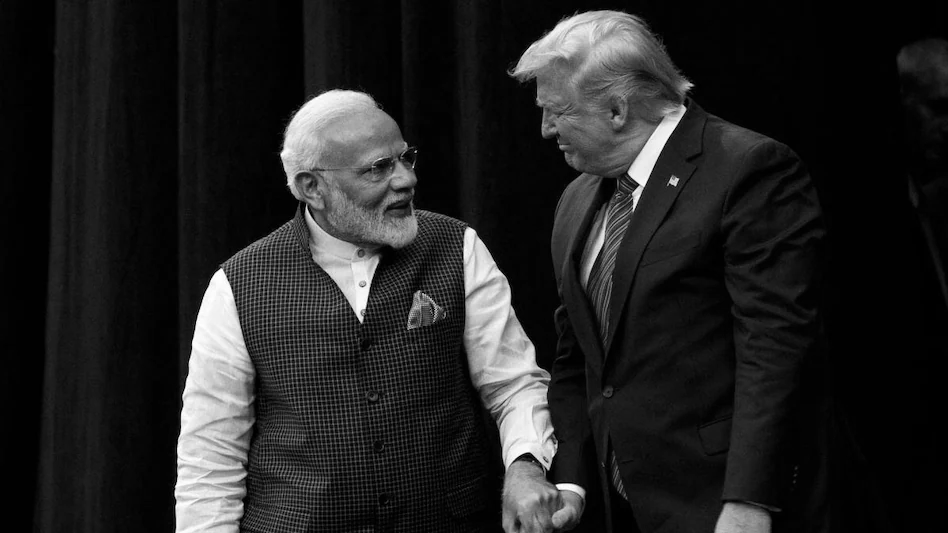
Modi, Trump hold phone conversation amid mixed signals on trade progress
Prime Minister Narendra Modi and U.S. President Donald Trump held their first phone conversation a week after Russian President Vladimir Putin’s visit to India, describing the discussion as “warm and engaging.” The leaders reviewed progress in bilateral relations and exchanged views on regional and global developments, reaffirming their commitment to work together for global peace, stability, and prosperity.
According to Indian officials, the leaders discussed expanding cooperation in critical technologies, energy, defence, and security under the India-U.S. COMPACT (Catalyzing Opportunities for Military Partnership, Accelerated Commerce and Technology) is a framework to strengthen bilateral cooperation in defence, technology, and trade , though progress on economic and trade issues under it remains slow.. They also reviewed the strengthening of their comprehensive global strategic partnership and agreed to work closely to address shared challenges and advance common interests.
Despite the cordial tone, officials acknowledged that trade discussions have yet to make the progress expected. Key sticking points include tariffs on Indian goods, market access for American products, energy imports, and technology regulations. Analysts note that while the phone call highlighted goodwill, significant negotiations remain necessary to resolve these complex economic issues.
The timing of the conversation, coming just a week after Putin’s visit, adds a geopolitical dimension. India’s continued engagement with Russia, particularly in energy and defence , signals its effort to maintain strategic autonomy while also deepening ties with the United States. This balancing act may be influencing the pace of trade talks, as both sides navigate economic priorities alongside broader strategic considerations.
Officials said the discussion reflects ongoing high-level engagement between India and the U.S., aimed at sustaining momentum across trade, technology, and security domains. The call underscores that while bilateral relations remain strong, economic and trade negotiations continue to be a delicate and evolving area requiring further attention and dialogue.