
Mizoram Reports 145 TB Deaths in 2025, Highest in Six Years
Mizoram is witnessing a renewed public health concern as tuberculosis (TB) deaths have climbed to a six-year high , even though the overall number of newly detected TB cases has remained almost stable. Official data under the National TB Elimination Programme (NTEP) shows that 145 people died due to TB in Mizoram in 2025 , the highest figure recorded since 2020. The state reported 2,275 TB cases in 2025 , only marginally lower than the 2,291 cases recorded in 2024 , but the rising death toll has triggered alarm among health officials and experts. This trend indicates that the concern is no longer limited to case numbers, but extends to the severity of disease and fatal outcomes.
Public health experts say TB trends can appear to “decline” in some years due to changes in screening intensity, testing access and reporting systems, rather than a real fall in infections. During and after the COVID-19 period , TB diagnosis and treatment were disrupted across India, leading to under-detection, delays in starting treatment and interruptions in medication. Such disruptions often cause hidden TB cases to surface later as severe illness , advanced infections and higher mortality . In Mizoram, deaths have steadily increased from 31 in 2020 to 145 in 2025 , suggesting that late diagnosis , treatment interruption and more complicated TB forms may be contributing factors.
The 2025 data also points to serious medical challenges, with 146 new patients diagnosed with Multi-Drug Resistant TB (MDR-TB) , a form that is more difficult to treat , requires longer treatment cycles and carries greater risk of complications . Another major concern is TB-HIV co-infection , as official figures show 267 TB patients were also living with HIV/AIDS in 2025 . Health experts explain that this link is critical because HIV weakens the immune system , making individuals far more vulnerable to contracting TB and progressing faster from latent infection to active disease . TB is also recognised globally as one of the most common opportunistic infections among people living with HIV and remains a major cause of death in this group, making the TB crisis in Mizoram closely connected to the larger HIV public health burden.
Mizoram has repeatedly been flagged as the state with India’s highest adult HIV prevalence , far above the national average, and this has significantly complicated TB control efforts. The combination of high HIV prevalence and rising TB deaths creates a dangerous cycle where HIV accelerates TB progression and TB can also worsen HIV outcomes. This overlap makes integrated TB-HIV screening , early testing , treatment adherence and close monitoring more important than ever. District-wise, Aizawl reported the highest number of TB cases at 1,569 , followed by Lunglei (155) and Kolasib (138) , while Serchhip registered the lowest at 52 . Among newly detected cases, 141 were children below the age of 14 , indicating ongoing transmission in the community . Officials also stated that around 84% of TB patients successfully completed treatment , which is encouraging, but the steady rise in deaths suggests that high-risk patients , advanced-stage cases and co-infected patients may be needing stronger medical attention.
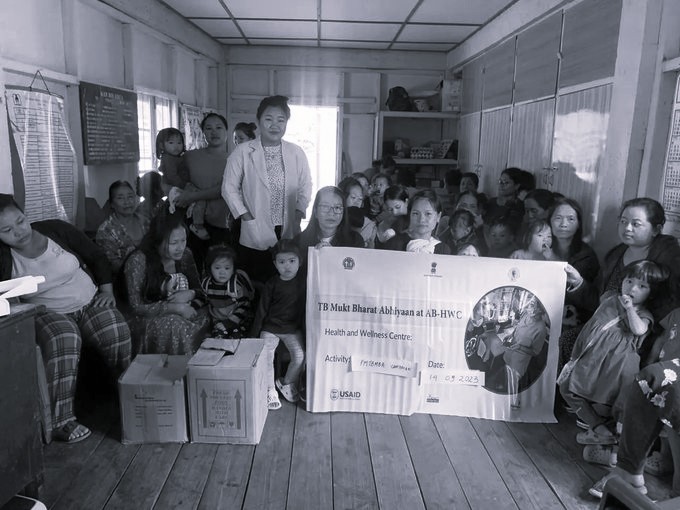
Authorities said that efforts are being strengthened through community involvement as well. Under the Prime Minister’s TB Mukt Bharat Abhiyaan , more than 100 individuals registered on the Nikshay platform to adopt TB patients or provide financial support , with the aim of improving nutrition support , treatment continuity and recovery outcomes , and also encouraging CSR-backed assistance . Nationally, although large states like Uttar Pradesh , Maharashtra , Bihar , Madhya Pradesh , Rajasthan and Tamil Nadu record TB deaths in much larger numbers due to their population size, Mizoram stands out because its TB mortality rate per lakh population becomes unusually high in a small-population state . With a population of about 12 lakh , 145 TB deaths in 2025 translates into a disproportionate death rate and indicates that small states like Mizoram may suffer heavier impact in mortality terms even if total case numbers are lower than bigger states.
Public health observers warn that Mizoram’s TB situation cannot be treated as a standalone disease issue anymore, as the rise in deaths is linked to delayed diagnosis , MDR-TB emergence and a strong HIV-TB overlap . Experts stress that Mizoram must intensify integrated TB-HIV strategies , improve early detection, expand rapid drug-resistance testing, ensure uninterrupted drug supply and strengthen adherence support mechanisms, especially for MDR-TB patients and those living with HIV , to prevent a further rise in fatalities and contain the growing threat.