
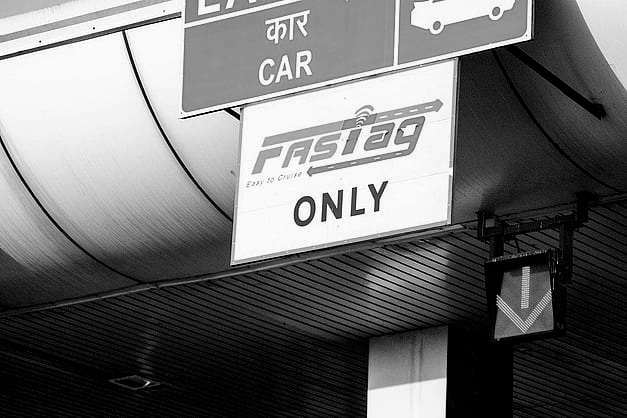
Mismatch in FASTag-Vehicle data prompts nationwide verification drive by NHAI
It is a common misconception that a FASTag can be freely used across multiple vehicles. In reality, each FASTag is mandatorily linked to a single vehicle registration number (VRN) and is intended to function as a unique digital identifier for that vehicle under India’s electronic toll collection system.
The recent advisory from the National Highways Authority of India (NHAI) has, however, brought attention to a growing operational issue: mismatches between FASTag-linked VRNs and actual vehicle number plates . This does not typically indicate legitimate multi-vehicle usage, but rather points to system-level inaccuracies and misuse in certain cases.
According to NHAI’s observations, several factors contribute to such discrepancies. One major reason is legacy FASTags issued before full integration with the VAHAN database . In earlier phases of FASTag rollout, vehicle verification relied on manual or semi-digital processes, increasing the possibility of incorrect data entry.
Another issue arises from incorrect mapping at the time of FASTag issuance , where a tag may be linked to a wrong VRN due to human error or incomplete documentation. There are also cases of improper tag handling or reuse , particularly in fleet operations or informal vehicle transfers, where tags are not deactivated and reissued properly when vehicles change ownership.
Additionally, enforcement cameras and FASTag readers sometimes capture VRNs that do not match due to dirty, damaged, or non-standard number plates , leading to recognition errors. NHAI’s push comes ahead of the planned rollout of Multi-Lane Free Flow (MLFF) tolling , where vehicles will be charged automatically without stopping at toll booths. In such a system, accurate VRN-Fastag mapping becomes critical , as enforcement, penalties, and electronic notices (e-notices) will depend entirely on digital identification.
The authority has therefore directed FASTag issuer banks to carry out urgent verification of all existing tags and to blacklist FASTags linked to incorrect or invalid VRNs , in line with government guidelines.
Rather than widespread intentional multi-vehicle usage, the issue reflects data inconsistencies, legacy system gaps, and enforcement challenges all of which are now being tightened as India moves toward fully automated tolling infrastructure.