
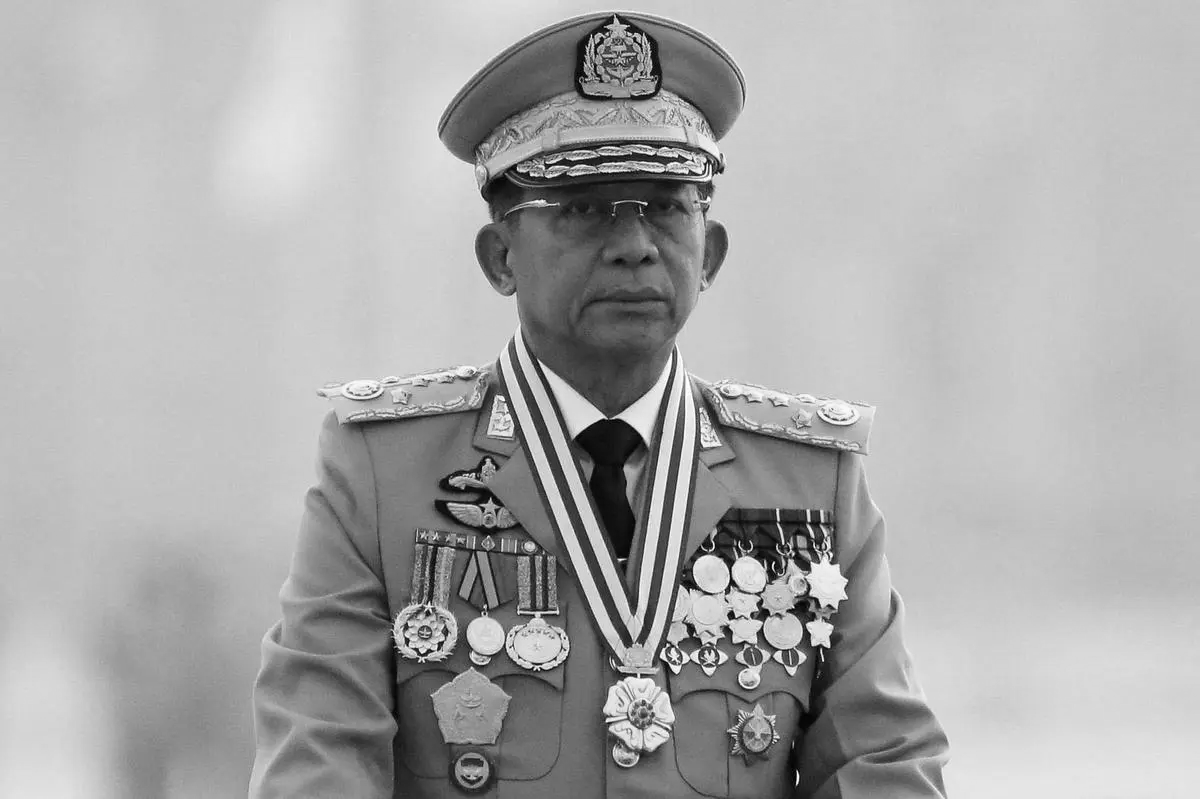
Min Aung Hlaing becomes Myanmar president, army rules firmly as democracy takes backseat
Myanmar’s parliament on Friday formally elected Min Aung Hlaing , the general who orchestrated the 2021 coup against Aung San Suu Kyi , as the nation’s new president, reinforcing the military’s grip on power five years after the overthrow of the civilian government.
The election, seen by many observers as largely ceremonial , provides a nominal return to civilian rule, yet critics argue it is a strategic move to ensure the army remains firmly in control . Independent observers and opposition groups have repeatedly described the military-organized vote as neither free nor fair .
Min Aung Hlaing, who was among three nominees, won 429 of 584 votes , a result that was virtually guaranteed given the overwhelming majority held by military-backed lawmakers and army-appointed members in parliament. The two remaining candidates were named vice presidents.
At 69, the former military chief stepped down from his role as commander-in-chief , in line with constitutional rules prohibiting the president from simultaneously holding the top military post. His close aide, Gen. Ye Win Oo , has taken over as the new commander, preserving the military’s tight control .
Having led the armed forces since 2011, Min Aung Hlaing wielded significant power under a military-imposed constitution even before the 2021 coup. The parliamentary vote followed a three-phase election in December and January, where major opposition parties, including Suu Kyi’s National League for Democracy , were either barred from contesting or boycotted the process, citing unfair conditions. Suu Kyi herself remains in detention .
The move has drawn international criticism , with Western nations and human rights groups calling the election undemocratic and illegitimate, while ASEAN expressed concern over stability and dialogue. India has adopted a cautious stance , emphasising the need for peace and engagement rather than overt condemnation.
Analysts say the development signals that Myanmar’s path to genuine democratic governance remains blocked , with the army continuing to dominate the country’s political landscape, despite appearances of electoral legitimacy .